Key Takeaways
-
A mobile sandblasting rig is a matched system: compressor, pot or feed system, hose, nozzle, controls, PPE, and dust and cleanup tools must all work together, since one weak part hurts the whole job.
-
Compressor rating alone doesn't determine results; nozzle size, hose length and diameter, and fitting condition all reduce pressure delivered to the surface, so balance them as a set.
-
Match the abrasive to the surface: soft media like soda or walnut shell protects fiberglass and thin panels, while garnet or steel grit strips rust and heavy coatings from steel.
-
Worn nozzles widen and waste air, so replace them on a regular schedule to keep the system efficient and the blast consistent.
-
Safety gear is part of the system: use a NIOSH-approved abrasive-blasting respirator, a blast hood, hearing protection, and a deadman valve, and verify which OSHA silica limits apply to your job.
-
Before blasting, confirm dust containment and waste disposal rules, since old paint may contain lead and spent media may require testing or regulated disposal.
If you picture sandblasting equipment, you probably think of a big pot of sand and a hose. That’s only one piece of the puzzle. A real mobile setup is a full system, and every part has to work together. When one piece is off, the whole job suffers.
Here at Blastworx, we haul our rig to driveways, docks, shops, and job sites all over Tampa Bay. We come to you, and we bring everything we need. So we know firsthand what good gear looks like and why it matters. This guide walks through each part of a mobile blasting setup in plain language. You’ll learn what each piece does, how to match the parts, and which safety and cleanup tools matter most. Whether you’re hiring a pro or just curious, you’ll leave knowing what to look for.
What Sandblasting Equipment Really Means
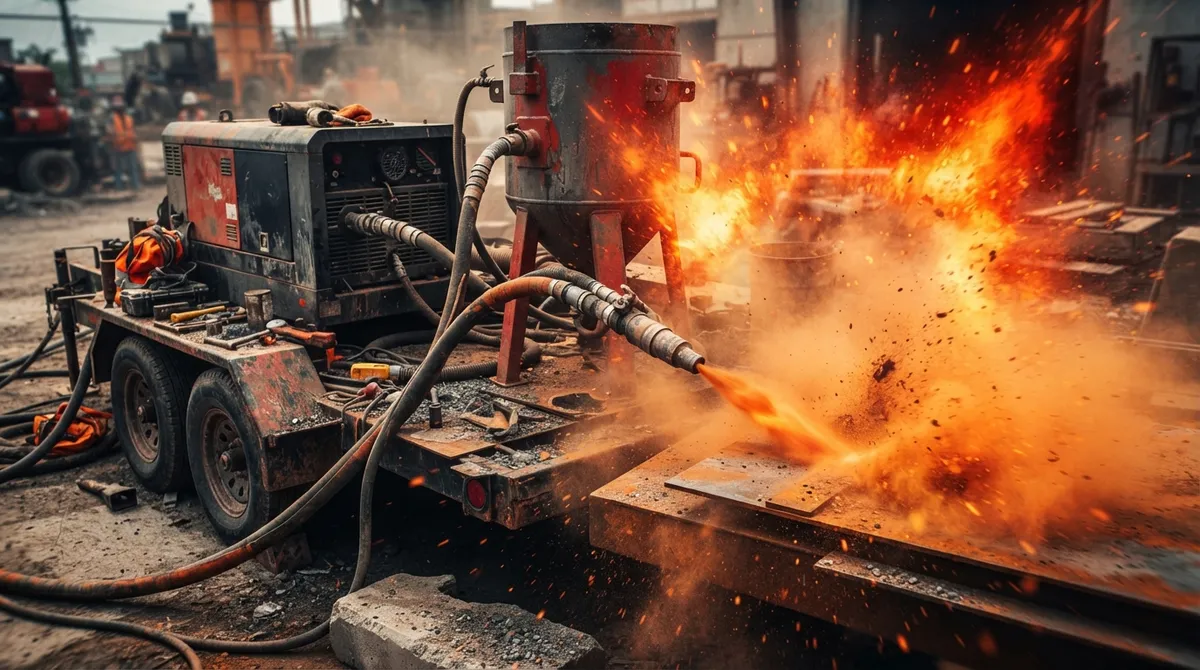
Sandblasting equipment is the full set of tools that push abrasive at a surface to clean it or prep it. If you want the history and the basics, here’s a quick look at what is sandblasting. In mobile work, the gear has to be portable, tough, and ready to run anywhere.
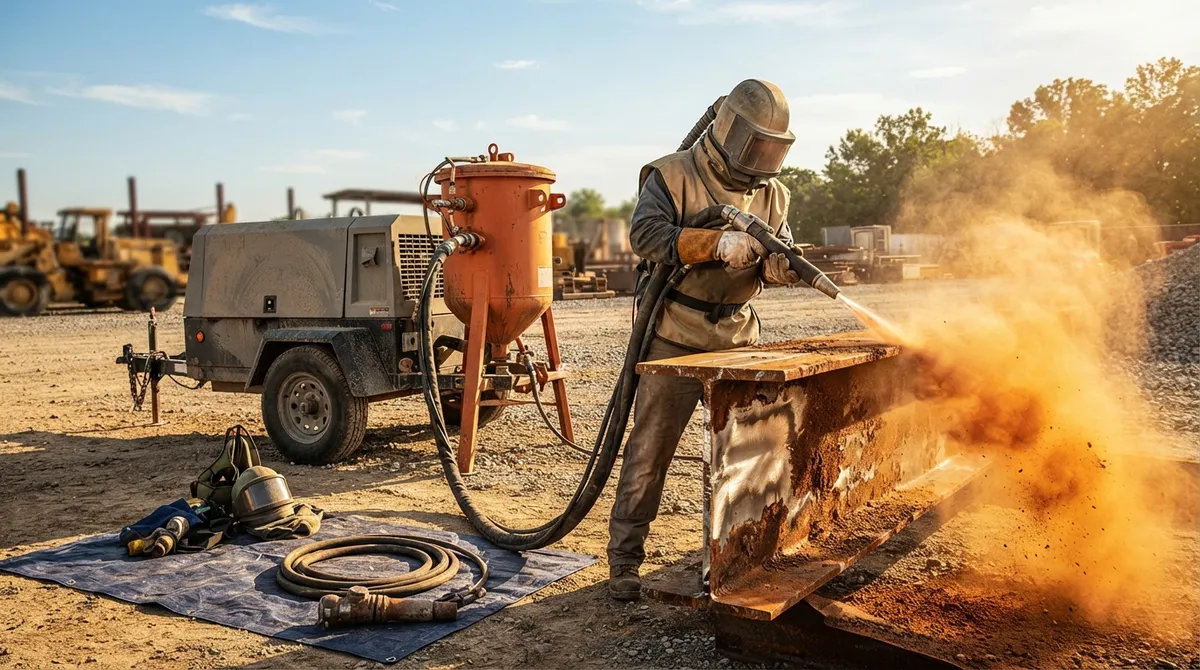
A typical mobile setup includes these main parts:
- An air compressor that makes the pressure and airflow
- A blast pot or abrasive-feed system that meters the media
- A blast hose, fittings, and a nozzle
- Operator controls and safety valves
- Personal protective equipment (PPE)
- Dust control, containment, and cleanup tools
Think of it like a kitchen. A great oven doesn’t help if the pans are the wrong size. The same idea applies here. We like to say, “We match the blast to your surface, not the other way around.” That starts with the gear. For a deeper look at a full kit, check out these 9 pieces of proper sandblasting equipment for mobile jobs.
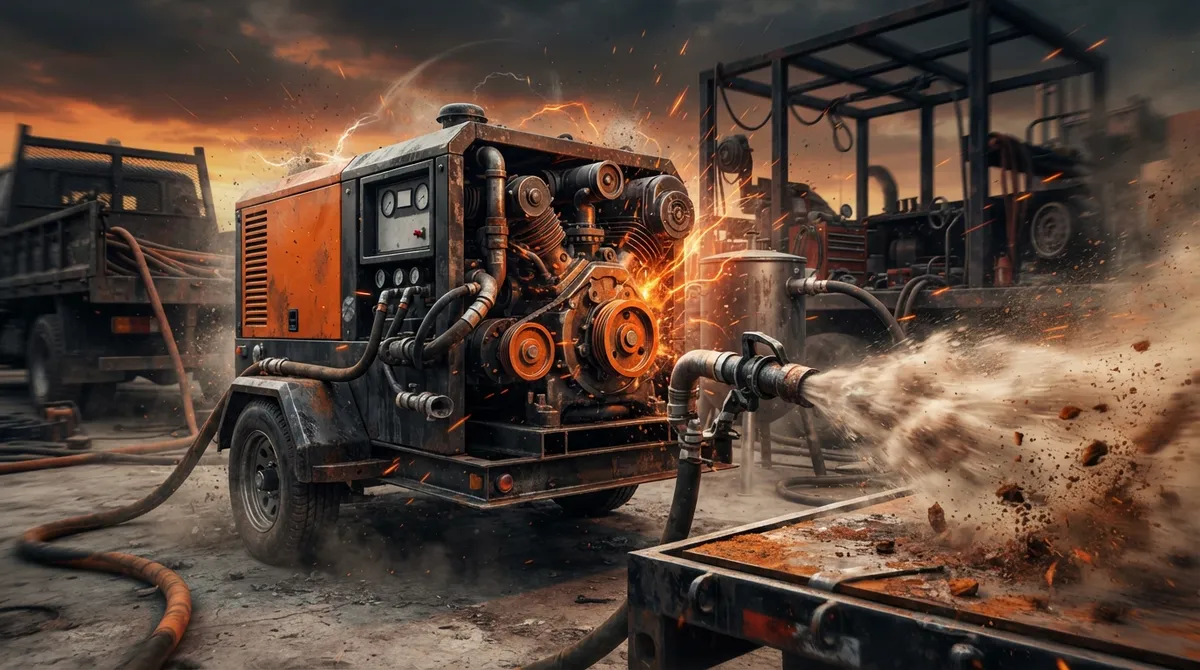
The Air Compressor: The Heart of the System
The compressor is the engine of any blasting rig. It supplies the pressure and the airflow your nozzle needs. Pressure is measured in PSI. Airflow is measured in CFM. Both matter.
Here’s where many people get it wrong. They look at the compressor rating and stop there. But the nozzle, hose length, hose diameter, and fittings all change how much power actually reaches the surface. A big compressor with a worn nozzle or skinny hose still delivers weak results.
Why a Matched System Wins
Every foot of hose and every tight fitting costs you a little pressure. Over a long run, those losses add up. A smart setup balances four things:
- The nozzle size and its air demand
- The compressor’s CFM output at working pressure
- The hose diameter and length
- The condition of fittings, gaskets, and the nozzle itself
When these line up, the job goes faster and the finish looks better. When they don’t, you burn time, fuel, and media. That’s why a self-contained rig is such a big deal. We bring our own power, so you don’t have to worry about whether your site can support the load.
Blast Pots and Abrasive-Feed Systems
The blast pot holds the abrasive and feeds it into the air stream. It controls how much media reaches the nozzle. Too little and you crawl. Too much and you waste product and clog the line.
Two common styles show up in the field. A pressure blast pot holds media under pressure and pushes it out steadily. A siphon-style blaster pulls media into the air stream using suction. Each has a place.
| Feature | Pressure Blast Pot | Siphon Blaster |
|---|---|---|
| Production speed | Faster, steady output | Slower, lighter work |
| Best for | Rust, heavy coatings, big surfaces | Small parts, light cleaning |
| Media control | Precise metering | Less precise |
| Portability | Larger, heavier | Small and easy to move |
| Typical use | Industrial, marine, automotive frames | Hobby and spot jobs |
The right choice depends on the media, the surface, and how much you need to finish in a day. For most pro jobs, a pressure pot is the workhorse.
Hoses, Nozzles, and Operator Controls
The hose and nozzle are where the power finally meets the surface. They wear out fast, so they deserve attention.
Nozzles shape the blast pattern. A wide nozzle covers more area. A tight one gives you more punch for stubborn rust. Because abrasive wears the opening over time, an old nozzle widens and wastes air. Swapping it out on schedule keeps the system efficient.
Blast hose should be rated for abrasive use and sized to the job. Good couplings and gaskets keep the line from leaking. Operator controls, often called a deadman valve, shut off the flow the moment the operator lets go. That’s a key safety feature, and it’s not optional on a pro rig.
Choosing the Right Media for the Job
The abrasive you pick changes everything. It affects cleaning speed, surface profile, dust, and how much waste you make. It also decides whether you protect the surface or damage it.
That’s why we always say, “The right media for the job.” A thin body panel needs a gentle touch. A steel beam can handle something much tougher. Safety guidance from OSHA points toward silica-free options such as garnet, steel shot, and crushed nut shells. Always make sure the media fits the surface and any coating spec.
| Surface | Common Media Choices | Why It Fits |
|---|---|---|
| Fiberglass and gelcoat | Soda, walnut shell | Soft, protects the hull |
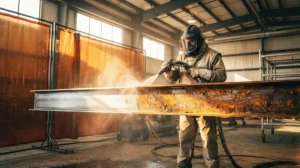
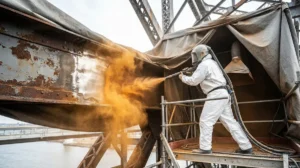
| Structural steel and frames | Garnet, steel grit | Strips rust and heavy coatings fast |
| Thin body panels | Soda, low-pressure soft media | Helps prevent warping |
| Wood and trim | Soft media, low pressure | Cleans without gouging |
| Concrete and brick | Stronger abrasives, wet or dustless methods | Removes buildup and paint |
Want to compare techniques? Our posts on choosing between soda blasting and sandblasting and wet versus dry blasting go into more detail.
Safety Gear Is Part of the Equipment
Safety gear isn’t an add-on. It’s part of the system. Blasting can expose workers to dust from the abrasive and from the material being removed. That can include respirable crystalline silica and toxic metals like lead in older coatings.
OSHA’s ventilation standard, 29 CFR 1910.94, calls for NIOSH-approved respirators to protect against dust from abrasive blasting. OSHA’s respirable crystalline silica limit is 50 micrograms per cubic meter as an 8-hour average. The exact rules depend on the work sector, so it’s smart to verify which standard applies to your job.
A solid safety kit usually includes:
- A NIOSH-approved abrasive-blasting respirator with clean supplied air when required
- A blast hood or helmet with a protective lens
- Gloves, coveralls, and sturdy boots
- Hearing protection
- A written respiratory protection program where respirators are required
Respirators are only one piece. Gear must be inspected, kept up, and used the way the maker intends. For a closer look at how a pro crew stays careful, read about 5 safe blasting procedures every mobile crew follows.
Dust Control, Containment, and Cleanup
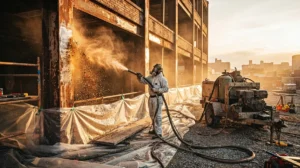
Working outdoors doesn’t mean dust goes away. Open-air blasting still needs a plan to protect workers and bystanders. Barriers, containment, ventilation, and dust collection all help, depending on the material and the surroundings.
This matters most near pools, parked cars, windows, and neighbors. We contain the mess and protect the surrounding area on every job. Some jobs call for dustless methods, which use water to cut dust at the source. If you’re curious how that works, see what makes dustless blasting in Tampa so effective, or learn how pros handle sandblasting dust control safely.
Handling Spent Media and Removed Coatings
Used abrasive and stripped paint don’t just vanish. They need to be collected and handled correctly. Rules vary by material and by location. Some jobs may require permits, daily cleanup, or disposal as regulated waste. If old paint may contain lead, the waste may need testing first. Always confirm federal, state, and local rules before the rig rolls out.
How to Plan the Right Setup for Your Project
You don’t need to buy any of this gear to benefit from it. Most homeowners and business owners simply hire a crew that already has the right rig. But knowing the basics helps you ask smart questions.
Here’s a simple way to think about planning a job:
- Identify the surface and what’s on it, such as rust, paint, or graffiti.
- Choose media that fits the surface and the finish you want.
- Match the compressor, hose, and nozzle to that media.
- Plan dust control and containment for the site.
- Arrange safe collection and disposal of waste.
A coating is only as good as the surface underneath it. Paint, powder coat, and resurfacing won’t last if the prep is bad. Blasting takes the whole surface back to clean, sound material at once, so the next layer bonds properly and holds up in Florida’s heat, humidity, and salt air.
Where Mobile Equipment Shines in Florida
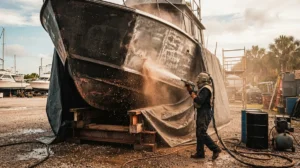
Mobile gear fits a wide range of work. On the water, it handles boat hulls, trailers, docks, and davits. At home, it clears rust from railings, fences, and gates. On the road, it preps frames and wheels. Check our pages on marine blasting, automotive blasting, industrial blasting, commercial blasting, and residential blasting to see how the setup changes by project.
Our rig is fully mobile and self-contained. That means we work dockside, in a driveway, at a shop, or on a job site without needing your power or water. We serve Tampa Bay and the central Florida corridor, including Tampa, Clearwater, Sarasota, Ocala, Orlando, and Fort Myers. You can see where we work on our service areas page.
Planning pool work, like a patio or deck refresh? Local pros such as Panther Pools often team up with prep crews so surfaces are clean before resurfacing. And if you’re lining up other home projects, even a trusted dental office like Charming Smiles of Ocoee reminds us that good prep and care make results last in any field.
Why Hiring a Pro Rig Beats Going It Alone
Buying or renting a full blasting setup is costly and tricky. You’d need the compressor, pot, hoses, nozzles, PPE, and a plan for dust and waste. Then you’d need the know-how to run it safely. That’s a lot to take on for a single weekend project.
A pro crew arrives ready. We’re fully insured, and you talk to the people doing the work. Our process is simple:
- Walkthrough. Send photos or we come look, and we pick the right media.
- Free estimate. You get a clear, written estimate the same day.
- Blast and strip. We protect the surrounding area, then blast at your location.
- Ready to finish. Your surface comes out clean and ready for the next step.
Curious how the costs stack up? Our guides on how much sandblasting estimates really cost and mobile rig versus local shop can help you decide. You can also browse our project gallery to see real results, or visit us on Google and see what our customers are saying about us.
Ready to Put the Right Equipment to Work?
Good sandblasting equipment is more than a pot and a hose. It’s a matched system of compressor, feed, hose, nozzle, media, safety gear, and cleanup. When each part is right, the job runs faster, looks better, and stays safer.
You don’t have to figure it all out alone. We handle the gear, the prep, and the mess, and we leave your surface back to clean, bare metal or clean, sound material, ready for the next step. If you have a project in Tampa Bay or across central Florida, get a free estimate today, or give us a call at 813-380-8092. You can text us too. We come to you.
FAQs
Q: What equipment do I need for a mobile sandblasting setup?
A: A mobile setup needs an air compressor, a blast pot or abrasive-feed system, blast hose, a nozzle, and operator controls. You also need proper safety gear and a plan for dust control and cleanup. All the parts should work together as one matched system.
Q: What is the difference between a pressure blast pot and a siphon blaster?
A: A pressure blast pot holds media under pressure and feeds it steadily, so it works faster on rust and heavy coatings. A siphon blaster pulls media in with suction, which suits small parts and light cleaning. Most pro jobs rely on a pressure pot.
Q: What safety equipment is required for abrasive blasting?
A: Operators need a NIOSH-approved abrasive-blasting respirator, a blast hood, gloves, coveralls, and hearing protection. When respirators are required, a written respiratory protection program applies too. Always check the OSHA rules that fit your specific job.
Q: How can mobile blasting control dust around a job site?
A: Crews use barriers, containment, ventilation, and dust collection to keep dust in check. Dustless methods use water to cut dust at the source. Even outdoors, you still need a plan to protect workers, neighbors, and nearby property.
Q: How should spent abrasive and removed paint be disposed of?
A: Spent media and stripped coatings should be collected and handled based on what they contain. Old paint may need testing for lead, and rules vary by city and state. Check local requirements before the job starts so cleanup stays safe and legal.