
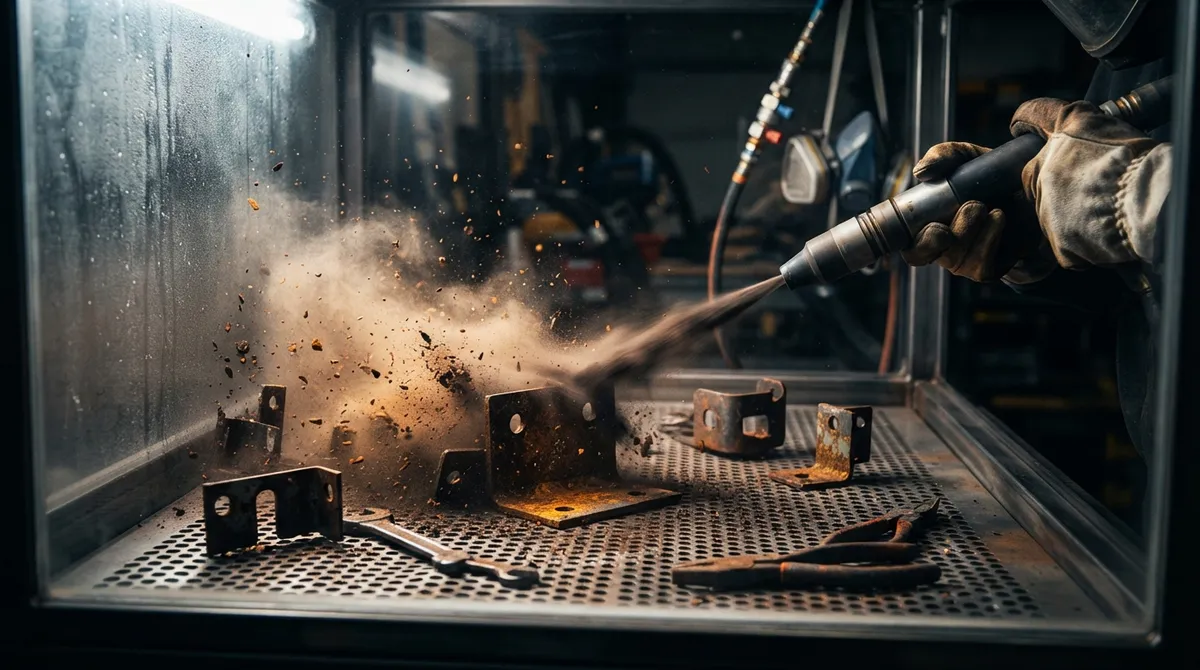
Key Takeaways
-
Mobile blasting can effectively restore small metal items like brackets, tools, and hardware using site-specific media selection—glass bead for delicate surfaces, aluminum oxide for heavy rust—matched to avoid damage.
-
Test blasting on a small area before full treatment is essential for delicate or unfamiliar items to prevent warping or damage from incorrect media, pressure, or nozzle distance.
-
Mobile blasting services come to your location with fully self-contained equipment needing no power or water hookups, eliminating the need to transport rusty or corroded items to a shop.
-
Proper dust containment with physical barriers, respiratory protection, and spent media collection is critical for on-site safety and compliance with OSHA’s respirable crystalline silica standards.
-
Choose a blasting provider who clearly explains their media choice, dust control methods, hazardous coating handling, and can show examples of similar small item jobs before booking.
-
Silica sand should be avoided due to silicosis risk; gentler alternatives like soda, glass bead, or walnut shell are preferred for delicate surfaces and detailed parts.
Got a rusty toolbox, a corroded bracket, or a pile of grimy old hardware sitting in your garage? You’re not alone. Small item blasting services are one of the most popular (and most misunderstood) parts of the mobile blasting world. People often assume blasting is only for boat hulls or building exteriors, but plenty of small, everyday objects can be brought back to life with the right approach.
At Blastworx, we get calls all the time about small parts and pieces. Brackets, tools, engine components, railings, fixtures, you name it. The good news is that many of these items are great candidates for mobile blasting. The trick is knowing which media to use, how to protect the item from damage, and how to keep the mess contained. That’s exactly what we’re going to walk through today, in plain, friendly terms, so you know what to expect before you ever pick up the phone.
What Counts as a Small Item in Mobile Blasting?
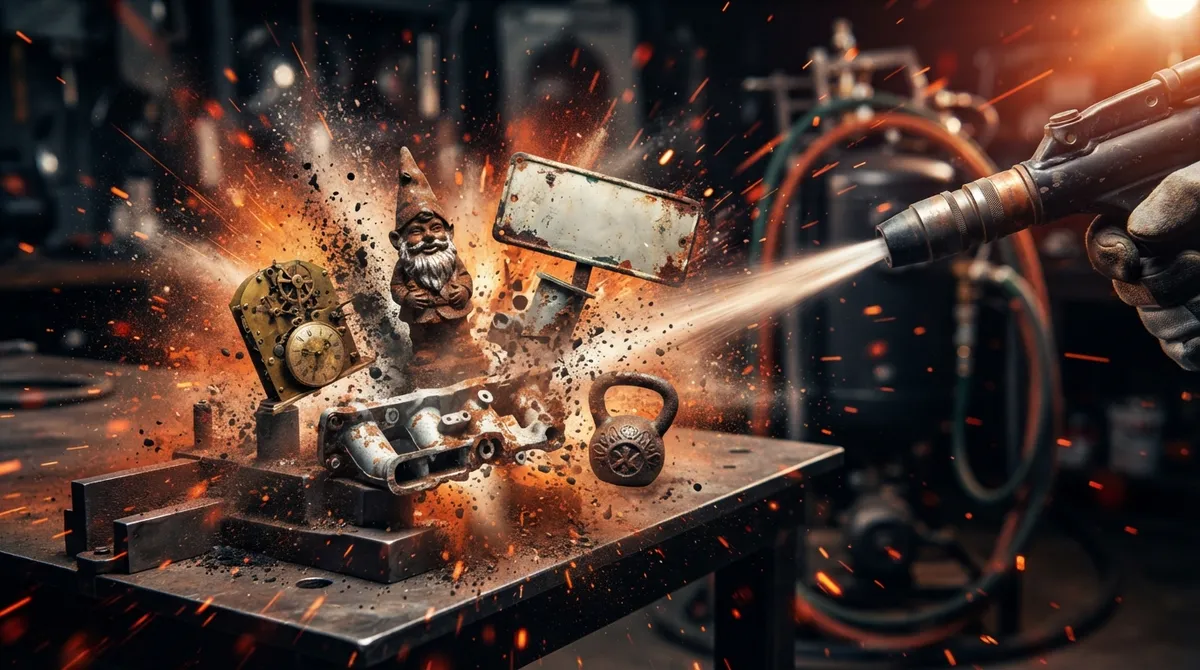
Small item blasting covers a wide range of compact objects. If it’s rusty, painted, coated, or covered in grime, and it’s small enough to isolate safely, there’s a good chance it can be blasted on-site.
Here are some common examples we see in Tampa Bay and across central Florida:
- Metal hardware like bolts, hinges, and brackets
- Hand tools and small machinery components
- Automotive parts such as wheels, brake components, and small brackets
- Railings, gate hardware, and fixtures
- Wood or masonry objects, when appropriate
- Outdoor furniture pieces and decorative metal items
Not every item is a good fit, though. Delicate or highly detailed parts sometimes do better in a controlled blast cabinet or specialist shop rather than out in the open. A trustworthy provider will tell you honestly if your item needs a different approach. We’d rather point you in the right direction than force a job that isn’t a good match.
Can Small Parts Be Blasted at My Home or Shop?
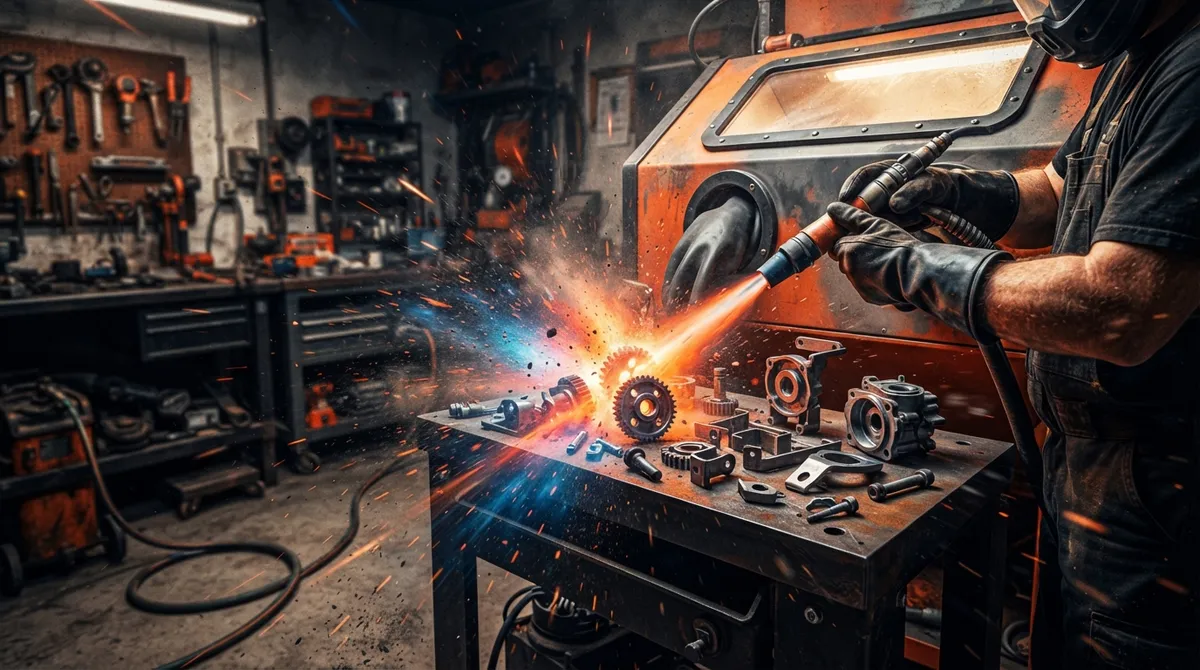
Yes, in most cases. That’s actually the whole point of mobile blasting. We come to you, whether that’s your driveway in Brandon, a shop in Plant City, or a job site in Riverview. Our rig is fully mobile and self-contained, so we don’t need your power or water hookups to get the job done.
Before we start, we walk the site and figure out the right setup. A few things we check:
- Is there enough space to isolate the item safely from people, pets, and property?
- Are there nearby surfaces (cars, windows, landscaping) that need protection?
- What’s the item made of, and what coating or contamination are we removing?
- What’s the desired end result: bare metal, a light clean, or surface prep for a new coating?
Once we’ve got answers, we set up containment, choose our media, and get to work. If you want to see examples of past jobs, our gallery has plenty of before-and-after shots from projects around the region.
Choosing the Right Media for Small, Delicate Items
This is where experience really matters. Not all abrasive media are created equal, and using the wrong one can damage a small or thin item pretty fast. We always say: we match the blast to your surface, not the other way around.
Here’s a quick breakdown of common media types and where they shine:
| Media Type | Best For | Aggressiveness |
|---|---|---|
| Glass Bead | Delicate metal, light cleaning, smooth finishes | Low to Medium |
| Sodium Bicarbonate (Soda) | Fiberglass, gelcoat, thin metal, sensitive surfaces | Low |
| Walnut Shell | Wood, soft materials, delicate cleaning | Low |
| Aluminum Oxide | Hard metals, heavy rust, weld prep | High |
| Garnet | General purpose metal stripping | Medium to High |
| Crushed Glass | Coating removal, general surface prep | Medium |
Notice sand isn’t on that list. NIOSH actually recommends against using silica sand as an abrasive because of the silicosis risk, and it’s not something we use here. There’s a lot more nuance to this decision, and it’s part of why we always ask about the surface first. If you want a deeper dive into media choices, our article on soda blasting vs sandblasting covers the pros and cons in detail.
Will Blasting Damage or Warp My Small Item?
This is probably the number one worry we hear, and it’s a fair one. Thin metal, delicate wood, and small detailed parts can absolutely be damaged if the wrong media, pressure, or nozzle distance is used. That’s why testing matters.
Before committing to a full blast, we often run a small test area, especially on sensitive or unfamiliar surfaces. This lets us see how the material responds before we commit to the whole item. A few factors that affect the risk of damage:
- Thickness and material of the item
- Type of coating being removed (paint, powder coat, rust, scale)
- Media aggressiveness and blast pressure
- Distance and angle of the nozzle
- Operator skill and experience
This is really where what is sandblasting gets interesting. It’s not just pointing a hose and spraying. It’s a careful balance of pressure, media, and technique tailored to each item. That balance is exactly what separates a good outcome from a ruined part.
Removing Rust, Paint, and Old Coatings from Small Parts
One of the biggest benefits of small item blasting is how thorough it is. Hand sanding or wire brushing tends to miss rust hiding in corners, threads, and tight seams. Blasting reaches those spots and takes the whole surface back to clean, bare metal or sound material all at once.
This makes it a great option for:
- Stripping old paint or powder coat before refinishing
- Removing rust and corrosion from hardware and brackets
- Cleaning scale and buildup off machinery parts
- Preparing metal surfaces for a fresh coat of paint or powder coat
If you’ve got railings or gate hardware with stubborn rust, our post on removing rust from railings walks through some helpful context. And if you’re restoring something with more sentimental value, like an old iron fence, check out our guide on restoring an old iron fence for a sense of what the process looks like.
How Dust and Debris Are Controlled On-Site
Mobile blasting means we’re often working in driveways, shops, or job sites, not enclosed facilities. That makes dust control and containment a top priority. Abrasive blasting can create hazardous airborne dust, both from the media and from the surface being blasted. OSHA’s respirable crystalline silica standard sets a permissible exposure limit of 50 micrograms per cubic meter as an 8-hour time-weighted average, which shows just how seriously this is taken industry-wide.
Here’s how we approach it on every small item job:
- Set up physical barriers or containment around the work area
- Protect nearby vehicles, landscaping, and structures
- Use appropriate respiratory protection for the operator
- Collect and properly manage spent abrasive and removed coatings
- Take extra precautions if lead-based paint or hazardous coatings are suspected
We contain the mess and protect the surrounding area, every time. It’s part of being fully insured and doing this job the right way. If you’re curious how this looks in practice on a bigger scale, our piece on sandblasting dust control gets into more detail.
Questions to Ask Before Booking a Small Item Blasting Job
Whether you call us or another mobile blasting provider, it’s smart to come prepared with a few questions. Here’s a simple checklist:
- What media will you use on my item, and why?
- How will you protect my property and contain dust?
- What respiratory protection do you use on-site?
- How do you handle lead paint or other hazardous coatings?
- Where does the spent abrasive and debris go afterward?
- Can you show examples of similar small item jobs you’ve done?
A provider who answers these clearly and confidently is one you can trust. This is where working with a small, owner-operated crew has real advantages. You talk to the people doing the work, not a call center reading from a script.
Why Mobile Blasting Makes Sense for Small Items
Dragging a rusty part to a shop, waiting in line, then hauling it back home is a hassle. Mobile blasting flips that. We come to you, whether you’re in Tampa, Ocala, Orlando, Fort Myers, or one of the smaller communities in between like Lutz or St. Pete. For the right job, we’ll travel anywhere in the state.
Small item blasting fits naturally alongside our other work too. Many customers start with one part, then realize we can also help with residential projects like railings and pool decks, or even automotive restoration work. Others need us for ongoing industrial or commercial needs where small parts are just one piece of a bigger job.
If your project involves anything marine related, like cleats, fittings, or small hardware, our marine page covers what we can safely handle without damaging fiberglass or gelcoat. And if you’re not sure whether your location falls within our reach, our service areas page lays it all out.
A Quick Look at Our Process for Small Items
We keep things simple and transparent from start to finish. Here’s what that looks like:
- Walkthrough. Send us photos or let us take a look, and we’ll figure out the right media for your item.
- Free estimate. You get a clear, written estimate the same day. The price we give is the price you pay.
- Blast and strip. We protect the surrounding area, then blast the item clean right at your location.
- Ready to finish. Your item comes out clean and ready for the next step, whether that’s priming, painting, or reassembly.
No guesswork, no surprises. Just a clean part, ready to go. Curious what other Tampa Bay customers think of working with us? You can visit us on Google to see what our customers are saying about us before you decide.
Wrapping It Up
Small item blasting services might seem like a niche corner of the mobile blasting world, but they solve a real problem for a lot of people. Whether it’s a rusty bracket, a set of old tools, or hardware from a bigger project, the right media and a careful hand can bring these pieces back to clean, sound material without unnecessary risk.
If you’ve got a small item (or a whole pile of them) that needs some attention, we’d love to help. Reach out today to get a free estimate, or if you’d rather talk it through first, feel free to give us a call. We’re happy to answer questions, no pressure, no obligation. That’s just how we like to do business here at Blastworx.
FAQs
Q: What items can a mobile blasting service clean or strip?
A: Lots of things! Metal hardware, brackets, tools, machinery parts, railings, automotive components, and even select wood or masonry pieces are all common candidates. If you’re not sure about your specific item, just send us a photo and we’ll happily let you know if it’s a good fit.
Q: Can small parts be blasted at my home, shop, or job site?
A: Absolutely, that’s the beauty of mobile blasting. We bring our fully self-contained rig right to your driveway, shop, or job site, so there’s no need to haul anything anywhere. We’ll walk the site first to make sure everything is set up safely.
Q: What blasting media is safest for delicate metal, aluminum, wood, or fiberglass?
A: For delicate surfaces, we typically reach for gentler options like soda, glass bead, or walnut shell. These media types clean effectively without being overly aggressive, which helps protect thinner or more sensitive materials from damage.
Q: Will abrasive blasting damage or warp a small or thin item?
A: It can, if the wrong media or pressure is used, but that’s exactly why we test small areas first and adjust our approach based on the material. With the right settings, most small items come out clean and undamaged.
Q: How do mobile blasters control dust and protect nearby property?
A: We set up containment around the work area, protect nearby surfaces and landscaping, and use proper respiratory protection throughout the job. We also collect spent media and debris afterward, so you’re not left with a mess to clean up.





