
Key Takeaways
-
Aluminum oxide blasting uses hard angular particles to strip rust and coatings, with brown fused alumina (94.5-97% pure) best for steel and white fused alumina (99%+ pure) preferred for stainless steel to minimize contamination.
-
Grit selection directly impacts results: coarser grits (16-24) cut deep for heavy rust, medium grits (46-60) work for standard coating prep, and finer grits (80-120) suit precision parts, with proper testing on small areas before committing to full jobs.
-
Unlike silica sand, aluminum oxide avoids crystalline silica hazards but still requires proper respiratory protection, containment barriers, and disposal plans since it carries contaminants from stripped surfaces like lead paint and chromium.
-
Aluminum oxide works best for structural steel, stainless steel, automotive frames, and industrial equipment but should be avoided on thin panels, soft wood, fiberglass, and delicate materials where soda or walnut shell media are safer alternatives.
-
In mobile open-air blasting setups, aluminum oxide typically runs single-pass systems with higher media consumption, while reclaim systems in blast rooms can cycle material 5-10 times before degradation.
-
Timing between blasting and coating is critical in humid climates like Florida, as bare steel begins flash rusting quickly, making prompt coating application essential to prevent corrosion.
If you’ve been quoted “aluminum oxide blasting” for a rust job, a set of trailer rims, or a stainless steel railing, you’re probably wondering what makes it different from regular sandblasting. Good question. It’s one we hear a lot from folks across Tampa Bay who just want their metal clean again without wrecking it in the process. Let’s walk through it together, no engineering degree required.
At Blastworx, we’ve spent plenty of hours matching the right abrasive to the right surface, because the wrong choice can turn a simple cleanup into an expensive mistake. Aluminum oxide is one of the toughest, most reliable media we reach for, but it’s not the answer for every job. This guide breaks down what it does well, where it falls short, and how it stacks up against sand and other common options, so you can make a smart call before your next project.
What Is Aluminum Oxide Blasting, Really?
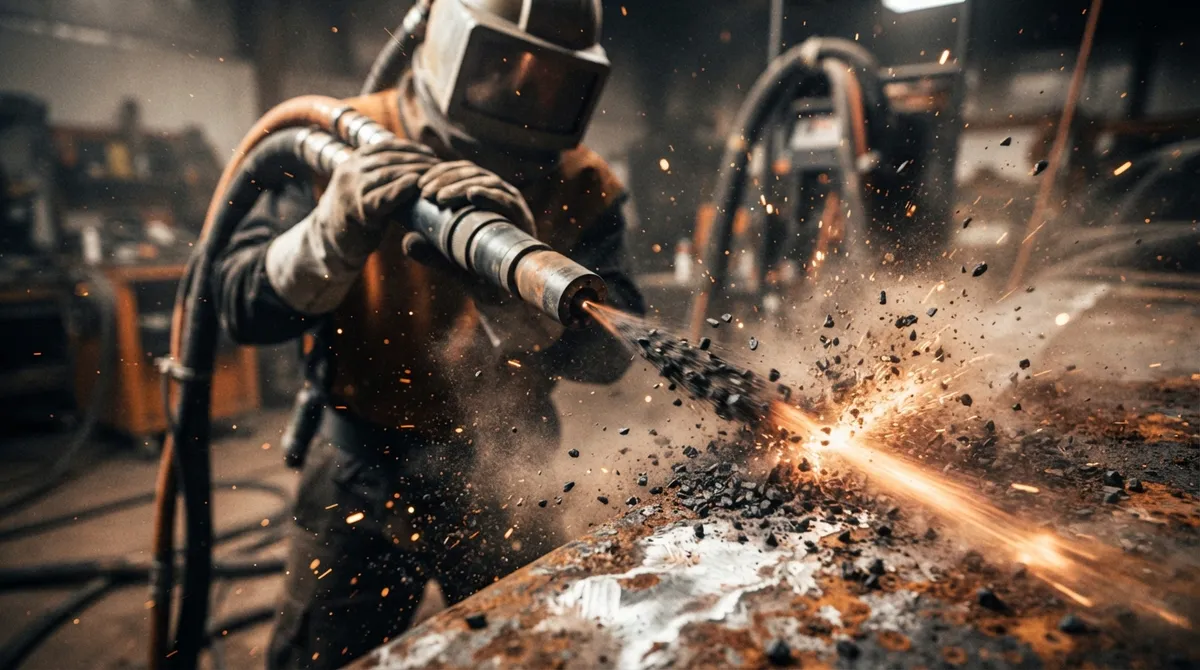
Aluminum oxide blasting uses small, angular, super hard particles to strip rust, old paint, mill scale, and grime off a surface. Think of it as sandpaper on steroids, shot through a nozzle at high speed. The particles are sharp-edged, which means they cut into the surface rather than just bouncing off it.
This abrasive comes in two main types, and knowing the difference matters more than you’d think.
- Brown fused alumina: about 94.5–97% aluminum oxide, tough and affordable, great for general steel prep.
- White fused alumina: 99% or more aluminum oxide, cleaner and purer, preferred for stainless steel and precision parts.
- Both types are angular in shape, which creates a rough “tooth” or profile that paint and coatings can grip onto.
- Aluminum oxide sits at roughly a 9 on the Mohs hardness scale, making it one of the hardest blasting media around.
Because it’s so hard and aggressive, aluminum oxide gets used a lot for spot repairs, equipment restoration, automotive parts, and steel prep before painting or powder coating. If you want a deeper look at how surface prep actually works before a new finish goes on, our article on how metal surface preparation blasting really works covers the basics nicely.
Aluminum Oxide vs. Sand: The Real Differences
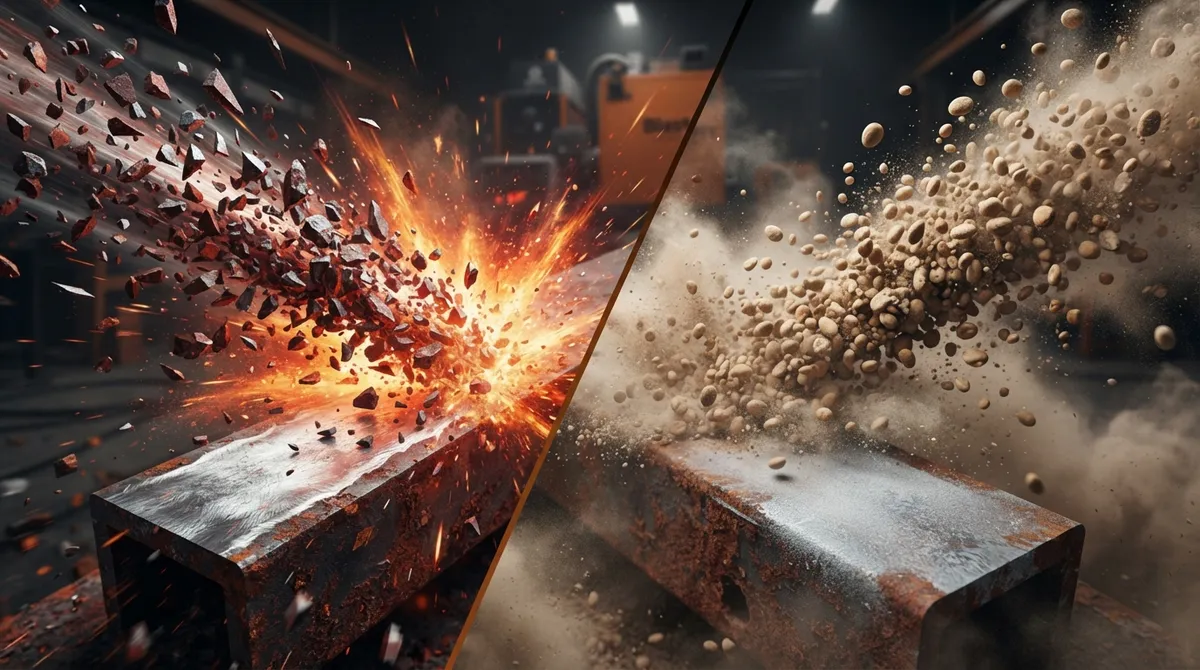
Sandblasting used to be the default choice for almost everything. These days, silica sand is heavily restricted in a lot of settings because of the health risks tied to crystalline silica dust. Aluminum oxide doesn’t have that specific hazard, but it’s not some magic risk-free alternative either. Let’s compare them side by side.
| Factor | Aluminum Oxide | Silica Sand |
|---|---|---|
| Hardness (Mohs) | ~9.0 | ~7.0 |
| Cutting speed | Fast, aggressive | Moderate |
| Reusability | Can be reclaimed several times in a controlled system | Breaks down quickly, limited reuse |
| Silica dust hazard | No free crystalline silica | Contains crystalline silica, a known health hazard |
| Best for | Steel, stainless steel, heavy corrosion, coating prep | General use, now restricted in many areas |
| Cost | Higher per pound | Lower per pound, but often banned or limited |
Notice that we didn’t say aluminum oxide is “safe” while sand is “dangerous.” That’s oversimplified. Aluminum oxide still throws dust and debris that can carry lead paint, chromium, or other contaminants pulled off the workpiece. Anyone doing this work needs proper respiratory protection, eye protection, and a real plan for containment, no matter which media is in the pot. For a broader look at how different media compare, check out our piece on media blasting vs sandblasting and which is safer for you.
Picking the Right Grit for the Job
Grit selection is where a lot of DIYers get tripped up. Coarser grit cuts faster but leaves a rougher profile. Finer grit is gentler but takes longer. Here’s a simple breakdown based on common reference profiles at 80–100 psi with a 3/8-inch nozzle.
- 16–24 grit: Heavy cutting, leaves a deep profile of roughly 3.5 to 5.0+ mil. Good for thick rust and heavy scale removal.
- 46–60 grit: A middle ground, producing about 1.5 to 2.5 mil. Commonly used for general coating prep on steel.
- 80 grit: Lighter cut, around 1.0 to 1.8 mil. Works well for a cleaner, more controlled finish.
- 100–120 grit: Fine finishing grit, roughly 0.5 to 1.2 mil. Better suited to precision parts or lighter cleaning jobs.
Keep in mind these numbers shift depending on pressure, stand-off distance, nozzle size, and how the operator angles the gun. That’s why we always test a small section first before committing to a full job. It’s a habit worth having, and it’s one you’ll see mentioned again in our guide on preparing for sandblasting the right way.
Where Aluminum Oxide Shines
This abrasive earns its keep on jobs that need real muscle without introducing silica dust into the mix. Here’s where we reach for it most often.
- Stripping rust and mill scale from structural steel before coating.
- Cleaning up automotive frames, wheels, and undercarriage parts.
- Prepping stainless steel where contamination from other metals needs to stay minimal.
- Restoring old equipment, tools, and industrial parts that have years of buildup.
- Creating a consistent anchor profile before epoxy, powder coat, or thermal-spray finishes go on.
We use this media a lot on automotive projects and heavier industrial jobs where a strong bite matters. If you’re restoring a classic car frame or prepping tanks and structural steel, aluminum oxide is often the right call. For more detail on structural steel work specifically, take a look at our post on structural steel blasting facts Florida owners need.
Where It’s the Wrong Tool
Aluminum oxide is aggressive, and aggressive isn’t always what you want. Here’s when we steer away from it, or dial back pressure and grit dramatically.
- Thin automotive body panels that can warp under too much heat or pressure.
- Soft wood surfaces like decks, fences, and trim.
- Delicate fiberglass or gelcoat on boat hulls.
- Glass, plastic, and other fragile materials.
- Vinyl fencing, which is simply too soft for any real abrasive blast.
For softer jobs like these, we usually reach for soda or walnut shell media instead. Curious about how soda blasting stacks up? Our article on choosing between soda blasting vs sandblasting lays it out clearly. And if wood is your specific concern, we’ve got a whole guide on whether sandblasting damages wood worth a read before you decide.
Safety and Containment: Don’t Skip This Part
Here’s the truth nobody wants to hear: aluminum oxide doesn’t contain the free crystalline silica found in sand, but that does not make it dust-free or risk-free. It’s still kicking up fine particulate, and whatever was on that surface, old paint, rust, grease, comes off with it.
A responsible mobile blasting job should always include the following.
- A pre-job check for lead paint or other hazardous coatings, especially on older structures.
- Proper respiratory protection, eye and face protection, and hearing protection for the operator.
- Containment barriers to protect nearby vehicles, landscaping, pools, and storm drains.
- A plan for collecting and disposing of spent media and removed coatings properly.
- Ventilation or dust control measures appropriate to the site, whether that’s outdoors or in an enclosed space.
The Occupational Safety and Health Administration outlines specific guidance for abrasive blasting operations, including exposure limits and containment recommendations. It’s worth a look if you want the full regulatory picture, and you can find that guidance directly on OSHA’s official site. We also lean on general safety principles described in resources like what is sandblasting for background on the wider abrasive blasting process.
Can Aluminum Oxide Be Reused?
Yes, to a point. In a properly designed blast room with screening and air-wash reclaim systems, aluminum oxide can be cycled through multiple uses, sometimes 5 to 10 cycles before it’s too broken down to work well. But here’s the catch: mobile, open-air blasting rarely has that kind of recovery setup.
When we’re working dockside, in a driveway, or on a job site, we’re usually running a single-pass system. That means abrasive consumption is higher, and it needs to be factored into your estimate. It’s not a downside so much as a reality of doing the work on location instead of in a shop.
What Does It Cost?
Pricing for aluminum oxide blasting depends on a handful of factors, and no two jobs are priced exactly the same.
- Size and complexity of the surface being blasted.
- Grit and media type required for the substrate.
- Level of corrosion, coating thickness, or contamination present.
- Containment and cleanup needs, especially near water, landscaping, or other structures.
- Travel distance if the job site is outside our normal service area.
We always send a clear, written estimate the same day, and the price we give is the price you pay. If you want a general sense of what mobile blasting runs in central Florida, our article on mobile blasting rates facts Florida owners need is a solid starting point.
After the Blast: What Happens Next
Blasting is a surface prep step, not a finish line. Once the aluminum oxide has done its job, the surface needs a few more steps before it’s truly ready.
- Remove all dust and residue from the surface using compressed air or a vacuum.
- Inspect the surface profile to confirm it matches what the coating manufacturer requires.
- Coat the surface promptly to avoid flash rust, especially in Florida’s humidity.
- Store or protect the piece if coating can’t happen right away.
Waiting too long between blasting and coating is one of the most common mistakes we see. Bare steel starts rusting again fast in our climate, so timing really does matter. If you’re managing a bigger coating project, our guide on surface prep steps before commercial coating walks through the full sequence.
Why Choose Mobile Blasting Over a Drop-Off Shop
One reason folks reach out to us instead of trailering a part across town is simple: we come to you. Our rig is fully mobile and self-contained, so we can set up dockside, in your driveway, or right at your job site without needing your power or water.
We match the blast to your surface, not the other way around, which means aluminum oxide gets used when it’s the right call, and something gentler gets used when it’s not. We also protect the surrounding area and contain the mess, so your landscaping, pool, or neighbor’s fence isn’t collateral damage.
Curious what that looks like in practice? Our gallery has plenty of before-and-after shots from real jobs around Tampa Bay. And if you want to see what past clients have said about working with us, feel free to see what our customers are saying about us on Google.
A Quick Comparison Table: When to Use What
| Situation | Recommended Media |
|---|---|
| Heavy rust on structural steel | Aluminum oxide, coarse grit |
| Stainless steel prep, low contamination tolerance | White fused aluminum oxide |
| Automotive frames and undercarriages | Aluminum oxide, medium grit |
| Thin body panels | Soda or fine media, low pressure |
| Fiberglass boat hulls | Soda or walnut shell |
| Wood decks and fences | Soda blasting, low pressure |
Final Thoughts Before You Book a Job
Aluminum oxide blasting is a serious tool for serious jobs. It cuts fast, leaves a great profile for coatings, and skips the silica risk tied to old-school sand. But it’s not gentle, and it’s not the right pick for every surface out there.
The smartest move is working with a crew that actually matches the media to your material instead of using the same abrasive for everything. That’s the whole philosophy behind how we operate, and it’s why we always start with a walkthrough before we ever fire up the blaster.
If you’ve got rust, old paint, or coatings that need to come off a steel structure, automotive part, or industrial component, we’d love to help. Get a free estimate today, or give us a call to talk through your project with the people who’ll actually be doing the work.
FAQs
Q: What is aluminum oxide blasting used for?
A: It’s used to strip rust, old paint, mill scale, and coatings off steel, stainless steel, and industrial parts. It’s also popular for automotive frames and equipment restoration since it cuts fast and leaves a strong profile for new coatings.
Q: Is aluminum oxide blasting safer than silica sand?
A: It doesn’t contain the crystalline silica that makes sand risky, so that’s a real plus. But it still creates dust and can carry contaminants from the surface, so proper protection and containment are still a must.
Q: What grit should I use for rust and paint removal?
A: Coarser grits like 16-24 cut fast through heavy rust, while medium grits around 46-60 work well for general coating prep. If you’re not sure, we’re happy to test a small area first and walk you through the options.
Q: Can aluminum oxide blasting damage automotive panels or wood?
A: Yes, if the pressure and grit aren’t dialed in correctly. Thin panels can warp and wood can get chewed up fast, so we always adjust our approach or switch media entirely for softer surfaces.
Q: How much does mobile aluminum oxide blasting cost?
A: It depends on the size of the job, the grit needed, and how much containment and cleanup is involved. We send a clear written estimate the same day, so you’ll know the price before any work begins.





