
Key Takeaways
-
Bare iron can flash rust within hours in Florida’s humidity, so apply rust-inhibiting primer immediately after blasting, ideally the same day, to prevent rust from returning quickly.
-
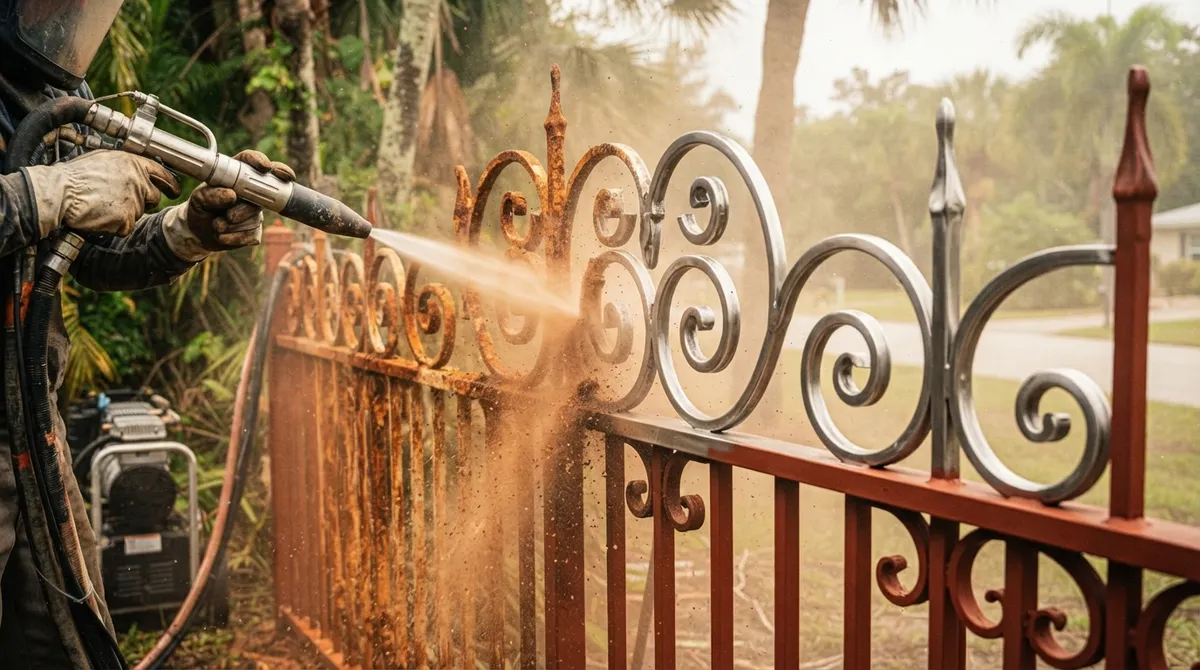
Professional mobile blasting is the most effective solution for fences with heavy rust, peeling paint, or intricate scrollwork that hand tools and power sanders cannot properly reach.
-
Match the blasting method to your fence type: use gentler soda or wet blasting for delicate scrollwork, standard dry blasting for heavy rust on sturdy sections, and wet blasting near pools or glass to control dust.
-
Rust removal requires addressing the entire system including loose paint layers, mill scale, grease buildup, and pitting—not just visible orange spots—for a long-lasting restoration.
-
After blasting, follow industry surface prep standards (SP-6 or SP-10 per AMPP guidelines) and apply primer and topcoat within the manufacturer’s recommended recoat window to ensure durability.
-
Older paint may contain lead and abrasive blasting creates silica dust; professional crews have proper respiratory protection and containment to safely handle these health hazards.
Rust on a wrought iron fence has a way of creeping up on you. One season it’s a few orange spots near the bottom rail. The next, it’s flaking paint and pitted metal that makes your whole yard look tired. If you’re searching for how to remove rust from a wrought iron fence, you’re probably standing outside right now, coffee in hand, wondering if the fence can be saved. Good news: it usually can.
Here in Tampa Bay and across central Florida, our humid air and salty breezes are rough on iron. Rust doesn’t just sit on top of the metal, it works its way into seams, scrolls, and joints. That’s why simple scrubbing often isn’t enough. This guide walks you through seven real ways to tackle rust, from small DIY fixes to full mobile abrasive blasting, so you can pick the right one for your fence. We’ll also cover safety, cost, and what happens after the rust is gone. Let’s get your fence looking sharp again.
Why Wrought Iron Fences Rust So Fast in Florida
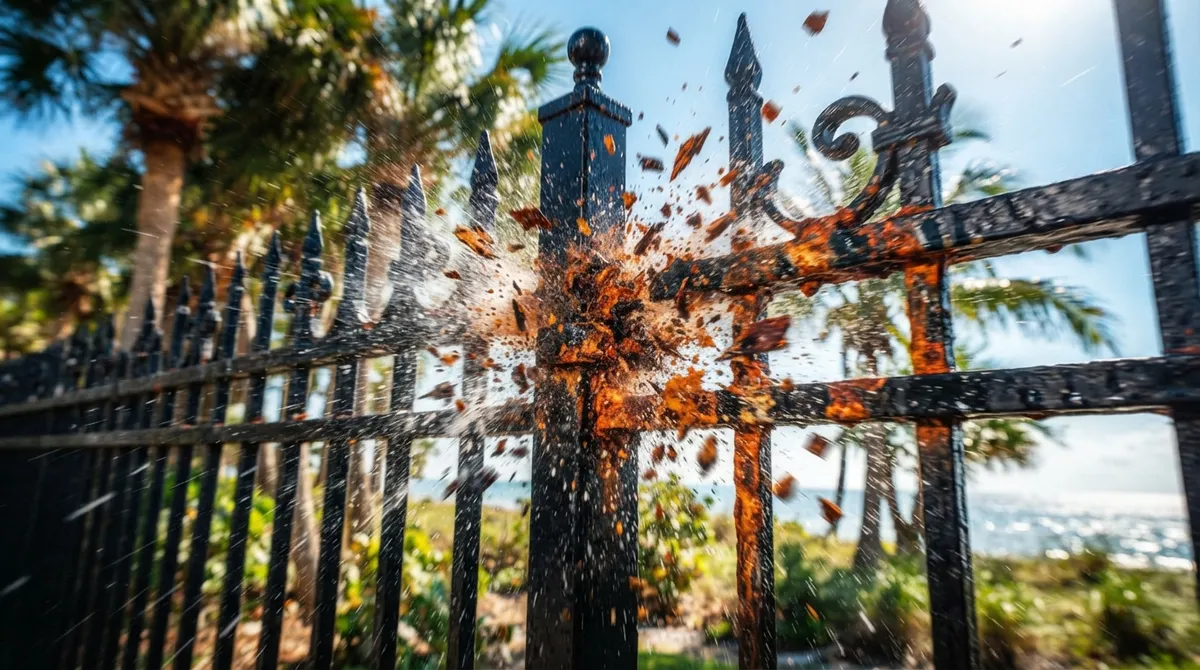
Florida weather is basically a rust factory. Humidity, rain, and salty air near the coast all speed up corrosion. Add in sprinkler overspray and pollen buildup, and you’ve got a recipe for orange streaks within just a couple years of a new paint job.
Rust isn’t only a cosmetic problem either. Left alone, it eats into the metal itself, weakening rails, pickets, and welded joints. That’s why addressing it early, and doing it right, matters so much for the life of your fence.
What’s Really Under That Rust
When people ask how to remove rust from a wrought iron fence, they’re often picturing just the orange spots. But there’s usually more going on underneath:
- Loose or peeling paint layers, sometimes several coats deep
- Mill scale left over from how the iron was originally made
- Grease, pollen, and dirt trapped in decorative scrollwork
- Failed or chalky old primer
- Rust that has already started pitting the surface
A proper fix addresses the whole system, not just the visible rust spots.
7 Ways to Remove Rust From a Wrought Iron Fence
1. Hand Sanding and Wire Brushing
For light surface rust on a small section, hand tools can work. A wire brush, sandpaper, or a rust-removal pad can knock off flaky spots before you prime and paint. This is the cheapest option and fine for touch-ups.
The downside? It’s slow, tiring, and easy to miss rust hiding in scrolls, corners, and joints. If your fence has a lot of decorative ironwork, hand tools often leave rust behind in places you can’t reach well.
2. Power Tool Cleaning (Grinders and Wire Wheels)
Angle grinders with wire wheel attachments speed things up compared to hand sanding. This approach lines up with what AMPP calls SP-3 power tool cleaning, a recognized standard for prepping metal before coating.
Power tools work well on flat rails but struggle on ornate scrollwork, finials, and tight curves. They can also leave grinding marks or thin out already weak metal if you’re not careful.
3. Chemical Rust Removers
Rust-dissolving gels and liquids can help loosen corrosion, especially in cracks and seams. They’re useful for small spot treatments but usually need multiple applications on heavier rust.
Keep in mind chemical removers can affect nearby plants, grass, and pavers if they drip or run off. They also don’t remove old paint, so you may still need another method underneath.
4. Dry Abrasive Blasting
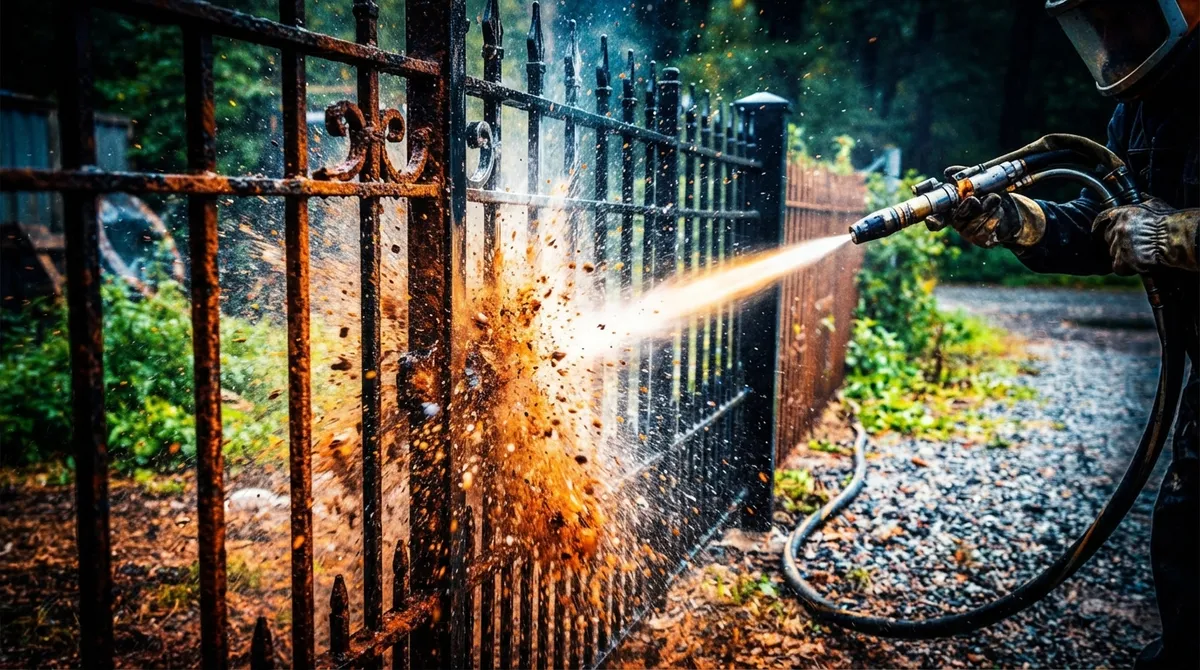
This is where things start to get serious for fences with widespread rust, peeling paint, or years of neglect. Dry abrasive blasting uses pressurized air to fire abrasive media at the metal, stripping rust, paint, and mill scale down to bare metal fast. If you’re unfamiliar with the process, what is sandblasting is a good place to start.
Dry blasting is efficient, but it does create dust. That’s why containment and protection of nearby landscaping, glass, and vehicles matters so much on a residential job.
5. Wet or Dustless Blasting
Wet blasting, sometimes called dustless blasting, introduces water into the media stream to knock dust down significantly. This is a smart choice for fences near pools, windows, or tight residential lots where dust control is a priority.
It’s gentler on surrounding surfaces while still stripping rust and old coatings effectively. Many homeowners in Tampa, Clearwater, and Sarasota prefer this method because it keeps the mess contained.
6. Soda Blasting for Delicate Ironwork
Soda blasting uses a softer media, which makes it a good option for older or more fragile wrought iron with delicate scrollwork. It removes rust and coatings without being as aggressive as harder abrasives, reducing the risk of warping thin metal.
This method won’t always be enough for heavy, deep pitting, but it’s a great fit for fences that need a gentler touch.
7. Full Mobile Abrasive Blasting Service
For fences with heavy rust, multiple paint layers, or hard-to-reach decorative details, professional mobile blasting is usually the most effective and efficient answer. A mobile rig can come straight to your property, so there’s no need to remove sections of fence or haul anything to a shop.
This is exactly the kind of work we handle at Blastworx. We match the blast to your surface, not the other way around, using softer or stronger media depending on how thick and how far gone the rust is. We come to you, fully mobile and self-contained, and we contain the mess so your landscaping, pool, and driveway stay protected.
Comparing the Rust Removal Methods
| Method | Best For | Dust Level | Speed |
|---|---|---|---|
| Hand Sanding | Small spots, light rust | Low | Slow |
| Power Tools | Flat sections | Moderate | Moderate |
| Chemical Removers | Cracks and seams | Low | Slow |
| Dry Blasting | Heavy rust, full fences | High | Fast |
| Wet/Dustless Blasting | Fences near pools or glass | Low | Fast |
| Soda Blasting | Delicate scrollwork | Low-Moderate | Moderate |
| Mobile Blasting Service | Ornate, heavily rusted, large fences | Controlled | Fast |
How Professionals Decide on Surface Prep Standards
If you’ve never heard the terms SP-6 or SP-10, don’t worry, most homeowners haven’t either. These are surface preparation standards from AMPP, the coatings industry authority, that describe how clean bare metal needs to be before painting.
- SP-7/NACE No. 4 is a light brush-off blast, mostly removing loose material.
- SP-6/NACE No. 3 is commercial blast cleaning, a common target for exterior iron.
- SP-10/NACE No. 2 is near-white metal blasting, allowing only about 5% random staining per evaluated area.
- SP-5/NACE No. 1 is white metal blasting, the strictest standard with no visible staining allowed at all.
Most exterior coating systems for a fence call for something around SP-6 or SP-10. The exact level should come from the paint or primer manufacturer’s technical sheet, not a guess.
What Happens After the Rust Is Gone
Removing rust is only half the job. Bare iron can flash rust again within hours, especially in Florida’s humidity. That’s why timing matters just as much as the blasting itself.
Steps After Blasting
- Inspect the metal for pitting, thin spots, or weld damage.
- Remove all dust and abrasive residue from the surface.
- Apply a rust-inhibiting primer within the coating manufacturer’s recoat window.
- Add one or two coats of a durable exterior topcoat.
- Check the anchor profile against the primer’s technical data sheet if a high-performance coating is being used.
Skipping straight to paint without a proper primer, or waiting too long after blasting, is one of the most common reasons a “fixed” fence rusts again within a year.
Safety Considerations You Shouldn’t Skip
Abrasive blasting isn’t just about making things look nice, it also involves real safety considerations, especially around dust and old coatings.
- Older paint layers may contain lead, which requires special handling procedures
- Silica dust from certain abrasives is a known health hazard
- OSHA sets an action level of 25 micrograms per cubic meter for respirable silica, with a permissible exposure limit of 50 micrograms per cubic meter over an 8-hour day, according to OSHA’s respirable crystalline silica guidance
- Proper respiratory protection, containment, and training are required for workers doing this type of job
- Nearby landscaping, pools, windows, and vehicles need physical protection during blasting
This is one more reason DIY blasting on a large fence isn’t always the best idea. A properly insured, trained crew knows how to manage these risks so your property, and your health, stay protected.
Should You DIY or Call a Professional?
Small rust spots on a short fence section are a reasonable weekend project. But once rust covers large areas, paint is peeling in sheets, or you’re dealing with ornate ironwork, professional help usually saves time, money, and frustration.
Signs You Need Professional Mobile Blasting
- Rust covers more than a small section of the fence
- Old paint is flaking or bubbling in multiple spots
- The fence has intricate scrollwork that’s hard to reach by hand
- You’re unsure whether old coatings might contain lead
- You want a long-lasting result instead of a temporary fix
If any of these sound familiar, it’s worth reaching out for a professional opinion before you spend a weekend with sandpaper and regret.
What to Ask a Mobile Blasting Contractor
Not every blasting company handles residential fences the same way. Before hiring anyone, it helps to ask a few direct questions.
- What media will you use on my specific fence?
- How will you protect my landscaping, pool, windows, and vehicles?
- Do you use dust control methods like wet or soda blasting?
- What surface prep standard are you targeting?
- How soon after blasting will primer be applied?
- Are you fully insured?
- Can I see examples of past fence restoration work?
A contractor who answers these clearly and confidently is one you can trust with your property. You can browse examples of completed work in our project gallery to see this kind of care in action.
Why Homeowners Across Central Florida Choose Mobile Blasting
Whether you’re in Tampa, Clearwater, Sarasota, or out toward Ocala and Orlando, the challenge is the same: humidity and salt air eat away at iron fast. Mobile blasting solves this without the hassle of removing your fence or hauling it anywhere.
We bring our fully self-contained rig straight to your property, whether that’s a driveway in Riverview or a backyard in Brandon. We protect the surrounding area, blast the fence back to clean, sound metal, and leave it ready to prime and coat. If your fence needs more than just rust removal, take a look at our guide on how to restore wrought iron railings the right way for the full picture on finishing touches.
We also work on more than just fences. If you’ve got other metal or masonry projects in mind, check out our pages on residential blasting, commercial blasting, or our full service areas across central Florida.
Real Results Speak Louder Than Promises
We’re proud of the work we do, and we think our customers say it best. You can visit us on Google and see what our customers are saying about us before you decide who to trust with your fence. When you call us, you’re talking directly to the people doing the work, not a call center reading from a script.
Ready to Bring Your Fence Back to Life?
Rust doesn’t have to win. Whether your wrought iron fence has a few stubborn spots or years of buildup, there’s a method here that fits your situation. And if the job feels bigger than a weekend project, we’re happy to help.
Reach out today to get a free estimate for your fence restoration project, or give us a call to talk through your options. We come to you, we protect your property, and we leave your fence ready for the next step.
FAQs
Q: Is mobile abrasive blasting safe for a wrought iron fence?
A: Yes, when the media and pressure are matched to your fence’s condition. A skilled crew will pick softer media for delicate scrollwork and stronger abrasives for heavy rust, so the iron stays intact while the rust disappears.
Q: What blasting media works best for removing rust from wrought iron?
A: It really depends on the fence. Soda or garnet media is gentle enough for ornate details, while stronger recyclable abrasives handle thick rust and multiple paint layers on sturdier sections.
Q: How soon should a wrought iron fence be primed after blasting?
A: As soon as possible, ideally the same day. Bare iron can flash rust quickly in Florida’s humidity, so priming within the coating manufacturer’s recommended window really matters.
Q: Can blasting damage thin or decorative wrought iron?
A: It can if the wrong media or pressure is used, which is exactly why we match the blast to your surface, not the other way around. A gentler approach like soda blasting protects delicate scrollwork while still clearing out the rust.
Q: How much does it cost to have a wrought iron fence blasted and repainted?
A: Costs vary based on fence length, rust severity, and how ornate the ironwork is. The best way to get a real number is to request a free estimate, since every fence and every property is a little different.





