
Key Takeaways
-
Solvent cleaning (SSPC-SP 1) must happen before any blasting to remove oil and grease; skipping this step spreads contamination and traps it under the new coating, causing premature failure.
-
Mobile abrasive blasting creates a uniform, adjustable surface profile that hand tools cannot match, resulting in consistent coating adhesion and preventing peeling within months in humid climates like Florida.
-
Choose SSPC-SP 10 (near-white metal, 95% clean) for coastal and harsh-weather structural steel; SSPC-SP 6 (brush-off blast) works only for general, non-exposed applications with less demanding coatings.
-
Freshly blasted steel is vulnerable to flash rust within hours in humid conditions; use forced-air drying and apply coating immediately after blasting to prevent having to redo the entire prep process.
-
Select the right abrasive media based on rust severity and coating requirements; steel shot handles heavy rust fast, while dustless blends work better for occupied sites and sensitive environments.
-
Mobile blasting units eliminate the need for on-site power or water hookups and cover large structural areas like beams and columns far faster than hand sanding, which typically misses rust in seams and corners.
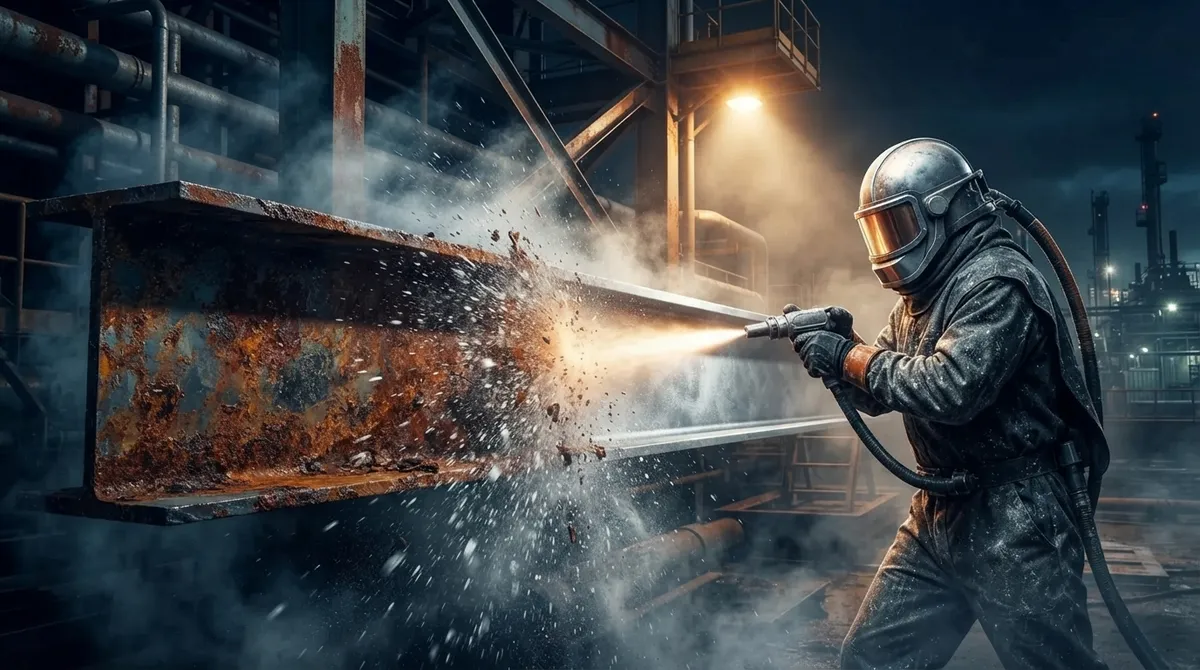
If you’ve ever watched paint peel off structural steel in just a year or two, you already know the truth: the coating is only as good as what’s underneath it. Prepping structural steel for coating isn’t a step you skip or rush, especially here in Florida where heat, humidity, and salt air chew through weak prep jobs fast. Whether it’s beams for a new build, a warehouse frame, or dock pilings, getting the surface right the first time saves you money and headaches down the road.
So how do you actually prep structural steel for coating? The short answer is abrasive blasting, but there’s a lot more nuance to it than pointing a hose and pulling a trigger. In this guide, we’re comparing the two most common approaches, hand tool prep versus mobile abrasive blasting, so you can see exactly why one wins out for most jobs. We’ll also walk through the standards, the steps, and the answers to questions we hear all the time from folks in Tampa, Orlando, Ocala, and everywhere in between.
Why Structural Steel Needs Special Prep Before Coating
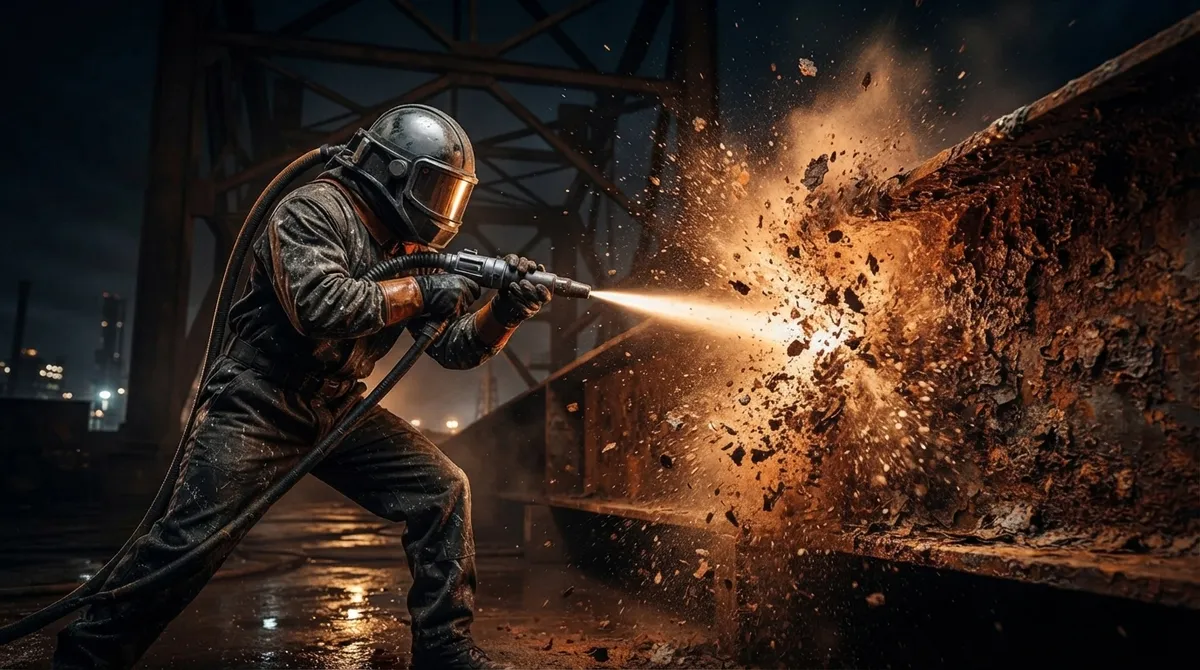
Structural steel doesn’t come out of the mill or off a job site clean. It usually has mill scale, rust, oil residue, and sometimes old paint clinging to it. None of that plays nice with a fresh coating. Paint, primer, and powder coat all need a clean, slightly rough surface to grab onto. Skip the prep, and you’re basically gluing a sticker onto a dusty table. It might hold for a while, but it won’t last.
According to what is sandblasting resources, abrasive blasting works by propelling small particles at high speed to strip away contaminants and create texture on the surface. That texture, called a surface profile, is what gives coatings something to mechanically bond to. Without it, even the best paint job will bubble, peel, or flake within a season or two, especially in a humid climate like ours.
The Non-Negotiable First Step: Solvent Cleaning
Before any blasting happens, the steel needs a solvent wipe-down. This step is officially called SSPC-SP 1, and it’s not optional. Oil, grease, and other soluble junk have to come off first using something like acetone or mineral spirits. If you skip this and blast right over grease, you just spread it around and trap it under your new coating.
- Removes oil, grease, and dirt that abrasives can’t touch
- Prevents contamination from spreading during blasting
- Sets up the steel for a clean, consistent blast pattern
- Required by nearly every major coating standard, including SSPC and ISO
Hand Tool Prep vs. Mobile Abrasive Blasting
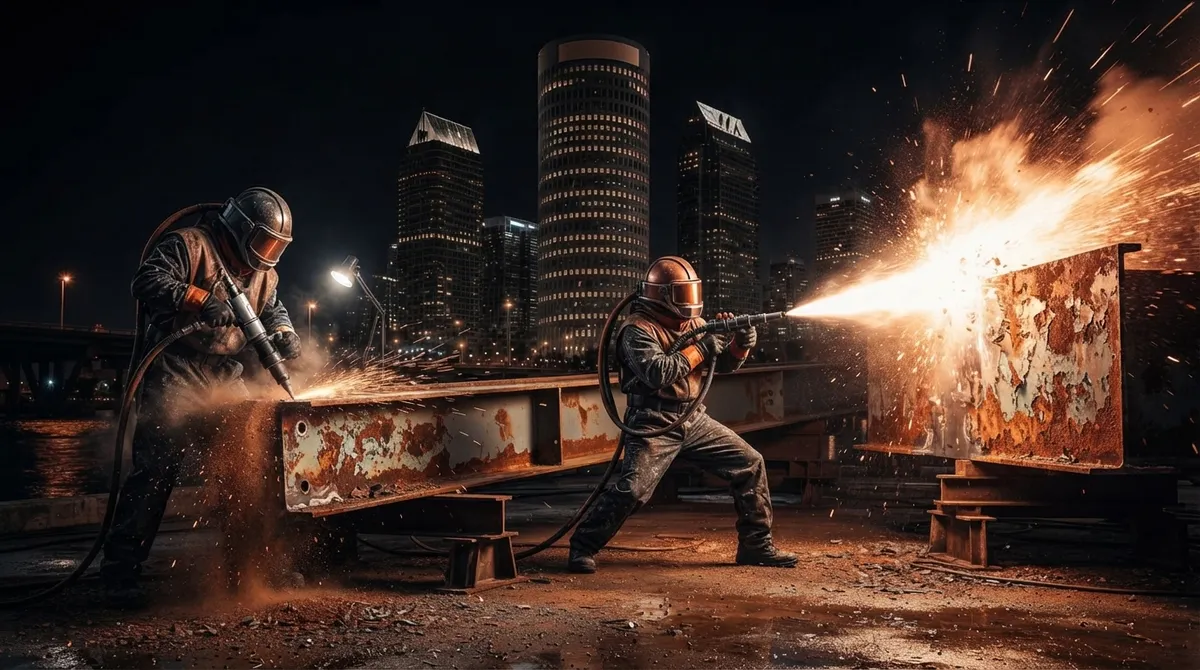
Now let’s get into the real comparison. When it comes to prepping structural steel for coating, most contractors choose between manual hand tools (wire brushes, grinders, sanders) or mobile abrasive blasting. Both can technically get the job done, but they are not equal in speed, quality, or long-term results.
| Factor | Hand Tools | Mobile Abrasive Blasting |
|---|---|---|
| Speed | Slow, labor-intensive | Fast, covers large areas quickly |
| Surface Profile | Inconsistent, shallow | Uniform, adjustable depth |
| Rust in Seams/Corners | Often missed | Reaches tight spots easily |
| Coating Adhesion | Lower, uneven | Higher, consistent bond |
| On-Site Convenience | Yes, but slower | Yes, fully mobile setup |
| Best For | Small touch-ups | Full structural steel projects |
Hand sanding and wire brushing have their place for tiny touch-ups, but they miss rust hiding in seams, bolt holes, and corners. Blasting takes the whole surface back to clean, sound material all at once. That’s a big deal when you’re prepping beams, columns, or trusses that need to hold up for decades.
The Standards That Matter: SSPC-SP 6 vs. SSPC-SP 10
Not every job needs the same level of cleanliness. That’s where SSPC standards come in. These are the visual benchmarks contractors and inspectors use to confirm the steel is ready for coating.
SSPC-SP 6: Brush-Off Blast
This is a lighter cleaning standard. It allows tightly adherent mill scale and rust to stay put, as long as all loose material is gone. Random staining is fine too, as long as it doesn’t cover more than 33 percent of any given area. This standard works well for coatings that aren’t super picky about surface cleanliness.
SSPC-SP 10: Near-White Metal
This is a much stricter standard, and it’s common for high-performance coatings or structures exposed to harsh conditions, like coastal steel here in Florida. At least 95 percent of every square inch must be free of all visible rust, scale, and residue. Only slight staining is allowed. This is the standard you want for steel that’s going to face salt air, humidity, and heavy weather year-round.
- Identify the coating system being used and its surface prep requirements
- Determine the exposure environment (indoor, coastal, industrial)
- Choose SP 6 for general protection or SP 10 for high-performance systems
- Confirm the standard with your coating manufacturer’s spec sheet
- Document the finished surface with photos for quality records
For a deeper look at how these standards apply to real Florida job sites, check out our post on 7 structural steel blasting facts Florida owners need. It breaks down what local conditions mean for your prep choices.
The Step-By-Step Process We Use for Structural Steel Prep
Here’s how a mobile blasting job typically goes when we’re prepping structural steel for coating out in the field, whether that’s a warehouse in Tampa or a fabrication yard in Ocala.
- Walkthrough and assessment. We look at the steel, check for oil, rust severity, and figure out the right media for the job.
- Solvent cleaning. Any oil or grease gets wiped down before blasting starts.
- Containment setup. We protect the surrounding area, especially important on active job sites or near other equipment.
- Blasting. We match abrasive type and pressure to the steel and the coating spec, working the surface until it hits the required standard.
- Inspection. We check the surface profile and cleanliness against SSPC-SP 6 or SP 10 requirements.
- Dry-off. Moisture gets removed fast to prevent flash rust before the coating goes on.
We match the blast to your surface, not the other way around. That means using dustless blasting for indoor or active job sites, and stronger media when the rust is stubborn. It’s all about getting the steel ready to prime and coat without wasting time or media.
Choosing the Right Abrasive Media for Structural Steel
Not all abrasives are created equal, and picking the wrong one can slow down the job or damage the steel. Here’s a quick rundown of common options.
- Steel shot or grit: Aggressive, fast, ideal for heavy rust and mill scale removal
- Sand: Effective and affordable, though dustier and requires more containment
- Soda: Gentler option, good for lighter contamination without changing the profile too much
- Garnet: Sharp and durable, works well for a deep, aggressive profile
- Dustless media blends: Great for indoor or occupied sites where airborne dust needs to stay low
The right media for the job depends on the coating system, the steel’s condition, and the environment you’re working in. This is exactly why a walkthrough matters before any blasting starts.
Preventing Flash Rust After Blasting
Here’s something a lot of folks don’t realize: freshly blasted steel is actually more vulnerable to rust, not less. Once that mill scale and old rust are gone, bare metal is exposed and reacts fast with humidity in the air. In Florida, that can happen within hours if you’re not careful.
Forced-air drying, heat sources, and quick coating application all help prevent flash rust from ruining your prep work. Waiting too long between blasting and coating means you might have to redo the whole thing. This is one more reason mobile blasting crews who show up ready to work efficiently matter so much, timing is everything once that bare metal is exposed.
When Wet Blasting Makes Sense
Dry shot blasting is the industry favorite for structural steel because it removes contaminants and builds surface profile at the same time. But wet blasting, including waterjetting at pressures of 10,000 psi or higher, has its place too. It’s especially useful for reducing dust on sensitive sites or when lead paint removal is a concern.
That said, wet methods usually require extra drying time and more attention to flash rust prevention. For most structural steel jobs across Tampa Bay, dry blasting remains the faster, more practical choice, but we’re happy to talk through your specific project needs.
Why Mobile Blasting Wins for Structural Steel Projects
At the end of the day, the comparison between hand tools and mobile abrasive blasting isn’t really close for structural steel prep. Blasting is faster, more thorough, and gives you a consistent surface profile that hand sanding just can’t match. Plus, mobile units come to you, fully mobile and self-contained, without needing your power or water hookups.
We’re fully insured, and when you call, you talk to the people doing the work, not a call center reading from a script. That kind of direct communication matters when you’re trying to nail down specs like SSPC-SP 10 for a coastal project or figure out timing between blasting and coating.
Curious what other Tampa Bay businesses have experienced? You can visit us on Google — see what our customers are saying about us before you decide who handles your next steel prep job. We serve Tampa, Clearwater, Sarasota, Ocala, Orlando, Fort Myers, and the towns in between, including Brandon, Riverview, and Plant City.
For related reading on surface prep before coating jobs, check out our guide on 14 surface prep steps before commercial coating. It covers a broader range of surfaces beyond just structural steel.
Ready to Get Your Steel Prepped Right?
Prepping structural steel for coating isn’t the place to cut corners. The standards exist because coatings fail fast on dirty, poorly profiled steel, and replacing a failed coating job costs way more than doing the prep right the first time. Whether you need SSPC-SP 6 for general protection or SSPC-SP 10 for high-performance coastal coatings, mobile blasting gets you there faster and more consistently than hand tools ever could.
If you’ve got structural steel that needs to go from rusty and rough to ready for the next step, we’d love to help. Get a free estimate today, or give us a call to talk through your project. We come to you, anywhere across the central Florida corridor, and we bring the right media for the job every single time.
FAQs
Q: What is the difference between SSPC-SP 6 and SSPC-SP 10 for structural steel?
A: SSPC-SP 6, or brush-off blast, allows tightly stuck rust and mill scale to stay as long as loose stuff is gone. SSPC-SP 10, near-white metal, is much stricter, requiring at least 95 percent of the surface free of visible residue. We usually recommend SP 10 for coastal Florida projects facing salt air and heavy weather.
Q: Why is solvent cleaning required before abrasive blasting on structural steel?
A: Oil and grease don’t come off with abrasive blasting alone, and blasting over them just spreads the contamination around. That’s why solvent cleaning, or SSPC-SP 1, always happens first. It sets the steel up for a clean, even blast pattern that actually gets the job done right.
Q: How does surface profile affect coating adhesion on mobile blasted steel?
A: Surface profile is basically the texture blasting creates on the steel, kind of like tiny hills and valleys. Coatings need that texture to mechanically grip the surface. Without it, paint or primer just sits on top and tends to peel or flake much sooner.
Q: How do you prevent flash rust after mobile blasting structural steel?
A: Freshly blasted steel is actually more prone to rust because the protective scale is gone and bare metal is exposed. We use forced-air drying and try to coat the steel as soon as possible after blasting, especially important here in Florida’s humidity. Waiting too long can mean starting the whole prep process over again.
Q: Can wet blasting be used instead of dry shot blasting for structural steel prep?
A: Yes, wet blasting and waterjetting are options, especially for dust-sensitive sites or lead paint concerns. That said, dry shot blasting is usually faster and more practical for most structural steel jobs we see across Tampa Bay. We’re happy to talk through which method fits your specific project.





