Key Takeaways
-
Match the blasting media to the part: aluminum oxide or crushed glass suits heavy frames, while soda or glass beads are safer for thin body panels prone to warping.
-
Blasting reveals hidden pinholes, old repairs, and filler-masked damage, so expect to find issues and plan repairs before painting.
-
Prime bare steel immediately after blasting, since humidity and salt air can cause flash rust within hours.
-
Ask any blaster how they control dust, collect spent media, handle possibly lead-based old paint, and whether they carry insurance.
-
Mobile blasting avoids transport costs and lets you do frames, wheels, and body panels in one visit without hauling parts across town.
-
Silica sand is rarely the best choice today because it creates respirable dust hazardous to lungs, with OSHA setting strict exposure limits.
You found the classic car of your dreams. Maybe it is a rusty C10 pickup, a ’67 Mustang with bubbling quarter panels, or a hot rod frame that has seen better decades. Now you need to get it down to clean, bare metal before any new paint can go on. That is where sandblasting automotive restoration comes in.
Here is the good news. Modern mobile blasting makes this job far easier than it used to be. A crew brings the equipment to your driveway or shop, strips the rust and old coatings, and leaves the metal ready for primer. No tow truck. No hauling parts across town.
But there is a right way and a wrong way to do it. Thin sheet metal can warp. Hidden rust can show up. Dust and old paint need to be handled safely. This guide walks you through how it all works, what to ask before you hire anyone, and how to protect your project from start to finish.
What Sandblasting Means in Automotive Restoration
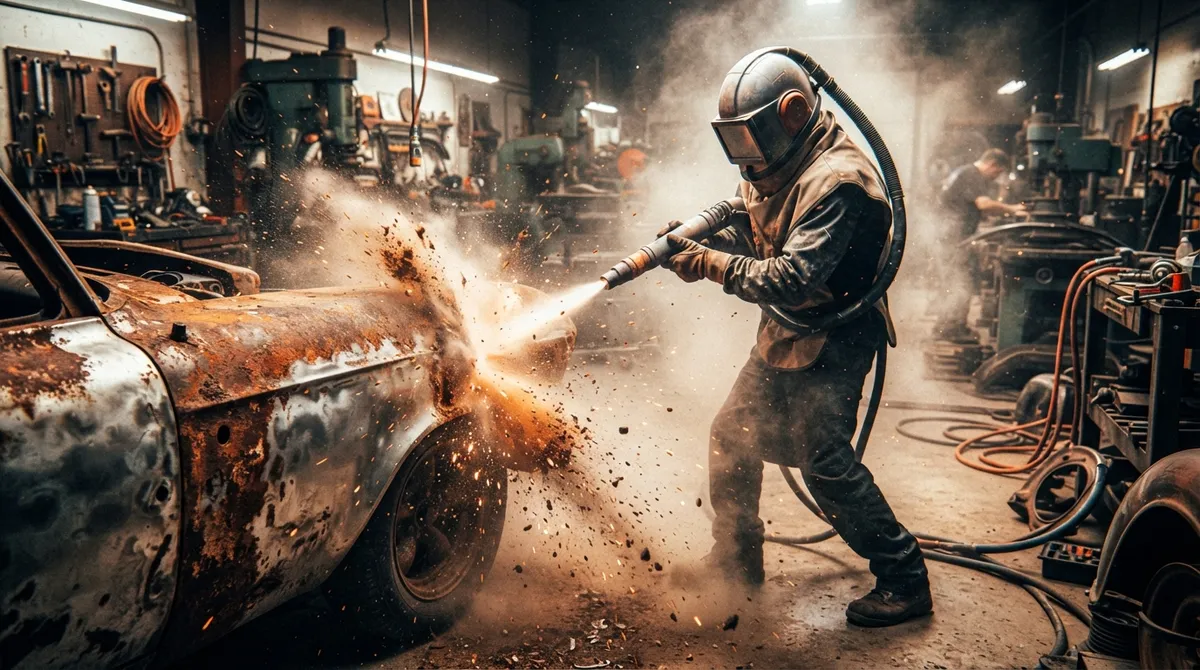
In the car world, “sandblasting” is a catch-all word. Most people use it to describe any abrasive blasting that strips paint, rust, scale, and filler from metal. If you want the textbook definition, here is a quick look at what is sandblasting and how the process started.
Here is the twist. True silica sand is rarely the best choice today. It breaks down into fine dust that is hard on lungs, and it is not the only tool for the job. Today’s blasters choose from many types of media, and the best one depends on your car, your metal, and your goal.
The point of blasting is simple. A coating is only as good as the surface underneath it. Paint, primer, and powder coat will not last if rust is hiding in the seams. Blasting takes the whole surface back to clean, sound material at once. That gives the next coat something solid to grab onto.
Why Go Mobile for Car Restoration
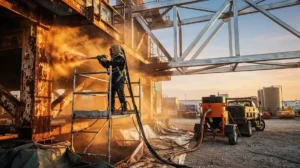
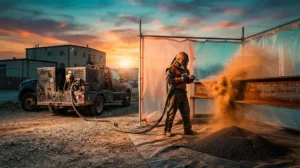
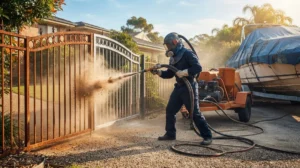
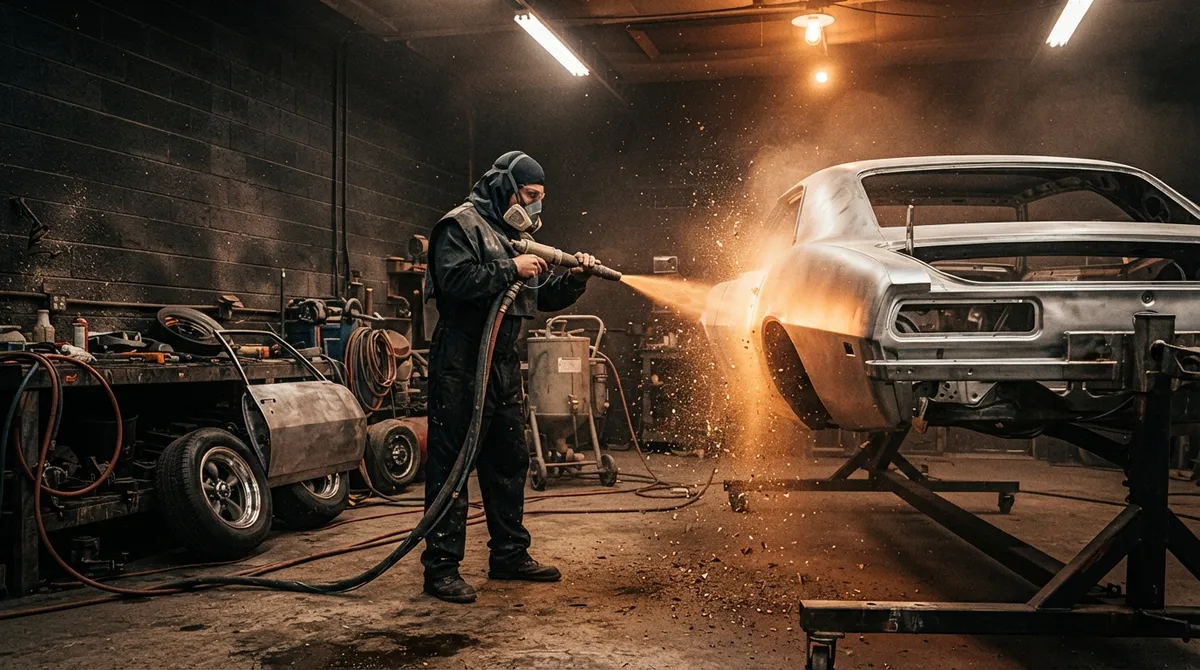
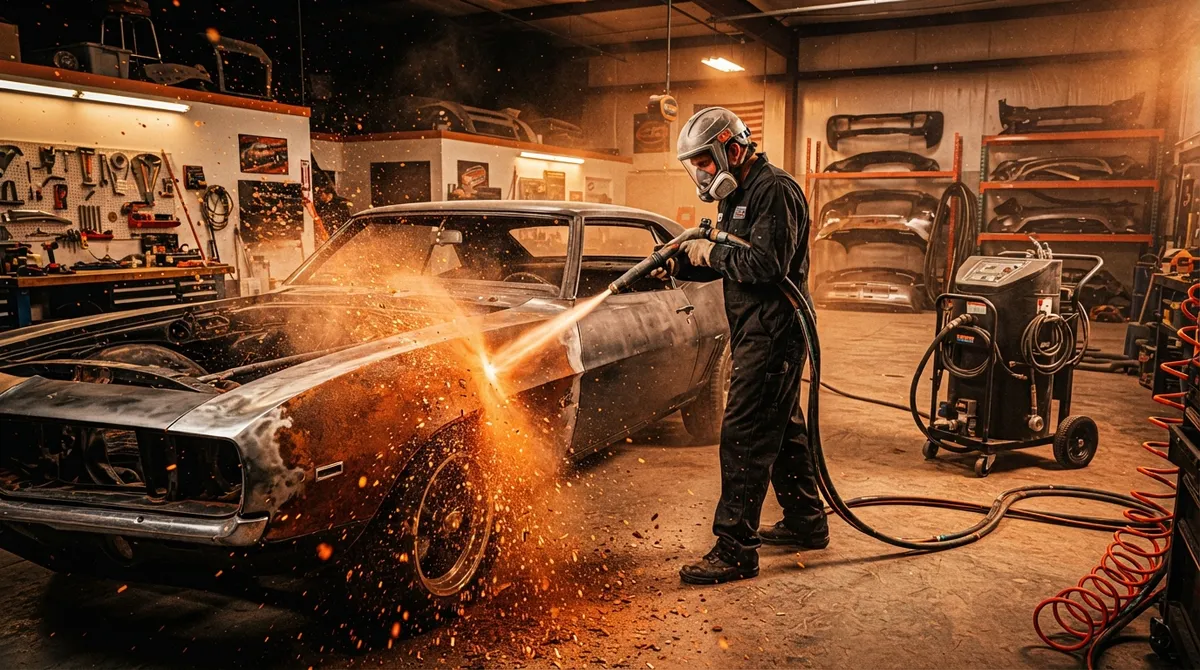
Mobile blasting means the equipment comes to the vehicle. At Blastworx, we come to you. Our rig is fully mobile and self-contained, so we do not need your power or water. We can work in a driveway, at a body shop, or on a job site.
Why does this matter for car projects? Here are the big wins:
- No transport hassle. A non-running project car or a heavy frame does not need to be trailered anywhere.
- You stay in control. You can watch the work and talk with the crew as it happens.
- Faster turnaround. Skip the drop-off line and the shop backlog.
- One visit, many parts. Frames, wheels, suspension pieces, and body panels can all be done in the same trip.
If you are weighing your options, our guide on mobile vs. shop sandblasting breaks down the tradeoffs in plain language. You can also read why mobile sandblasting is Tampa’s go-to fix for a local view.
Choosing the Right Media for Your Car
This is the most important decision in the whole job. We match the blast to your surface, not the other way around. The right media for the job protects your metal and still gets the coating off.
Each type of media cuts differently. Some are aggressive and fast. Others are gentle and slow. Here is a simple comparison.
| Media Type | Cutting Action | Best For | Watch Out For |
|---|---|---|---|
| Aluminum oxide | Aggressive | Frames, heavy rust, thick coatings | Can profile thin metal too much |
| Crushed glass | Medium-aggressive | Rust and paint on sturdy steel | Not ideal for thin panels |
| Glass beads | Mild | Cleaning parts, light finishing | Slow on heavy rust |
| Garnet | Medium | General stripping on thicker steel | Needs good dust control |
| Soda (sodium bicarbonate) | Gentle | Paint on delicate panels, aluminum, fiberglass | Does not remove heavy rust |
| Walnut shell or corn cob | Very gentle | Light cleaning, delicate parts | Will not cut heavy coatings |
Notice a pattern? Heavy frames can take a stronger abrasive. Thin body panels need lower pressure and softer, cooler media to help prevent warping. If you want a deeper look at one option, read aluminum oxide blasting vs. sand. For the gentle end of the scale, check out how to choose between soda blasting vs. sandblasting.
Can Blasting Warp Your Body Panels?
Short answer: yes, it can, if it is done wrong. Sheet metal on a car is thin. Hoods, roofs, doors, and quarter panels are the most at risk. Too much pressure, too much heat, or staying in one spot too long can stretch or ripple the steel.
A careful operator controls several things at once:
- Pressure. Lower pressure on thin panels, higher on heavy frames.
- Nozzle distance and angle. A steady, even pass keeps heat from building up.
- Dwell time. No lingering in one area.
- Work sequence. Moving around the panel helps spread out heat and stress.
For very delicate panels, the best move may be a softer method such as soda or a gentler media. A good contractor will tell you honestly when a panel needs a different approach. If you want to see how we think about this on other jobs, our post on 5 automotive sandblasting facts Florida owners need is a good next read.
What Blasting Can Remove From a Classic Car
Blasting is great at taking things down fast and thoroughly. It can remove:
- Old paint and multiple layers of coatings
- Surface rust and scale
- Undercoating and road grime
- Some body filler
- Stubborn buildup on suspension parts, wheels, and rims
It is far better than hand-sanding in one key way. Hand tools miss rust in seams, corners, and tight spots. Blasting reaches into those areas and takes the whole surface back to clean, bare metal. For more on this, see blasting vs. hand tools and how sandblasting for rust removal works on-site.
Expect Surprises: Hidden Damage Shows Up
Here is something every restorer should know. Blasting reveals the truth. Paint and filler can hide a lot. Once the coating is gone, you may see:
- Pinholes and thin, rusted-through spots
- Old repairs and patch panels
- Damaged or cracked seams
- Dents that were smoothed over with filler
Please do not be discouraged if this happens. It is actually a good thing. You would rather find these problems now than after you have spent money on paint. Knowing the real condition of the metal lets you plan repairs the right way.
Blasting can also push abrasive into cavities and openings. That is why masking, disassembly where it makes sense, and careful cleanup matter so much. Leftover media in a door, rocker, or frame rail can cause trouble later.
Safety, Dust, and Waste Matter
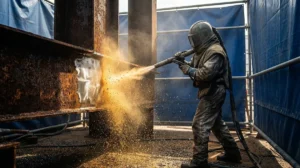
Mobile blasting has to be done responsibly. Dust, spent media, and old coatings do not just vanish. A professional crew plans for all of it.
Here are a few facts worth knowing. OSHA sets the permissible exposure limit for respirable crystalline silica at 50 micrograms per cubic meter of air over an 8-hour shift, with an action level of 25. The EPA also notes that silica sand can create a lot of dust as it breaks down during blasting. These numbers are one big reason many pros avoid plain silica sand.
Older cars may also have paint with lead or other toxic metals. That makes proper handling of debris even more important. OSHA guidance calls for hazard assessment, dust controls, training, and proper protective gear, including respirators used under a compliant program.
When you hire a mobile blaster, ask how they will:
- Protect nearby property, windows, and landscaping.
- Contain and control dust and debris.
- Collect spent media and coating residue.
- Handle and dispose of waste, especially if old paint may be hazardous.
- Follow local environmental and stormwater rules.
At Blastworx, we contain the mess and protect the surrounding area. We are also fully insured, which gives you extra peace of mind. For more on this topic, read how pros handle sandblasting dust control safely and 5 safe blasting procedures every mobile crew follows.
How to Prepare Before the Crew Arrives
A little prep goes a long way. Here is a simple checklist to get your project ready.
- Clear the space. Make sure the crew can reach the vehicle or parts easily.
- Remove what you can. Take off glass, trim, rubber seals, wiring, and anything that should not be blasted.
- Drain fluids. Empty gas tanks, oil, and coolant where needed.
- Move valuables. Keep nearby items, tools, and plants out of the work zone.
- Share your goals. Tell the crew what finish you want next, such as primer, paint, or powder coat.
We go into this more in 9 steps to prepare for sandblasting the right way.
After the Blast: Clean and Protect Fast
This part is critical. Bare steel is hungry for moisture. In Florida’s heat, humidity, and salt air, it can start to flash rust quickly. That means the clock is ticking once the blasting is done.
Here is what a smart post-blast routine looks like:
- Remove all leftover media. Blow out and vacuum cavities, seams, and openings.
- Wipe down the metal. Use a proper degreaser or surface cleaner to remove dust and oils.
- Inspect closely. Look for pinholes, thin spots, and repairs that need attention.
- Prime or protect quickly. Apply epoxy primer or another approved coating as soon as the surface is ready.
One note on coatings. Blastworx focuses on strip and prep. For automotive work, we mostly strip and prep only, though limited paint or sealer may be available depending on the project. Your painter or body shop will handle the final refinishing. Our job is to hand off a surface that is ready to prime and coat.
Questions to Ask Before You Hire
Not every blaster is the same. Before you sign on, ask these questions:
- What media will you use on my specific panels and frame?
- How do you prevent warping on thin sheet metal?
- How will you control dust and collect spent media?
- How do you handle old paint that might contain hazardous metals?
- Are you fully insured?
- Will I get a clear, written estimate?
The answers tell you a lot. A pro will explain things clearly and without pressure. You should always feel like you are talking to the people doing the work. For more ideas, see what you should know before hiring sandblasting services.
Our Simple Four-Step Process
Here is how a typical Blastworx project goes:
- Walkthrough. Send photos or we come look, and we figure out the right media for the surface.
- Free estimate. You get a clear, written estimate the same day. The price we give is the price you pay.
- Blast and strip. We protect the surrounding area, then blast the surface clean at your location.
- Ready to finish. The surface comes out clean and ready for the next step.
We serve Tampa, Clearwater, Sarasota, Ocala, Orlando, and Fort Myers, along with towns like Brandon, Riverview, Plant City, Lutz, and St. Pete. You can see our work on our automotive blasting page and browse real projects in our gallery. Curious what past customers think? Visit us on Google — see what our customers are saying about us.
Ready to Start Your Restoration?
A great restoration starts with great prep. When the metal is clean, sound, and protected, every coat that follows lasts longer and looks better. That is the whole point of sandblasting automotive restoration done right.
Whether you have a rusty frame, a stack of wheels, or a full classic project, we would love to help. Ready to move forward? Get a free estimate today, or give us a call at 813-380-8092. You can text too. We come to you.
FAQs
Q: What is the best blasting media for automotive restoration?
A: It depends on the part. Heavy frames can handle stronger media like aluminum oxide or crushed glass, while thin body panels do better with gentle options like soda or glass beads. We match the blast to your surface, not the other way around.
Q: Can sandblasting warp classic-car body panels?
A: It can if it is done wrong, since thin sheet metal heats up and stretches easily. A careful operator uses lower pressure, steady passes, and softer media on large panels like hoods, roofs, and doors to help prevent warping.
Q: How does mobile automotive blasting work, and what should I prepare?
A: We bring a fully self-contained rig to your driveway, shop, or job site, so we do not need your power or water. Just clear the work area, remove glass, trim, and seals where you can, and tell us what finish you plan to apply next.
Q: How soon should I prime after blasting?
A: As soon as possible. Bare steel can flash rust quickly in Florida’s humidity and salt air, so clean the surface, remove all leftover media, and get it primed or protected right away.
Q: Can blasting remove rust, paint, and body filler?
A: Yes. Blasting strips rust, paint, undercoating, and many types of filler back to clean, bare metal. It also reveals hidden pinholes and old repairs, so you know the true condition of the metal before you refinish.