Key Takeaways
-
Define your finish goal first (bare metal, light clean, or a coating spec), then share the surface material and the age and existing coating of the structure before requesting quotes.
-
Match the blasting method to the surface: dry abrasive suits thick steel and heavy rust, wet or dustless suits active or indoor sites, and soda or soft media suits thin or delicate metals.
-
Mobile blasting avoids hauling large or bolted items, and a self-contained rig means you don't need to supply power or water, which reduces downtime.
-
Ask contractors how they control dust, what respiratory protection they use, whether they test for lead or silica, and how they protect surrounding areas before hiring.
-
Confirm the contractor's plan for spent abrasive and removed coatings, since some waste may need testing and controlled collection rather than ordinary disposal.
-
Be cautious of unusually low quotes that skip containment or cleanup; compare written estimates for clear scope, media type, containment, cleanup, and proof of insurance.
Picking an industrial sandblasting company can feel like a big call. You have steel to protect, a deadline to hit, and a coating crew waiting on the next step. The wrong choice can mean damaged material, messy cleanup, or paint that peels in a year. The right one leaves you with clean, sound metal that is ready for what comes next.
Here is some good news. You do not have to haul heavy parts across town anymore. A mobile crew brings the blasting to your site. In this guide, we will walk through what these companies do, how to match the method to your surface, which safety rules matter, and how to compare quotes with confidence. Think of it as a friendly checklist you can use before you ever pick up the phone.
What an Industrial Sandblasting Company Actually Does
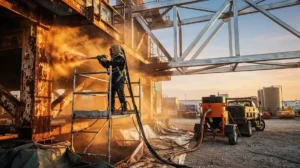
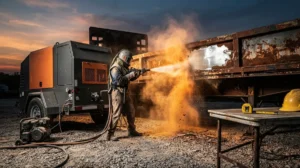
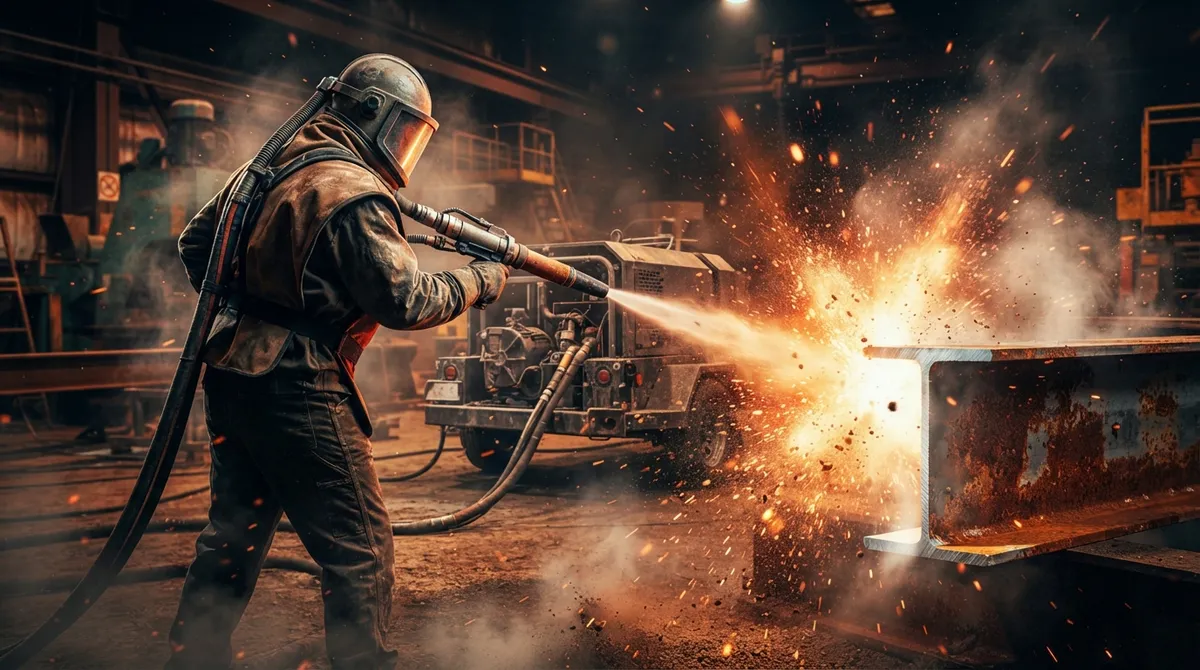
An industrial sandblasting company uses abrasive media to clean surfaces or prepare them for coating. The media is propelled against the surface to remove rust, old paint, mill scale, and other buildup. It also creates a surface profile, which is a light texture that helps new coatings stick.
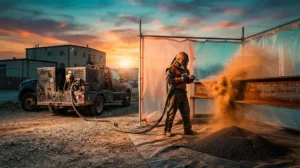
A mobile company does this at your location. Instead of loading tanks, frames, or steel onto a truck, the crew brings a self-contained rig to you. For a deeper look at the basics, see this overview of what is sandblasting. You can also read our guide on what commercial sandblasting is and how it works.
Typical industrial jobs include:
- Structural steel and beams
- Tanks, vessels, and pipe
- Heavy equipment and machinery
- Weld and fabrication prep
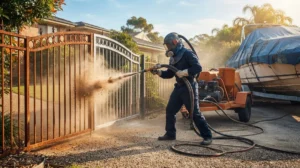
- Trailers, frames, and metal hardware
At Blastworx, we put it simply: a coating is only as good as the surface underneath it. Paint and protective coatings will not last if the prep is bad.
Why Mobile Beats Hauling Your Work to a Shop
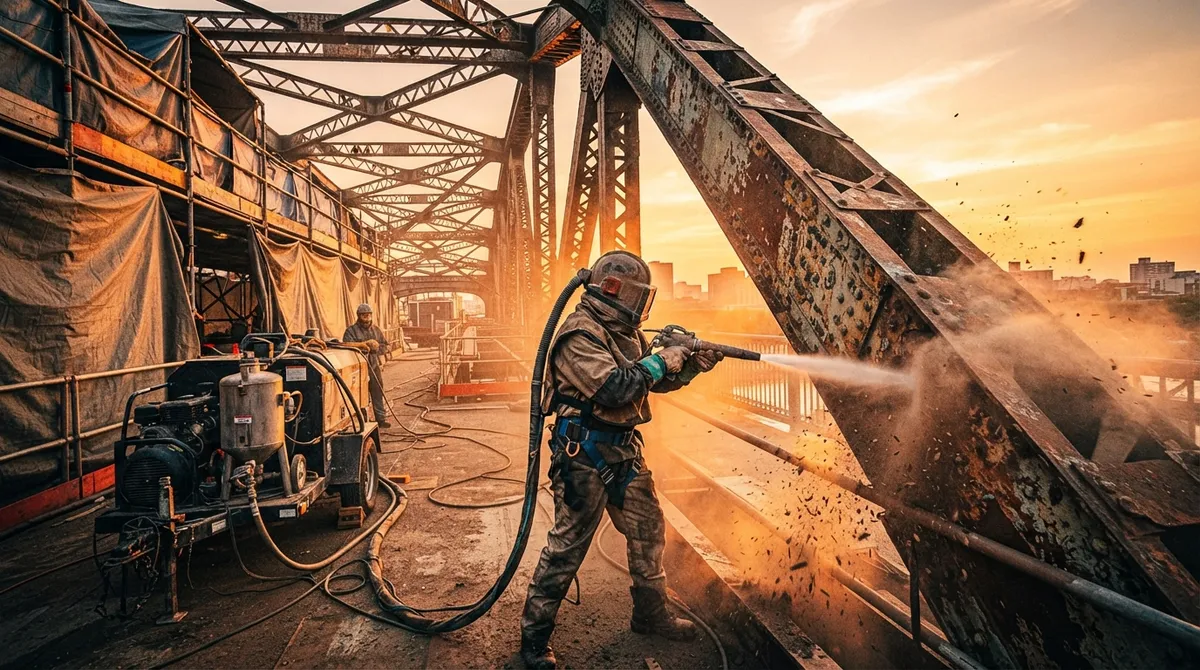
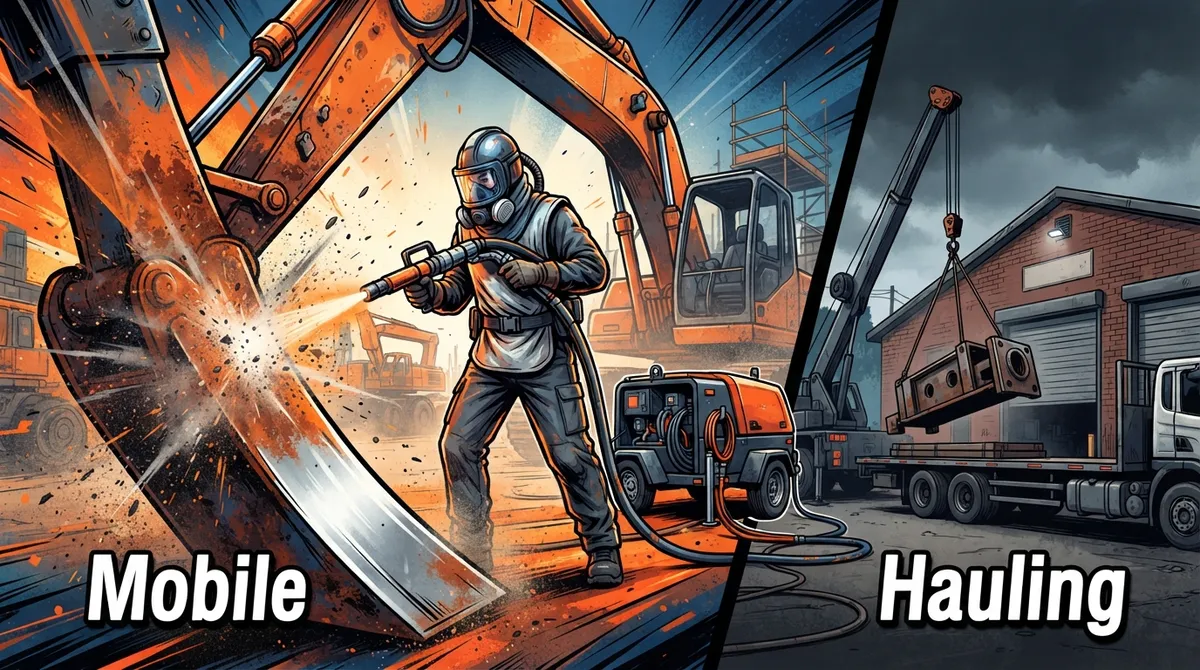
Shipping large items is slow and costly. Some things cannot be moved at all, like bolted structural steel, big tanks, or equipment bolted to a plant floor. A mobile industrial sandblasting company solves that problem because we come to you.
A fully mobile and self-contained rig also means you do not have to supply power or water. That keeps your schedule moving and cuts downtime. Want to see the tradeoffs side by side? Take a look at mobile rig vs. local shop to see which fits your project.
Here is a quick comparison.
| Factor | Mobile Blasting | Drop-Off Shop |
|---|---|---|
| Transport needed | None, the crew comes to you | You must haul or ship items |
| Large or fixed items | Handled on-site | Often not possible |
| Downtime | Usually lower | Includes travel and wait time |
| Power and water | Self-contained rig | Provided by the shop |
How to Choose an Industrial Sandblasting Company: Step by Step
Ready to start your search? Follow these steps in order. They keep you focused on what really matters.
- Define your goal. Do you need bare metal, a light clean, or a specific finish for a coating spec? Write it down first.
- Know your surface. Steel, aluminum, concrete, and wood all react differently. Tell the contractor what the item is made of.
- Ask about the existing coating. Old paint can hide lead or other hazards. Mention the age of the structure.
- Request a walkthrough. Photos or an on-site look helps the crew match the blast to your surface.
- Compare written estimates. Look for clear scope, media type, containment plans, and cleanup.
- Confirm insurance. A professional crew should be fully insured.
That first step is the one people skip most. When you know your finish goal, every other decision gets easier. Our guide on 9 steps to prepare for sandblasting the right way can help you get ready.
Match the Blast to the Surface
Here is where a good company earns its keep. We match the blast to your surface, not the other way around. Too aggressive, and you can pit or warp thin metal. Too gentle, and rust stays in the seams.
Dry Abrasive Blasting
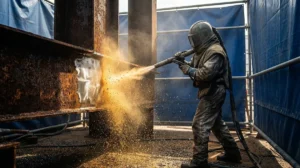
Dry blasting is fast and strong. It works well on thick steel, heavy rust, and mill scale. The tradeoff is more dust, so containment and ventilation matter. Our post on dry blasting vs. soda blasting for metal breaks down the differences.
Wet and Dustless Blasting
Wet methods add water to suppress dust. That makes them a great fit for active job sites, indoor work, and areas near other equipment. Dustless blasting is available for those spots. You can learn more in 5 things to know about wet sandblasting in 2026.
Soda and Softer Media
Soda and other soft media are gentle. They clean without cutting into delicate surfaces. They are a good fit for thin panels, aluminum, and parts that cannot take a hard hit. If you are unsure, read how to decide if soda blasting fits your surface.
| Method | Best For | Dust Level |
|---|---|---|
| Dry abrasive | Heavy rust, thick steel, mill scale | High, needs containment |
| Wet or dustless | Active sites, indoor work | Low |
| Soda or soft media | Thin or delicate surfaces | Low to moderate |
The right media for the job saves time and protects what is underneath. It is the single biggest choice in any blasting project.
Safety and OSHA: What a Good Contractor Follows
Abrasive blasting creates hazards, and a good industrial sandblasting company takes them seriously. OSHA requires employers to control exposures using feasible engineering and work-practice controls. Where needed, workers must also have the right respiratory protection.
Silica is a big one. Some abrasives and surfaces can release respirable crystalline silica. Under OSHA’s construction standard, the permissible exposure limit is 50 micrograms per cubic meter as an 8-hour average. The action level is 25 micrograms per cubic meter. Employers must follow the standard, including training and a written exposure-control plan where required. You can read the rule directly at OSHA’s respirable crystalline silica standard.
Ask any contractor these questions:
- How do you control dust and protect nearby people?
- What respiratory protection does your crew use?
- Do you test or plan for lead or silica hazards?
- How will you protect the surrounding area?
We contain the mess and protect the surrounding area on every job. For more on this topic, see 5 safe blasting procedures every mobile crew follows and how pros handle sandblasting dust control.
Waste, Debris, and Environmental Responsibility
Here is something many owners forget to ask about. What happens to the spent abrasive and old coating after the job? It depends on your location, the work scope, and what was in the coating. Some waste may need testing and controlled collection. It is not always ordinary trash.
A responsible contractor will explain how they prevent releases, manage debris, and figure out disposal rules. If a company brushes this off, treat it as a red flag. You can find helpful background in how to choose environmental sandblasting that’s safe.
Understanding Cost and Getting a Fair Quote
Price varies from job to job. No two sites are alike. Several things move the number up or down:
- Size and complexity of the surface
- Type and thickness of the existing coating
- Access, such as height, tight spaces, or distance
- Finish standard you need
- Containment and waste handling needs
Be wary of quotes that look too good. A low price may skip containment or cleanup, and those costs show up later. Our guide on why sandblasting quotes vary so much explains the gaps. For more on pricing, see 7 sandblasting cost facts Florida owners need.
At Blastworx, you get a clear, written estimate the same day. The price we give is the price you pay.
Red Flags and Green Flags to Watch For
A quick gut check can save you a headache. Here is what to look for.
Green flags:
- They ask about your surface and your finish goal
- They explain the media and why they chose it
- They carry full insurance
- You talk to the people doing the work
- They offer a written estimate
Red flags:
- One method for every surface
- No plan for dust or waste
- Vague pricing with no written scope
- No proof of insurance
Mistakes are common, and they can get expensive. Learn from others in 13 abrasive blasting mistakes that cost you money in 2026.
What to Expect on Job Day
A smooth job follows a simple flow. Here is how it works with us.
- Walkthrough. Send photos or we come look, and we choose the right media.
- Free estimate. You get a clear, written estimate the same day.
- Blast and strip. We protect the surrounding area, then blast the surface clean at your location.
- Ready to finish. The surface comes out clean and ready for the next step.
Blasting takes the whole surface back to clean, sound material at once. Hand-sanding often misses rust in seams and corners. That is why sandblasting beats hand prep on most industrial jobs. Once the metal is bare, it should be coated quickly, since steel can flash rust fast in Florida’s humid air.
Not sure what your finish should look like? Our post on 14 surface prep steps before commercial coating helps you plan. For metal-specific advice, see how metal surface preparation blasting works.
Why Florida Conditions Change the Plan
Florida is tough on metal. Heat, humidity, and salt air speed up rust, especially near the coast. That makes solid prep even more important. A good coating bond holds up far better when the surface starts out clean.
Our crew is based in Tampa and works across the central Florida corridor, including Orlando, Ocala, and Fort Myers. We will travel anywhere in the state for the right job. Want to see what past customers say? Visit us on Google — see what our customers are saying about us.
You can also learn about our industrial blasting services and the areas we serve.
Ready to Get Started?
Choosing an industrial sandblasting company comes down to a few simple things. Know your goal, match the method to the surface, check safety and waste plans, and compare clear written quotes. Do that, and you will end up with clean metal that is ready for the next step.
We would love to help. We are a fully insured, owner-operated crew, and you talk to the people doing the work. When you are ready, get a free estimate or give us a call. We come to you.
FAQs
Q: What does a mobile industrial sandblasting company do?
A: A mobile industrial sandblasting company brings blasting equipment and a trained crew right to your site. We remove rust, old paint, scale, and other coatings so your surface is clean and ready for the next step. No hauling needed.
Q: How much does industrial sandblasting cost?
A: It depends on the job. Size, coating type, access, finish standard, and containment needs all play a part. The best way to know is to get a clear written estimate, and we give you one the same day.
Q: How do you control dust and protect nearby property?
A: We contain the mess and protect the surrounding area on every job. Depending on the surface, we may use wet or dustless blasting to keep dust down, which works well on active job sites and indoor work.
Q: What safety rules apply to abrasive blasting?
A: OSHA requires employers to control exposures with feasible engineering and work-practice controls, plus respiratory protection where needed. If silica is a concern, the construction limit is 50 micrograms per cubic meter as an 8-hour average, and the contractor must follow the full standard.
Q: What happens to the spent abrasive and removed paint?
A: It depends on your location and what was in the coating. Some waste needs testing and controlled collection instead of going in ordinary trash. A good contractor will explain how they handle debris and figure out disposal before the work starts.