Key Takeaways
-
Let the coating system and project spec drive blast prep: agree on cleanliness grade, surface profile, inspection, containment, waste handling, and coating timing before blasting begins.
-
Mobile blasting brings equipment to fixed or heavy steel, avoiding hauling, crane time, and downtime, and it can often be done after hours or on weekends.
-
Test old coatings for lead before blasting; OSHA's construction lead standard sets an 8-hour exposure limit of 50 micrograms per cubic meter of air.
-
Choose cleanliness standards carefully: SP 6 allows staining on up to 33% of surface, SP 10 up to 5%, and SP 5 is strictest, but over-specifying adds cost and time without benefit.
-
Coat freshly blasted steel quickly, since it can flash rust within hours in humid, salty conditions like Florida's, and moisture or salt can cause early coating failure.
-
Use respiratory protection rated for the hazard, such as a NIOSH-approved Type CE supplied-air respirator where required, and never rely on a basic dust mask for abrasive blasting.
Structural steel holds up our buildings, bridges, tanks, and equipment. It also fights a constant battle with rust, especially here in Florida, where heat, humidity, and salt air never take a day off. If you own steel that needs a new coating, the prep work matters more than the paint. That is where sandblasting structural steel comes in.
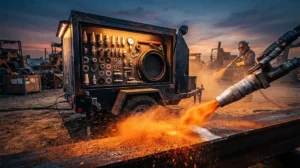
The good news? You do not have to haul a heavy beam or a fixed tank to a shop. Mobile blasting brings the work to you. A crew sets up at your site, cleans the steel back to bare metal, and leaves it ready for the next step.
In this guide, we walk through 12 things every owner, manager, and contractor should know before the blasting starts. We cover standards, media, safety, containment, waste, and timing. Think of it as a friendly checklist you can use to ask better questions and get a better result. Let’s dive in.
1. What Sandblasting Structural Steel Really Means
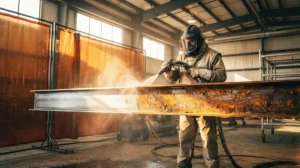
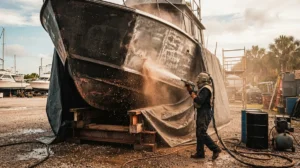
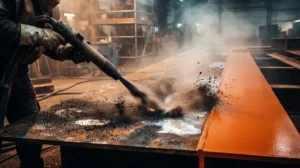
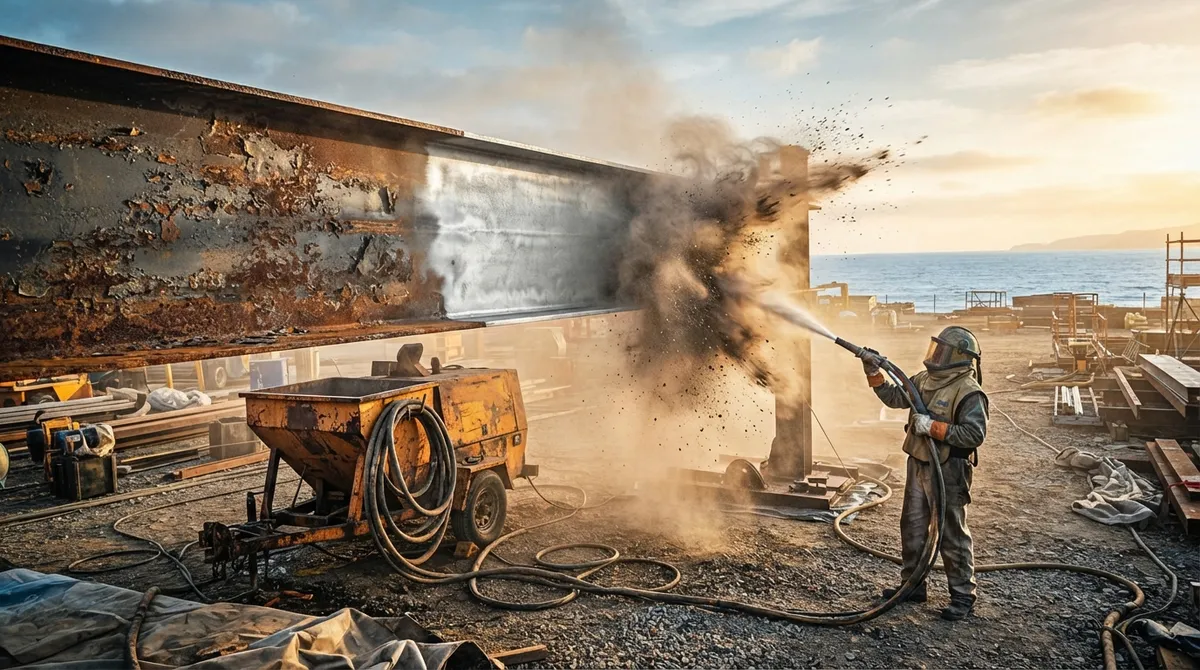
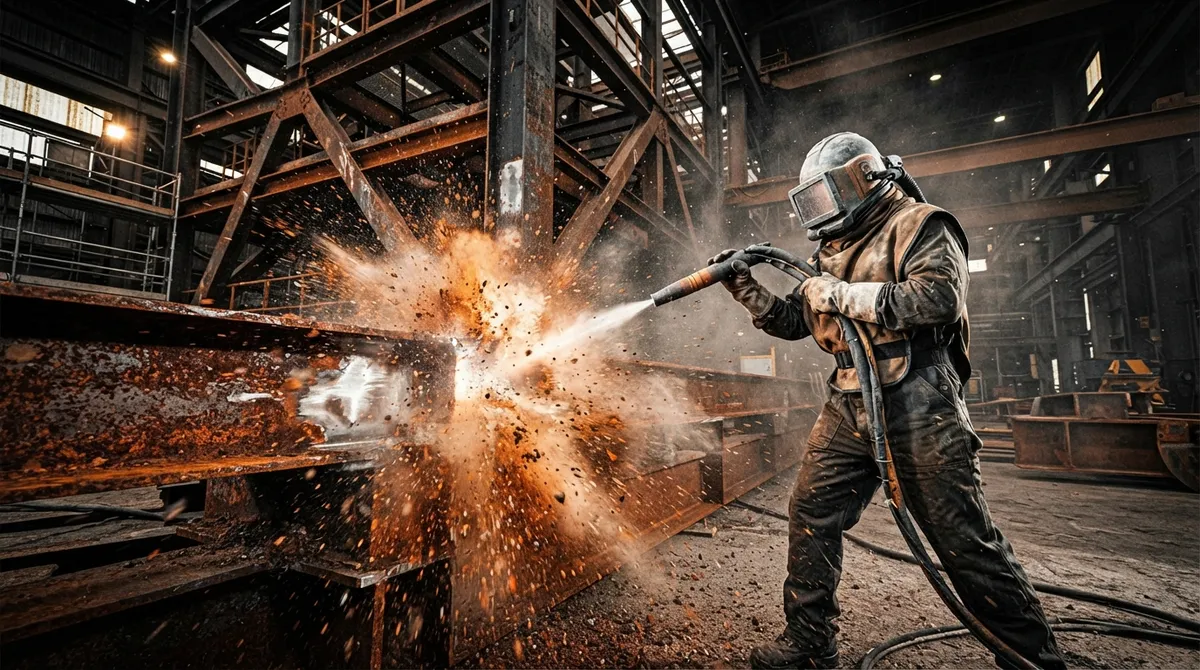
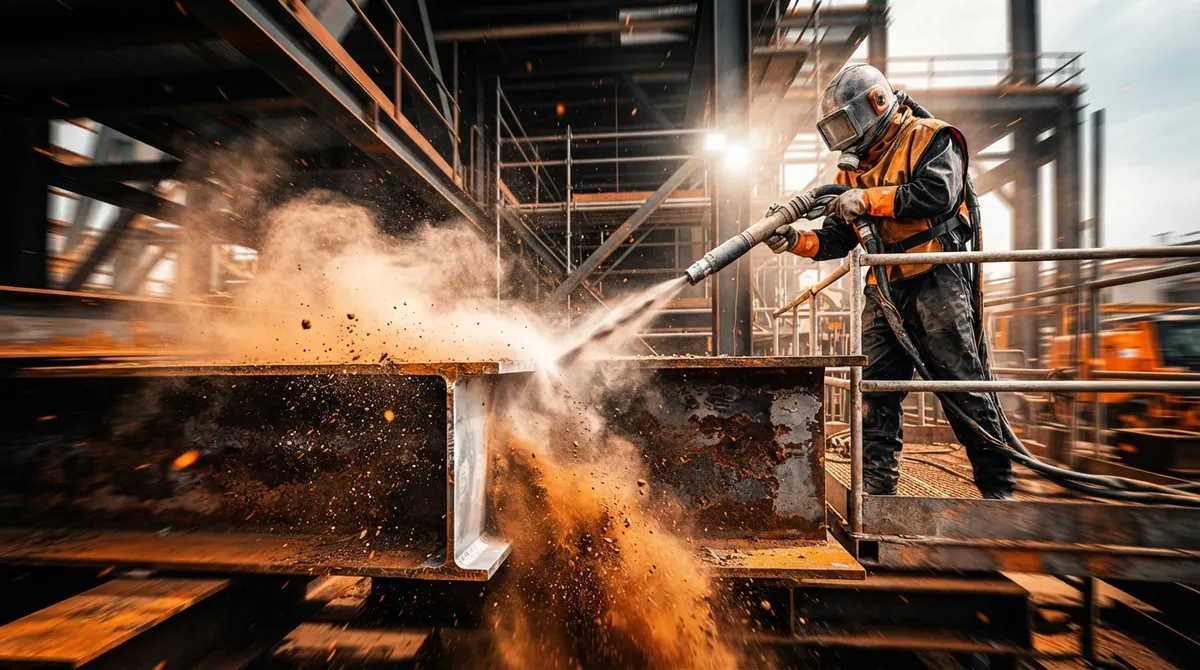
Sandblasting structural steel means shooting abrasive media at steel at high speed to remove rust, mill scale, old paint, and other grime. The goal is simple. You want a clean surface with the right texture so a new protective coating can grab on and last. For a quick background on the process itself, here is a look at what is sandblasting.
Today, many crews use the term loosely. The work often uses media other than sand, such as garnet or steel abrasive. The principle stays the same, though. You blast the surface clean and create a profile for the coating to bond to.
2. Why Mobile Blasting Fits Steel So Well
Large steel is hard to move. Think of building frames, support columns, bridge parts, storage tanks, and heavy equipment. Mobile blasting skips the hauling. The crew brings the equipment to the steel instead.
At Blastworx, we come to you. Our rig is fully mobile and self-contained, so we work at your facility or job site without needing your power or water. You also avoid long downtime, because nothing leaves your property.
Here are the biggest perks of blasting on-site:
- No transport costs or crane time for large pieces
- Less downtime for your operation
- Work can happen after hours or on weekends
- Fixed assets get treated right where they stand
If you want the bigger picture, see why Tampa businesses choose mobile sandblasting.
3. Start With the Coating Spec, Not the Blast
Here is a tip that saves money. Let the coating system drive the prep, not the other way around. The coating maker and your project spec should name the cleanliness grade and the surface profile you need.
Before any blasting begins, owners and contractors should agree on a few key items:
- The cleanliness grade the steel must reach
- The surface profile range the coating needs
- How the work will be inspected
- Where the containment boundaries sit
- How waste will be handled and disposed of
- When the coating goes on after blasting
We match the blast to your surface, not the other way around. Clear answers up front keep the job smooth. For more on planning, check out these 14 surface prep steps before commercial coating.
4. Understand the Cleanliness Standards
You will hear the letters SP and NACE a lot. These come from AMPP/SSPC standards, which define how clean blasted steel should look. The three common ones are worth knowing.
| Standard | Common Name | What It Means |
|---|---|---|
| SP 6 / NACE No. 3 | Commercial Blast Cleaning | Allows staining on up to 33% of each surface unit |
| SP 10 / NACE No. 2 | Near-White Metal Blast | Allows staining on up to 5% of each surface unit |
| SP 5 / NACE No. 1 | White Metal Blast | The most stringent visual cleanliness level |
Notice that cleaner is not always better. The most strict level is not needed for every coating or project. Over-specifying can raise cost and time with no real benefit. Your coating manufacturer and project spec should guide the choice.
5. Know the Difference Between Cleanliness and Profile
Cleanliness and profile are two different things. Cleanliness is how free the steel is of rust, scale, and old coating. Profile is the tiny peaks and valleys the blast leaves in the steel, which give paint something to grip.
The standards above are visual cleanliness criteria. They do not replace project requirements for surface profile, soluble salts, dust, or coating conditions. A steel surface can look clean and still fail if the profile is wrong or salts remain on it.
This matters a lot near the coast. Salt can hide on steel and cause early coating failure. If your spec calls for soluble-contaminant testing, plan for it. Our guide on how metal surface preparation blasting really works goes deeper on this.
6. Pick the Right Abrasive Media
Choosing media is a big decision. The right media for the job depends on the steel, the coating system, the profile you need, and site limits. Dust and waste play a role too.
Here is a quick comparison of common options for steel work:
| Media Type | Best For | Notes |
|---|---|---|
| Garnet | General steel prep, silica-free work | A common alternative to silica sand |
| Steel abrasive | Heavy rust, scale, and thick coatings | Creates a strong, consistent profile |
| Aluminum oxide | Hard surfaces and precise profiles | Aggressive and long lasting |
| Soda | Light coatings and delicate areas | Gentle, but not for heavy mill scale |
Keep in mind that the media is not the only source of dust. The removed coating and the steel itself can add hazardous dust or metals. To compare options, see aluminum oxide blasting vs. sand and steel shot blasting facts.
7. Plan Containment Before You Blast
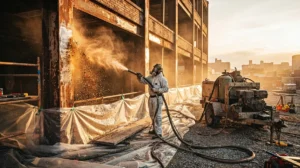
Blasting throws dust and debris. On large or fixed structures, you often need containment, which means temporary barriers or enclosures that keep the mess where it belongs. OSHA guidance recommends enclosure or temporary containment for large or fixed structures where feasible, paired with ventilation and dust collection.
Good containment protects your neighbors, your property, and the public. It also protects other workers on site. We contain the mess and protect the surrounding area on every job.
A site plan should cover:
- How the blast area is isolated from people and equipment
- How debris is captured and collected
- How dust is controlled and ventilated
- Where spent abrasive and removed coating will go
Dustless blasting is also an option for indoor work, active job sites, and spots near other equipment. Learn more about what makes dustless blasting so effective.
8. Take Worker Safety Seriously
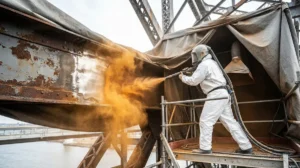
Abrasive blasting is tough work. OSHA guidance points out several hazards, including respirable dust, crystalline silica, lead and other toxic metals, and loud noise. The right plan starts with a hazard assessment, then uses engineering and administrative controls, training, and proper protective gear.
Respiratory protection matters most. Depending on conditions and applicable rules, abrasive blasting may require a NIOSH-approved Type CE supplied-air respirator. Crews should never treat a basic dust mask as enough.
You can read more about how a good crew works in 5 safe blasting procedures every mobile crew follows.
9. Watch Out for Lead and Old Coatings
Older steel often wears old paint, and some of that paint may contain lead. This changes everything. Lead-containing coatings need extra testing, controls, and worker protection.
OSHA’s construction lead standard, 29 CFR 1926.62, sets a permissible exposure limit of 50 micrograms per cubic meter of air as an 8-hour time-weighted average. That number is a good reminder of why you should test old coatings before the work starts.
If your steel is older, ask these questions early:
- Has the old paint been tested for lead or other metals?
- What containment and air controls will the crew use?
- How will the removed coating be classified and disposed of?
For related reading, see these steel coating removal facts.
10. Manage Spent Abrasive and Waste the Right Way
When the blast is done, you still have waste. That includes spent abrasive and removed coating. Both need a plan.
Waste handling depends on what you blasted off. Clean rust and scale are one thing. Lead paint or other metals are another, and they may need special classification and disposal. Settle this with your contractor before the work starts, so nobody is surprised later.
A good crew also cleans up well. Sweeping, collecting, and removing debris should be part of the job, not an afterthought.
11. Coat the Steel Quickly After Blasting
Freshly blasted steel is very active. In Florida’s humid air, it can start to flash rust within hours. That is why timing matters. Plan so the steel goes from clean and bare to primed and coated as soon as your spec allows.
A coating is only as good as the surface underneath it. If the steel sits too long, or if moisture or salt gets in, the new paint can fail early. Talk with your coating crew about the right window and the right weather conditions.
Many owners pair blasting with another crew for the coating step. Our role is strip and prep, with paint or protective coating available on some industrial jobs when needed. Either way, line up the schedule ahead of time. You can also look at 7 reasons sandblasting before painting pays off.
12. Know What Drives Cost and Schedule
Every steel job is different, so there is no single price or speed. Production rates and costs shift with several factors:
- Access to the steel, such as height, tight spots, or confined areas
- The condition of the steel and how heavy the rust or coating is
- The cleanliness grade and profile your spec requires
- The type of media used
- Containment and dust-collection needs
- Waste classification and disposal
Be wary of any quote that skips these details. A fair estimate should explain what it covers. Our guide to what sandblasting estimates really cost can help you compare. For Florida-specific points, read 7 structural steel blasting facts Florida owners need.
How Blastworx Handles Structural Steel Jobs
We keep our process simple, and you talk to the people doing the work. Here is how a typical steel job runs:
- Walkthrough. Send photos or we come look, and we pick the right media for the steel.
- Free estimate. You get a clear, written estimate the same day. The price we give is the price you pay.
- Blast and strip. We protect the surrounding area, then blast the steel clean at your location.
- Ready to finish. The steel comes out back to clean, bare metal and ready to prime and coat.
We are fully insured and based in Tampa, and we work across the central Florida corridor, including Ocala, Orlando, and Fort Myers. For the right job, we will travel anywhere in the state. You can learn more about our industrial blasting work, browse our project gallery, or check our service areas. If you are curious how we stack up with real customers, visit us on Google and see what our customers are saying about us.
Final Thoughts
Sandblasting structural steel is not just about blasting hard. It is about the right standard, the right media, the right safety plan, and the right timing. When you get those pieces lined up, your coating bonds properly and holds up in Florida’s heat, humidity, and salt air.
Ready to get your steel back to clean, sound material? Get a free estimate today, or give us a call. We come to you, and we will help you plan the job from start to finish.
FAQs
Q: What is sandblasting structural steel, and how does mobile blasting work?
A: It is the process of blasting abrasive media at steel to remove rust, mill scale, and old coatings, then leaving a profile for a new coating to bond to. With mobile blasting, the crew brings the equipment to your site, so large or fixed steel never has to be moved. We come to you and handle the work on-site.
Q: Which blast standard should I choose: SP 6, SP 10, or SP 5?
A: It depends on your coating system and project spec. SP 6 allows staining on up to 33% of each surface unit, SP 10 allows up to 5%, and SP 5 is the strictest. The most stringent grade is not always needed, so let the coating maker and your spec guide the choice.
Q: Does blasting steel on-site need containment?
A: Often, yes. OSHA guidance recommends enclosure or temporary containment for large or fixed structures where feasible, along with ventilation and dust collection. Containment protects workers, neighbors, and the area around the job.
Q: How soon should steel be coated after blasting?
A: As soon as your spec allows. Freshly blasted steel can flash rust quickly in Florida’s humid, salty air. Plan the blasting and coating schedule together so the clean surface does not sit exposed.
Q: What is safe to do when old paint may contain lead?
A: Test the coating first, then plan for containment, air controls, trained workers, and proper waste disposal. OSHA’s lead standard sets an exposure limit of 50 micrograms per cubic meter as an 8-hour average. Never guess with old paint. Always check before blasting.