Key Takeaways
-
Paint failures like bubbling and peeling usually trace back to poor surface prep, so blasting to clean, sound material gives coatings a solid base to bond to.
-
Blasting creates a surface profile of tiny peaks and valleys for paint to grip; always match the profile and media to the coating manufacturer's spec sheet.
-
Agree on the cleanliness standard before work begins, such as SP 10 near-white metal or SP 6 commercial, since each suits different coatings and budgets.
-
Bare blasted steel can flash rust within hours in humid conditions, so line up the painter in advance and coat promptly, following the manufacturer's time and weather limits.
-
Remove oil and grease before blasting, since abrasive work can drive contaminants deeper into the surface, and clean off dust afterward to protect adhesion.
-
Blasting dust may contain silica or lead from old paint, so confirm containment, respiratory protection, and waste handling with your contractor before work starts.
We’ve all seen it. A fresh coat of paint goes on, looks great for a few months, then starts to bubble, peel, and flake. Nine times out of ten, the paint wasn’t the problem. The surface underneath was.
That’s why sandblasting before painting is one of the smartest moves you can make on a metal, concrete, or masonry project. Blasting takes the whole surface back to clean, sound material in one pass, so your coating has something solid to grab onto. In Florida, where heat, humidity, and salt air go to work on every surface, that solid foundation matters even more.
In this friendly guide, we’ll walk through seven reasons blasting pays off, how to pick the right standard, what to expect when a mobile crew shows up at your place, and the mistakes that cost people money. Think of it as a chat with the folks who do this every day. At Blastworx, we come to you, so we’ll cover what that looks like too.
1. Blasting Removes What Hand Tools Miss
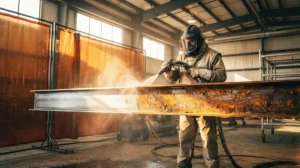
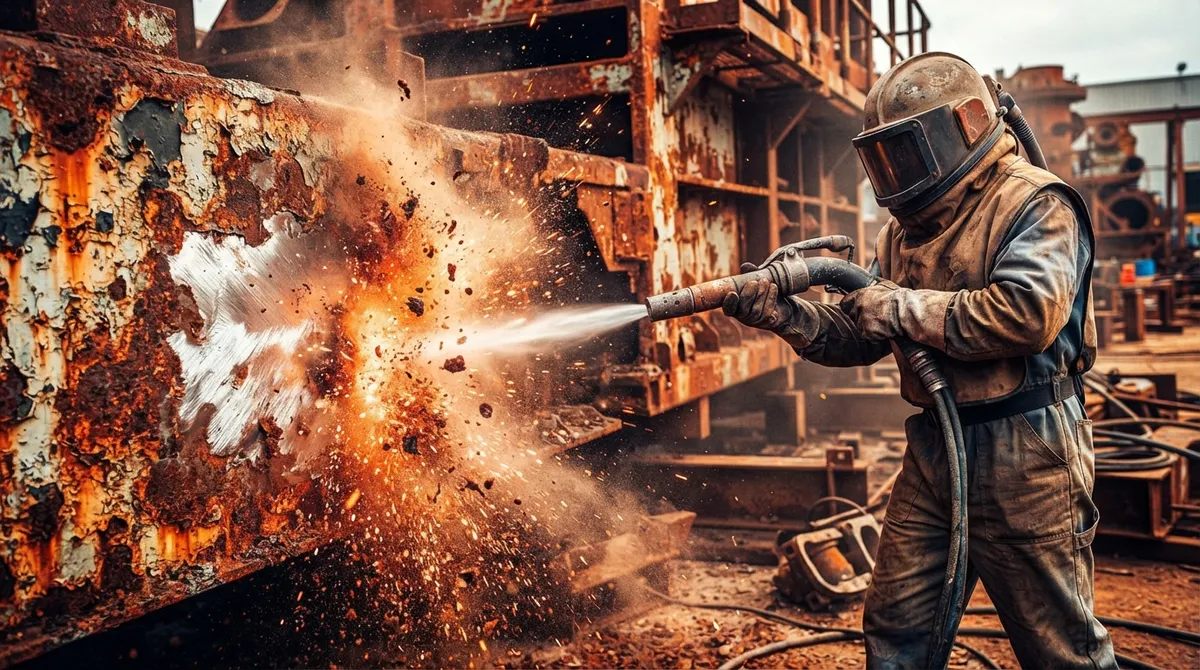
Sanding and wire brushing feel productive, but they leave a lot behind. Rust hides in seams, pits, welds, and tight corners. Old coatings cling to edges. Contaminants sit in the low spots where a sanding block never reaches.
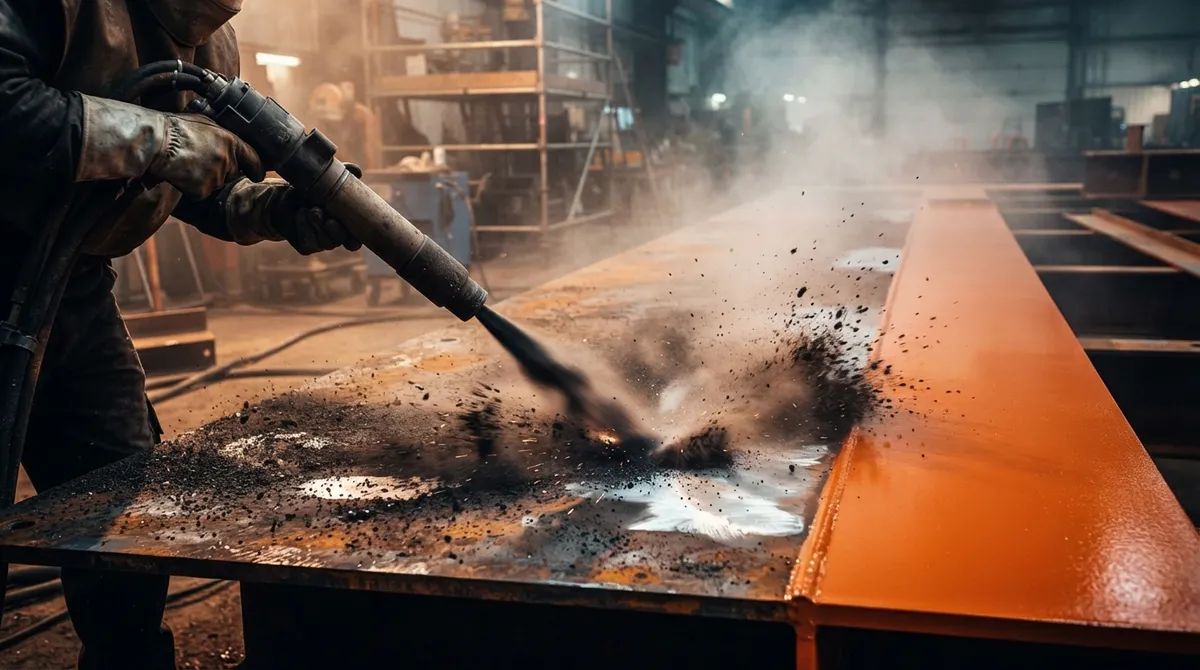
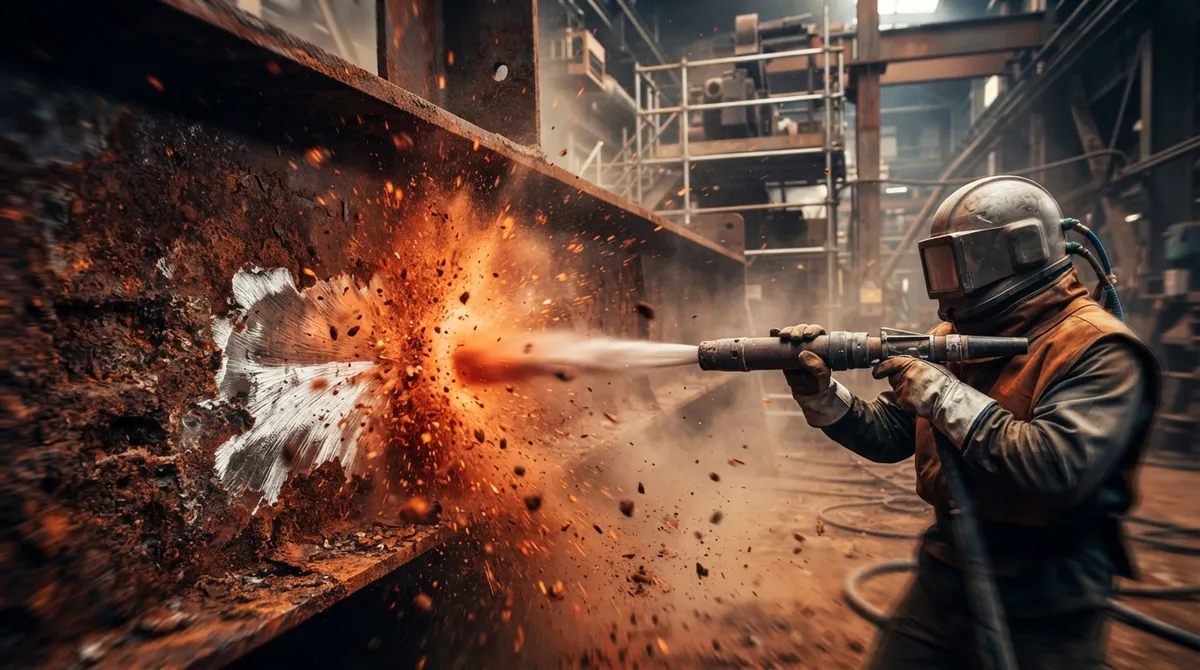
Abrasive blasting hits all of it at once. It strips rust, mill scale, old coatings, and buildup, and it does it evenly across the whole surface. If you want to see how the two approaches stack up, check out sandblasting vs. hand prep and when blasting wins.
Here’s what blasting typically clears away before paint goes on:
- Rust and mill scale on steel
- Failing or peeling paint and old coatings
- Graffiti and stubborn buildup
- Surface contaminants that block adhesion
2. It Creates the Surface Profile Paint Needs
Paint doesn’t just stick to a surface. It grips it. Blasting leaves tiny peaks and valleys, called a surface profile, that give the coating something to hold onto. If you’re curious about the basics, here’s a quick look at what is sandblasting and how the process works.
The key is getting the profile right for your specific coating. Too smooth, and the paint can’t bond well. Too rough, and the peaks can poke through a thin coat, leaving weak spots where rust can restart. The coating manufacturer’s spec sheet tells you what profile to aim for.
Media, nozzle pressure, angle, and distance all change the result. That’s why we say it plainly: we match the blast to your surface, not the other way around. If you want to go deeper, our guide on how metal surface preparation blasting really works breaks it down.
3. You Can Match the Cleanliness Level to the Job
Not every paint job needs the same level of clean. Industry standards from AMPP (formerly SSPC and NACE) describe different cleanliness levels for steel. Knowing the difference helps you avoid overpaying for prep you don’t need, or under-prepping a job that demands more.
| Standard | Common Name | What It Means |
|---|---|---|
| SP 5 | White Metal | Cleanest level, essentially no visible residue |
| SP 10 | Near-White Metal | Staining limited to 5% of each unit area |
| SP 6 | Commercial | Staining allowed on up to 33% of each unit area |
| SP 14 | Industrial | Tightly adhered residue allowed in a defined amount |
| SP 7 | Brush-Off | Light cleaning; loose material removed only |
Here’s the important part: these standards describe visual cleanliness. They don’t cover everything your coating might need, like profile depth, soluble salts, or dust. Agree on the specified level before work begins, and don’t assume it’s the same for every paint job. Your coating spec or painter should tell you what’s required.
4. It Helps Paint Last in Florida’s Tough Climate
Florida is hard on coatings. Intense sun, daily humidity, afternoon storms, and salt air near the coast all push paint to its limits. A coating applied over poor prep will fail early here.
When rust and old, failing paint are blasted off, the new coating bonds directly to clean, sound material. That bond is what holds up through the heat and moisture. A coating is only as good as the surface underneath it. Paint, powder coat, resurfacing, and antifouling all depend on good prep.
Whether it’s a boat trailer in Tampa, a gate in Clearwater, or equipment in Fort Myers, the same rule applies. Take it back to clean, bare metal, and the next step goes much better. For a closer look at the process, see 10 sandblast painting prep steps that make paint last.
5. The Right Media Protects the Surface Underneath
Sandblasting before painting doesn’t mean blasting everything with the same harsh abrasive. The right media for the job makes all the difference. A thin body panel needs a gentler touch than a heavy steel frame. A fiberglass boat hull needs different media than an iron fence.
Here’s how media often lines up with surfaces:
- Soda or walnut shell: gentle on fiberglass, gelcoat, and delicate surfaces
- Dustless (wet) blasting: great for indoor work, active job sites, and areas near other equipment
- Stronger abrasives: best for heavy rust on steel, frames, and structural pieces
Not sure which method fits? Our posts on choosing between soda blasting and sandblasting and what makes dustless blasting so effective can help you decide.
A quick note: we don’t blast vinyl fencing, since it’s too delicate. And some surfaces, like painted walls, glass, veneer, and cultured stone, need to be evaluated in person first.
6. Mobile Blasting Brings the Prep to You
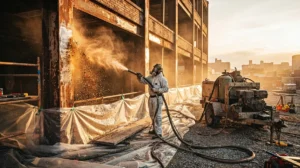
This is where mobile blasting really shines. Instead of hauling a gate, railing set, or boat trailer to a shop, we come to you. Our rig is fully mobile and self-contained, so we work dockside, in a driveway, at a shop, or on a job site without needing your power or water.
That saves you the hassle of loading, hauling, and scheduling around a shop’s backlog. For big items like structural steel, tanks, or heavy equipment, it’s often the only practical option. Learn more about the tradeoffs in mobile vs. shop sandblasting.
Before we mobilize, a few things are worth confirming:
- Access: Can the rig reach the work area?
- Work-area protection: What needs covering, like landscaping, pools, windows, or nearby equipment?
- Weather: Rain and wind can affect scheduling and coating timing.
- Waste handling: How will spent media and debris be collected?
- Method fit: Is the chosen blasting method right for the location, such as indoors versus open air?
We contain the mess and protect the surrounding area, whether you’re a homeowner or a business. You can browse our work on the gallery page to see what that looks like.
7. It Keeps the Whole Job on Track, If You Time It Right
Blasting is just one piece of the prep puzzle. A few steps around it decide whether the paint holds.
- Remove oil and grease first. Blasting can drive contaminants into the surface if they’re not cleaned off beforehand.
- Blast to the agreed standard and profile. Confirm what the coating spec calls for.
- Inspect and clean off dust and debris. Loose dust left on the surface can weaken adhesion.
- Coat promptly. Bare steel can develop flash rust quickly, especially in Florida humidity. Follow the coating manufacturer’s time and weather limits.
That last step is the big one. Bare, freshly blasted metal is very reactive. Humid air, a rain shower, or even a foggy morning can start flash rust fast. Plan your painter or coating crew so they’re ready right after blasting. Our team handles strip and prep, so lining up the painter ahead of time is a smart move. For a bigger picture, see 14 surface prep steps before commercial coating.
Safety and Waste: Don’t Skip This Part
Blasting creates dust, and that dust can be more than a nuisance. According to OSHA, it can contain respirable particles from both the abrasive and the surface being blasted. That includes silica or lead from older paint in some cases.
Good practice includes containment, ventilation, exposure controls, NIOSH-approved respiratory protection, proper training, and safe cleanup. OSHA’s general-industry silica limit is 50 micrograms per cubic meter of air as an 8-hour average, though you should always verify the rules that apply to your worksite. Older buildings and painted surfaces may also trigger lead-related rules for containment and disposal.
If your project involves old paint, ask your contractor how they’ll handle dust and waste before the first nozzle fires. A professional crew should have a clear answer. Our guide on how pros handle sandblasting dust control goes into more detail.
Common Mistakes to Avoid
After plenty of jobs, we see the same slip-ups again and again. Here’s how to dodge them:
- Painting too late: Waiting days lets flash rust or contamination creep back in.
- Skipping the spec: Not checking the coating’s required profile and cleanliness level.
- Ignoring oil and grease: Blasting over contamination can spread it.
- Using the wrong media: Too aggressive can warp thin panels or scar soft surfaces.
- Skipping the post-blast clean-up: Dust left behind hurts adhesion.
For more cautionary tales, read 13 abrasive blasting mistakes that cost you money in 2026.
What We Blast Before Paint
Sandblasting before painting works across a wide range of projects. Here are the areas we serve most:
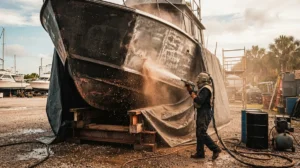
- Marine: boat hulls, trailers, docks, davits, and hardware
- Automotive: frames, body panels, wheels, and full restorations
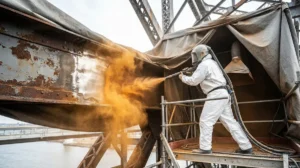
- Industrial: structural steel, tanks, and heavy equipment
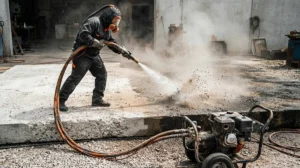
- Commercial: concrete, graffiti, storefronts, and fleet vehicles
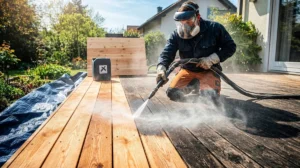
- Residential: fences, railings, gates, pool decks, and patios
One note on scope: we strip and prep. In most cases, your painter, coating crew, or contractor handles the finish. Our job is getting the surface back to clean, sound material and ready to prime and coat.
How Our Process Works
We keep things simple. You talk to the people doing the work, and the price we give is the price you pay.
- Walkthrough: Send photos or we come take a look, then we pick the right media for the surface.
- Free estimate: A clear, written estimate the same day.
- Blast and strip: We protect the surrounding area, then blast the surface clean at your location.
- Ready to finish: The surface comes out clean and ready for the next step.
We’re fully insured, owner-operated, and based in Tampa. We serve the Tampa Bay and central Florida corridor, including Orlando, Ocala, Fort Myers, and beyond. Curious what neighbors think? Visit us on Google and see what our customers are saying about us.
Wrapping It Up
Paint is only as good as what’s underneath it. Sandblasting before painting removes rust, old coatings, and contaminants, creates the right profile, and gives your finish a real shot at lasting in Florida’s heat, humidity, and salt air. Add the convenience of a mobile crew that comes to you, and prep gets a whole lot easier.
Got a gate, a boat trailer, a set of railings, or a big steel job waiting on fresh paint? Get a free estimate today, or give us a call at 813-380-8092. You can text too. We’d love to help you get it back to clean, bare metal and ready for the next step.
FAQs
Q: Why sandblast metal before painting?
A: Blasting strips rust, mill scale, and old coatings, then leaves a surface profile that paint can grip. That means a stronger bond and a coating that lasts longer, especially in Florida’s humid, salty air.
Q: How soon after sandblasting should a surface be painted?
A: As soon as possible, and always within the window your coating manufacturer specifies. Bare steel can flash rust quickly in humid weather, so line up your painter before the blasting starts.
Q: Can mobile blasting be done at my property or job site?
A: Yes! Our rig is fully mobile and self-contained, so we come to your driveway, dock, shop, or job site without needing your power or water. We contain the mess and protect the surrounding area while we work.
Q: What blast-cleaning standard should be used before painting?
A: It depends on your coating system and the project. Common steel standards include SP 10 (near-white metal) and SP 6 (commercial), so check your coating spec and agree on the level before work begins.
Q: What happens if a blasted surface gets wet before painting?
A: Moisture can cause flash rust on bare steel in a hurry. If that happens, the surface may need light re-cleaning before coating, so it’s best to plan the paint job right after blasting.