
Key Takeaways
-
Apply primer or rust protection immediately after blasting, ideally the same day, as bare steel develops flash rust rapidly in humid conditions like Florida.
-
Match the blast media to each specific part type: use soda for aluminum engine cases and thin panels, glass bead for steel, and avoid silica sand entirely due to OSHA respiratory hazards.
-
Disassemble motorcycles completely before blasting and mask off bearings, seals, carburetors, wiring harnesses, and threaded holes to prevent damage to sensitive components.
-
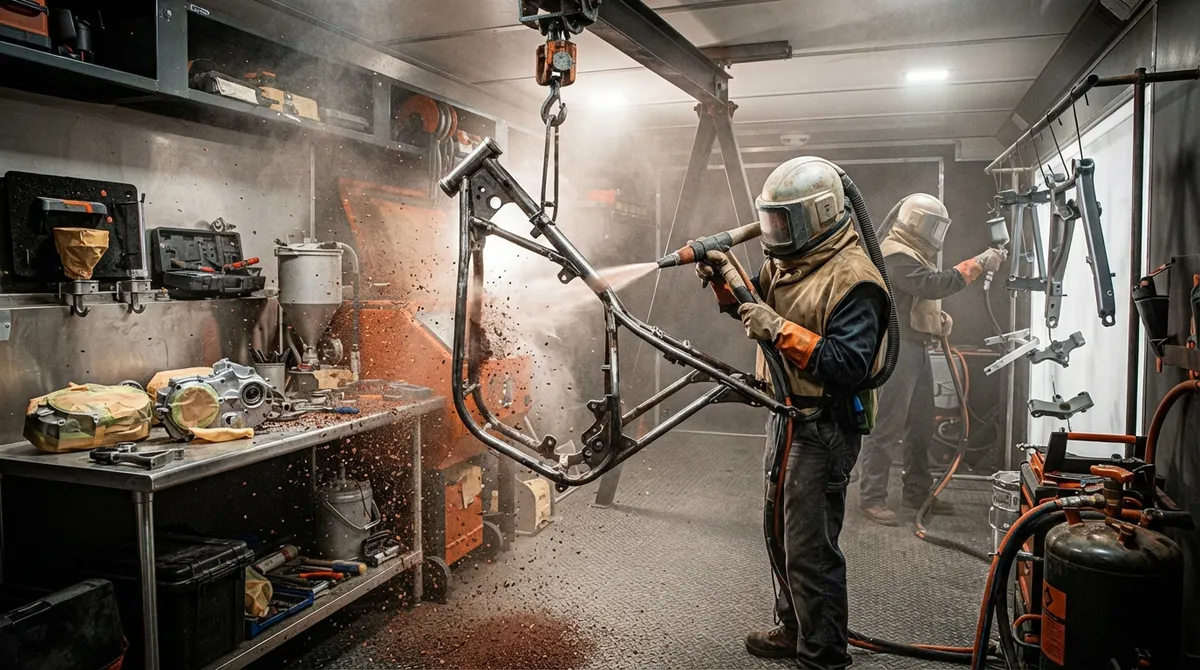
Mobile blasting eliminates transportation hassles for awkward or delicate parts like frames and tanks, and requires no power or water connection since the rig is self-contained.
-
Dustless and wet blasting reduce airborne dust and cleanup time but don’t eliminate the need to protect electrical components, cavities, and bearing surfaces from moisture.
-
Request a detailed written estimate that specifies which parts are included, the blasting method and media used, masking details, and whether priming or reassembly services are covered.
Bringing an old motorcycle back to life is one of the most rewarding projects a person can take on. But before any fresh paint or powder coat goes on, every trace of rust, grime, and old finish has to come off. That’s where motorcycle restoration blasting comes in. It strips your frame, tank, and other parts down to clean, sound metal so your new finish actually sticks and lasts.
At Blastworx, we’ve seen firsthand how the right blasting approach can save a rusty old frame that looked ready for the scrap pile. We come to you, whether that’s your garage in Tampa, a workshop in Ocala, or a shop bay in Orlando. Our rig is fully mobile and self-contained, so we don’t need your power or water to get the job done. Below, we’ll walk through six things every motorcycle owner should know before starting a restoration blasting project.
1. Know What Parts Can Actually Be Blasted
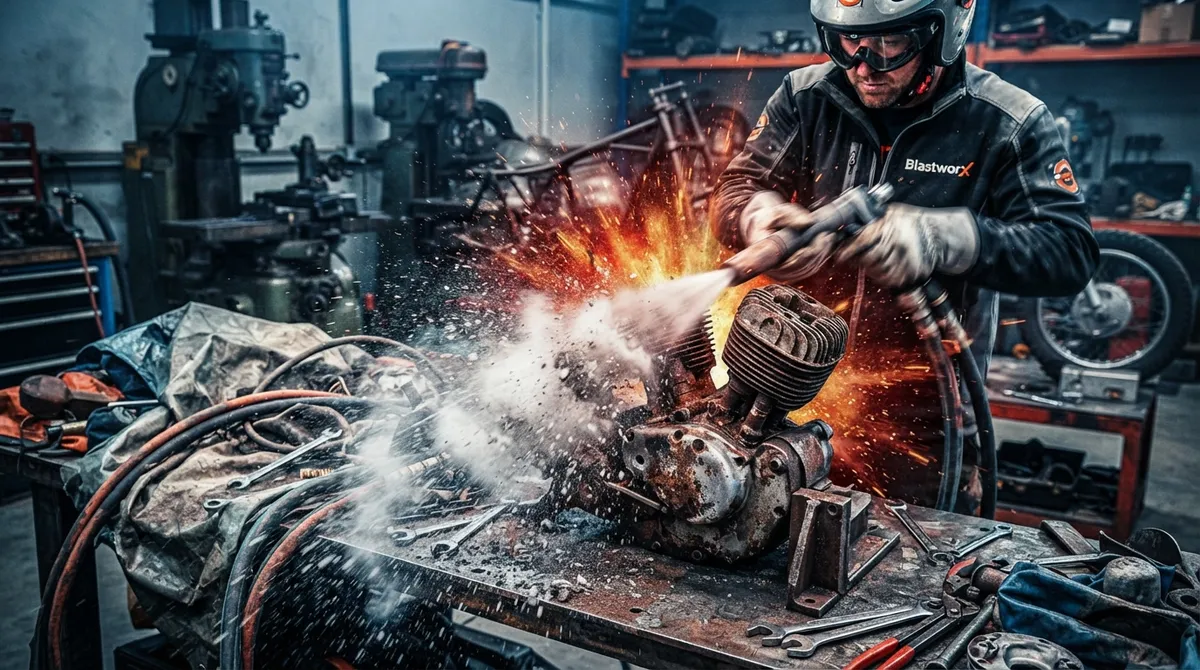
Almost every metal component on a motorcycle can benefit from professional blasting. This includes frames, swingarms, wheels, engine cases, fenders, gas tanks, and exhaust pipes. Mobile blasting is especially handy here because large or oddly shaped parts don’t need to be hauled to a shop. We simply set up wherever the bike or parts are sitting.
That said, not every part should go straight into the blast cabinet. Sensitive components need to be removed or carefully protected first. Here’s a quick list of what typically gets blasted versus what needs special handling:
- Frames, swingarms, and forks (once disassembled)
- Wheels and rims (media-dependent based on metal type)
- Engine cases (only with gentle media and careful masking)
- Fenders, tanks, and body panels (thin metal needs a soft touch)
- Exhaust pipes and heat shields
- Brackets, fasteners, and small hardware
Bearings, seals, carburetors, wiring harnesses, and threaded holes should always be removed or masked off before any blasting starts. If you’re not sure what needs protecting on your build, our team can walk through it with you during a free estimate.
2. Choose the Right Media for Each Part
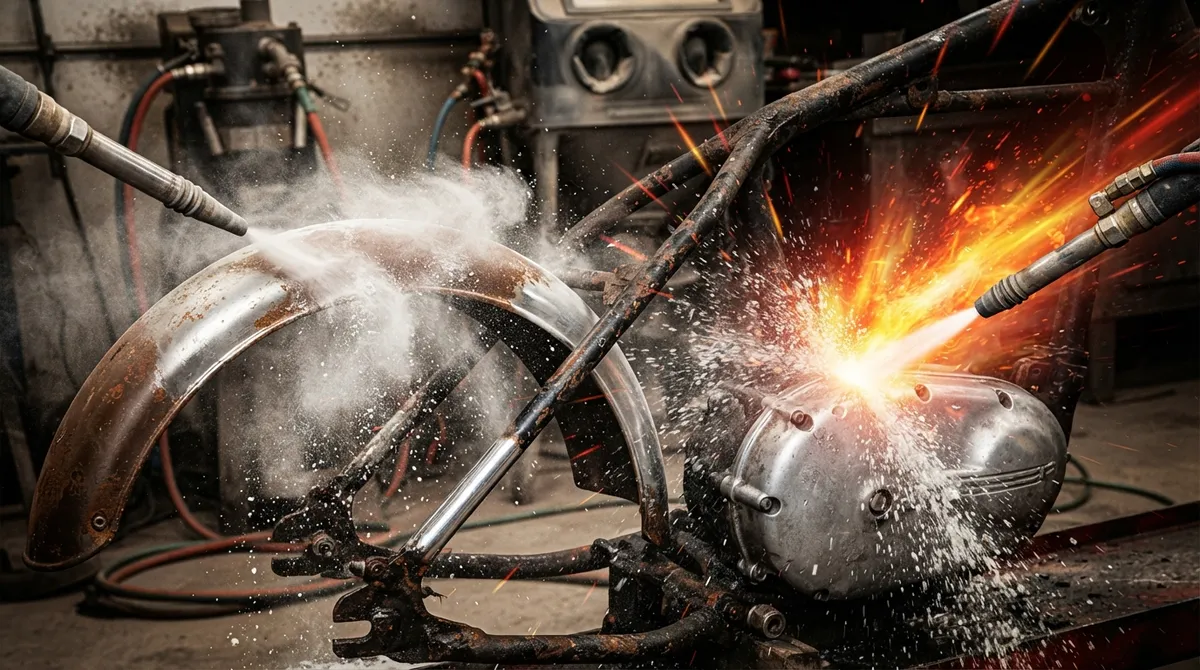
This is probably the most important decision in the whole process. We always say we match the blast to your surface, not the other way around, and that’s especially true with motorcycles. A frame covered in decades of rust needs something different than a thin aluminum engine cover.
| Media Type | Best For | Notes |
|---|---|---|
| Soda | Aluminum parts, thin panels, gas tanks | Gentle, low risk of warping, removes paint and grease well |
| Walnut Shell | Light rust, delicate surfaces | Biodegradable, softer than sand-based media |
| Corn Cob | Cleaning grease and light coatings | Another gentle, eco-friendly option |
| Glass Bead | Steel parts needing a clean, smooth finish | Good for uniform surface prep |
| Plastic Media | Fiberglass fairings, painted plastic parts | Low aggression, protects underlying material |
| Aggressive Abrasives | Heavy rust on thick steel frames | Used only under controlled, careful conditions |
Notice that silica sand isn’t on this list. That’s intentional. OSHA and NIOSH have flagged silica dust as a serious respiratory hazard since 1974, and it’s simply not a medium we’ll use on your bike or on any job. We stick with safer alternatives like soda, walnut shell, and glass bead depending on what the part calls for. If you want to dig deeper into how media choice affects results, our article on how to choose between soda blasting vs sandblasting covers it well.
3. Understand Why Soda Blasting Is Often the Safer Choice
Soda blasting has become a favorite for motorcycle restoration, and for good reason. It’s gentle enough to avoid warping thin panels or gas tanks, yet strong enough to strip old paint, grease, and light surface corrosion. It won’t leave the same rough profile that a heavier abrasive like garnet creates, so you might need extra prep before certain coatings go on.
For aluminum engine cases specifically, soda is usually the safer bet. Aluminum is softer than steel and can pit or scar under aggressive media. Soda’s lower impact keeps the surface intact while still getting rid of oil residue and light oxidation. If you’re curious why so many folks in our area prefer this method, check out our piece on why soda blasting is Tampa’s gentlest cleaning fix.
4. Prep Work Matters as Much as the Blasting Itself
You wouldn’t paint a wall without taping off the trim first, right? Same idea applies here. Before any blasting begins, motorcycle parts need to be fully disassembled and inspected. Here’s the general process we follow on most restoration jobs:
- Inspect every part for thin spots, cracks, or previous repairs
- Remove bearings, seals, carburetors, and electrical components
- Mask off threaded holes and areas that shouldn’t be touched
- Select the right media and pressure for each specific part
- Run a small test blast on an inconspicuous area
- Blast the full surface with controlled passes
- Remove leftover media and thoroughly dry the part
- Apply primer or rust protection right away
That last step is critical. Bare steel starts developing flash rust almost immediately, especially in Florida’s humidity. Waiting even a day or two without protection can undo hours of careful work. We always recommend having primer ready to go before the blasting even starts.
5. Dustless and Wet Blasting Have Their Place, But Come With Trade-Offs
Dustless blasting has grown popular for good reason. It keeps airborne dust down significantly, which makes it a great option for indoor garages or shared shop spaces. It’s also easier on cleanup, since the water helps trap particles instead of letting them float everywhere.
But wet methods aren’t a magic fix for every situation. Water introduces its own challenges, mainly around drying time and rust prevention. Electrical components, enclosed cavities, and bearing surfaces still need to be protected or removed, wet blasting or not. If you’re weighing your options, our comparison on wet sandblasting vs dry blasting breaks down which method fits different jobs.
We also offer traditional what is sandblasting methods depending on the part and desired finish. The key is matching the technique to the job, not defaulting to one method for everything.
6. Get a Clear, Detailed Estimate Before Work Begins
Pricing for motorcycle restoration blasting can swing quite a bit depending on several factors. A single rusty fender is a much smaller job than a full frame-off restoration with a dozen parts needing attention. Before you commit to any project, make sure your estimate spells out the details clearly.
A solid estimate should cover:
- Exactly which parts are included in the job
- Whether disassembly and reassembly are part of the service
- The blasting method and media being used
- Masking and protection for sensitive components
- Cleanup and media removal
- Rust prevention steps after blasting
- Access needs for power, water, or workspace
- Whether priming or coating is included
We believe in giving you a same-day written estimate with no surprises. The price we quote is the price you pay. Whether you’re in Tampa, Clearwater, Sarasota, or out toward Fort Myers, we can usually get eyes on your project quickly and let you know what to expect.
Why Mobile Blasting Makes Sense for Motorcycle Projects
Hauling a disassembled motorcycle across town to a shop is a hassle nobody enjoys. Frames are awkward, tanks are delicate, and small parts have a way of getting lost in transport. Mobile blasting solves that problem by bringing the equipment to you instead.
We work throughout the central Florida corridor, including Tampa, Ocala, Orlando, and Fort Myers. For the right project, we’ll travel further too. Since our rig is fully self-contained, we don’t need to tap into your power or water supply. We also contain the mess and protect the surrounding area, so your garage or driveway stays in good shape when we’re done.
Curious how this compares to other automotive projects we handle? Our automotive blasting services page covers frames, body panels, wheels, and more. And if you want to see examples of past work, our gallery shows real before-and-after results from jobs across the region.
Safety Is Never an Afterthought
Blasting isn’t just about getting a clean surface. It’s about doing it safely, every single time. OSHA’s respirable crystalline silica standard sets a strict permissible exposure limit of 50 micrograms per cubic meter of air over an 8-hour period, and for good reason. Silicosis is a serious, preventable disease, and it’s simply not worth the risk when safer alternatives exist.
We follow documented safety procedures on every job, including proper containment, respiratory protection when needed, and using approved alternative media like soda, walnut shell, and glass bead instead of silica sand. We’re fully insured, and when you call us, you talk to the people doing the actual work, not a call center reading from a script.
If you want to see what folks in our service area have to say about working with us, feel free to visit our Google Business Profile and see what our customers are saying about us. We’ve built our reputation one careful, well-done job at a time.
Ready to Get Your Motorcycle Project Rolling?
Restoring a motorcycle is a labor of love, and getting the surface prep right sets the tone for everything that follows. Whether you’re working on a single rusty tank or a full frame-off rebuild, matching the right media and method to each part makes all the difference. From soda blasting delicate aluminum cases to using stronger media on a heavily corroded frame, the goal is always the same: get you back to clean, bare metal that’s ready for the next step.
If you’re in Tampa Bay or anywhere along the central Florida corridor, we’d love to help bring your project back to life. Get a free estimate today, or if you’d rather talk it through first, give us a call and we’ll answer your questions and figure out the right approach for your bike.
FAQs
Q: What parts of a motorcycle can be cleaned with mobile blasting?
A: Almost any metal part can be blasted, including frames, swingarms, wheels, engine cases, fenders, tanks, and exhaust components. We come to you and handle each piece with the right media, so nothing gets damaged along the way.
Q: Is soda blasting safe for aluminum motorcycle engine cases?
A: Yes, soda blasting is one of the gentlest options for aluminum parts. It removes grease, paint, and light oxidation without the harsh impact that can pit or scar softer metals like aluminum.
Q: How soon should motorcycle parts be primed after blasting?
A: As soon as possible, ideally the same day. Bare steel starts developing flash rust quickly, especially in Florida’s humidity, so we always recommend having primer ready before we even start blasting.
Q: Will blasting warp motorcycle gas tanks or thin sheet metal?
A: It can if the wrong media or pressure is used, but that’s exactly why we match the blast to your surface. Soft media like soda and lower pressure settings help protect thin panels from warping.
Q: How much does motorcycle restoration blasting cost?
A: It really depends on how many parts you’re working with, the corrosion level, and the media needed. We always provide a clear, written estimate the same day, so you know exactly what to expect before we start.





