
Key Takeaways
-
Mobile machinery cleaning blasting eliminates costly downtime by cleaning equipment on-site without disassembly or transport, allowing production to resume faster than traditional shop-based cleaning methods.
-
Choose dry abrasive blasting for heavy rust and thick coatings on solid steel, soda blasting for gentle paint removal near seals, dry ice for electrical components and motors, and wet blasting for dust-sensitive areas near operating equipment.
-
Always require a pre-blasting inspection, test area, and masking of sensitive parts like bearings and wiring to prevent equipment damage; skipping these steps can result in warped panels or ruined components.
-
Dry ice blasting is water-free and non-conductive, making it the safest choice for motors and control panels, while producing no secondary media waste like sand or soda residue that requires additional cleanup.
-
Prepare your facility by clearing work space, isolating machinery from power sources, and communicating access restrictions and sensitive equipment locations to reduce job costs and prevent damage to nearby assets.
-
Professional mobile blasting operators must provide proper respiratory, eye, face, and hearing protection; comply with EPA waste handling rules; and minimize dust to meet OSHA standards and local air quality regulations.
Got a piece of equipment covered in years of grease, rust, or old paint, but no way to haul it to a shop? That’s exactly where machinery cleaning blasting comes in. Instead of pulling the machine apart or trucking it somewhere else, a mobile crew brings the equipment right to your location and cleans it in place. It’s faster, it’s simpler, and for a lot of Tampa Bay businesses, it’s the only practical option.
We’ve spent years running mobile blasting jobs across central Florida, and machinery cleaning is one of the most common calls we get. Shop owners, marina operators, and facility managers all hit the same wall eventually: the equipment is too big, too heavy, or too important to move. That’s when machinery cleaning blasting saves the day. This guide walks you through how it works, which methods fit which jobs, and what to expect when you call in a mobile crew.
What Is Machinery Cleaning Blasting?
Machinery cleaning blasting is a surface-cleaning method that uses high-velocity media, powered by compressed air, water, or another force, to strip contamination off equipment. It removes grease, carbon buildup, rust, old paint, weld slag, and general grime. OSHA describes abrasive blasting as a method used to clean objects, remove burrs, and prepare surfaces for new coatings, and that description holds true whether you’re cleaning a bridge beam or a conveyor system.
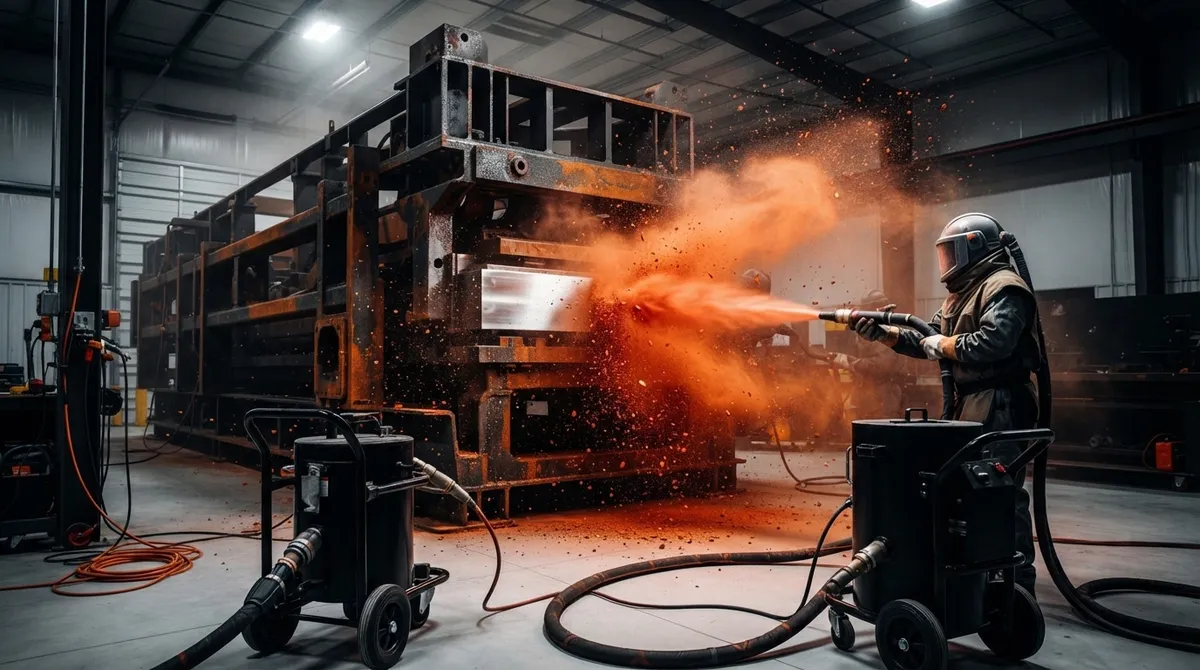
The big difference with mobile machinery cleaning is that the work happens right where the equipment sits. There’s no crane needed to load a machine onto a trailer. No shop schedule to wait on. A mobile blasting company brings the compressor, blast pot, media, hoses, and containment gear straight to your facility, dock, or job site.
Why Businesses Choose On-Site Machinery Cleaning
Downtime costs money. Every hour a machine sits disassembled or waiting for transport is an hour it’s not making you money. That’s the whole reason mobile blasting exists as a service category. We come to you, set up, and get the job done without your equipment ever leaving the property.
Here are the main reasons folks skip the shop and call a mobile crew instead:
- No disassembly needed for most jobs, which saves labor hours
- No transport costs or liability moving heavy or awkward equipment
- Cleaning happens on your schedule, including nights or weekends
- Fully mobile and self-contained rigs mean no need for your power or water hookups
- Faster turnaround gets machinery back into production sooner
We’ve cleaned everything from production line equipment to heavy fabrication tools using this exact approach. If you want to see examples of past work, our gallery shows a range of industrial and equipment projects we’ve handled around the region.
Choosing the Right Blasting Method for Your Machinery
Not every machine gets the same treatment. The right process depends on the substrate, the type of buildup, how sensitive the parts are, and what kind of finish you need afterward. We match the blast to your surface, not the other way around, and that principle matters even more with machinery than with flat surfaces like concrete or steel beams.
Dry Abrasive Blasting
This is the classic method using sand, aluminum oxide, or steel media at high pressure. It works well for heavy rust, thick paint, and tough industrial buildup on solid steel components. It’s aggressive, so it’s not the right pick for anything delicate like thin sheet metal, bearings, or wiring.
Soda Blasting
Soda blasting uses sodium bicarbonate media, which is much gentler than sand. It’s a solid choice for machinery with painted surfaces you want to strip without damaging the base metal underneath. It also works well around gaskets and seals that a harsher media might chew up.
Dry Ice Blasting
Dry ice blasting is a bit of a game-changer for machinery cleaning. The pellets sublimate directly into carbon dioxide gas on impact, so there’s no secondary media waste left behind. According to the Government of Manitoba’s guidance on dry ice cleaning, this method works well on production equipment, packaging machinery, electrical components, conveyors, ovens, and molds. Because it’s water-free and non-conductive in many applications, it’s often the safer pick for motors and control panels.
Contamination like grease or carbon still needs to be collected after the blast. Dry ice just means you’re not also dealing with leftover sand or soda residue mixed in with the mess.
Wet or Vapor Blasting
Wet blasting mixes water with abrasive media to cut down dust and add a bit of a polishing effect. This works well on machinery where dust control is a top priority, like near other operating equipment or in occupied buildings.
Comparing Common Machinery Cleaning Methods
| Method | Best For | Watch Out For |
|---|---|---|
| Dry Abrasive (sand, aluminum oxide) | Heavy rust, thick coatings, solid steel | Can damage thin metal, seals, precision parts |
| Soda Blasting | Paint removal, gentler cleaning near seals | Less effective on heavy scale or rust |
| Dry Ice Blasting | Electrical components, motors, molds, ovens | Contamination still needs collection |
| Wet/Vapor Blasting | Dust-sensitive areas, light polishing | Water exposure may not suit all machinery |
What Happens Before the Blasting Starts
A good mobile blasting contractor doesn’t just show up and start firing media at your equipment. There’s prep work involved, and it matters a lot for machinery specifically, since these jobs often involve moving parts, wiring, and sensitive components.
- Inspection of the machinery to identify base material, coatings, and residues
- Checking for electrical, hydraulic, or confined space hazards
- Confirming lockout/tagout or equipment isolation responsibilities
- Masking off seals, bearings, wiring, and precision-machined parts
- Running a small test area to confirm the media and pressure won’t cause damage
- Setting up containment to protect the surrounding area and control dust
This process protects your equipment and keeps things compliant. Skipping steps like the test area is how machinery ends up damaged, with warped panels, ruined wiring, or scratched bearings. We contain the mess and protect the surrounding area on every job, no exceptions.
Safety Considerations You Should Know About
Blasting isn’t without its hazards, and OSHA has published detailed guidance on protecting workers during abrasive blasting operations. Dust, noise, flying particles, and exposure to toxic metals in old coatings are all real concerns. A professional operator should be using proper respiratory protection, eye and face protection, and hearing protection throughout the job.
The EPA also has guidance for metal fabrication shops doing abrasive blasting, which calls for minimizing excess dust, following equipment manufacturer instructions, and properly managing contaminated abrasive media so it isn’t reused improperly. These aren’t just suggestions, they’re part of doing the job right and staying compliant with local air quality and waste handling rules.
If you want to understand more about how what is sandblasting works at a technical level, it’s worth a read before your project starts. Knowing the basics helps you ask better questions when you’re getting quotes.
Common Machinery Types We Clean
Mobile machinery cleaning blasting covers a wide range of equipment. Some of the most common jobs we see include:
- Production line equipment and conveyors
- Heavy fabrication tools and weld prep surfaces
- Tanks, vessels, and structural steel components
- Marine hardware like davits, cleats, and trailer frames
- Automotive frames, suspension parts, and undercarriages
- Molds, ovens, and food-processing machinery
For industrial facilities, our industrial blasting service covers structural steel, tanks, and heavy equipment prep, all done on-site with our own power and water. If you’re dealing with automotive parts or full vehicle projects, our automotive blasting page covers frame and undercarriage work. And for marine hardware, davits, and trailers, check out our marine blasting services.
What Affects the Cost of Machinery Cleaning Blasting
There’s no single flat rate for this kind of work, and pricing varies quite a bit depending on the job. A few factors that shift the price up or down:
- Size and complexity of the machinery
- Type and thickness of contamination (light grease versus heavy scale)
- Media selected for the job
- Access to the equipment and how much masking or containment is needed
- Travel distance for the mobile crew
- Waste handling and disposal requirements
The best way to get an accurate number is a walkthrough or a set of clear photos. We give a written estimate the same day, and the price we quote is the price you pay, no surprises after the job starts.
How to Prepare Your Facility Before the Crew Arrives
A little prep on your end speeds things up and keeps costs down. Here’s what helps:
- Clear a work area around the machinery for equipment and hoses
- Isolate the machine from power sources ahead of time if possible
- Point out any sensitive nearby equipment that needs extra protection
- Let the crew know about any confined spaces or access restrictions
- Flag any parts of the machine you want left untouched
Good communication upfront means fewer surprises during the job and a cleaner result at the end. For facilities anywhere from Tampa to Ocala, Orlando, or Fort Myers, our service areas page covers where we typically work, though we’ll travel further for the right project.
Why Tampa Bay Businesses Trust Mobile Machinery Cleaning
We’ve built our reputation around showing up, doing the work right, and standing behind it. Blastworx is fully insured, and when you call, you talk to the people actually doing the blasting, not a call center reading from a script. That matters when you’re trusting someone with expensive machinery.
Don’t just take our word for it. You can visit us on Google to see what our customers are saying about us before booking a job. Reviews from real Tampa Bay businesses give you a sense of what to expect from start to finish.
Ready to Get Your Machinery Back to Clean?
Machinery cleaning blasting saves you time, money, and headaches compared to disassembly and shop transport. Whether it’s a production line, a fabrication tool, or a piece of marine hardware, the right media and a careful process get it back to clean, sound material, ready for the next step. If you’re in Tampa, Ocala, Orlando, Fort Myers, or anywhere along the central Florida corridor, reach out today to get a free estimate on your machinery cleaning project, or give us a call to talk through the details. We’re ready to bring the rig to you.
FAQs
Q: What is machinery cleaning blasting?
A: It’s a mobile cleaning service where a crew brings blasting equipment right to your machinery to strip off grease, rust, carbon, and old paint. No disassembly or transport needed, we just show up and get to work on-site.
Q: Can mobile blasting clean heavy equipment without taking it apart?
A: In most cases, yes! That’s actually the whole point of mobile machinery cleaning. We bring the compressor, media, and containment gear to your location so your equipment stays put and gets cleaned right where it sits.
Q: Is dry ice blasting safe for electrical equipment and control panels?
A: Dry ice blasting is often a great fit for electrical components because it’s water-free and non-conductive in many applications. That said, every job gets a proper inspection first, since equipment design and contamination type still matter.
Q: Will blasting damage seals, bearings, or wiring on my machine?
A: It can, if the wrong media or pressure is used. That’s why we always test a small area first and mask off sensitive parts before we start. We match the blast to your surface, not the other way around.
Q: How much does mobile machinery cleaning blasting cost?
A: It really depends on the size of the machine, the type of buildup, and how much access and containment the job needs. We’ll walk through your equipment or review your photos, then hand you a same-day written estimate so you know exactly what to expect.





