
Key Takeaways
-
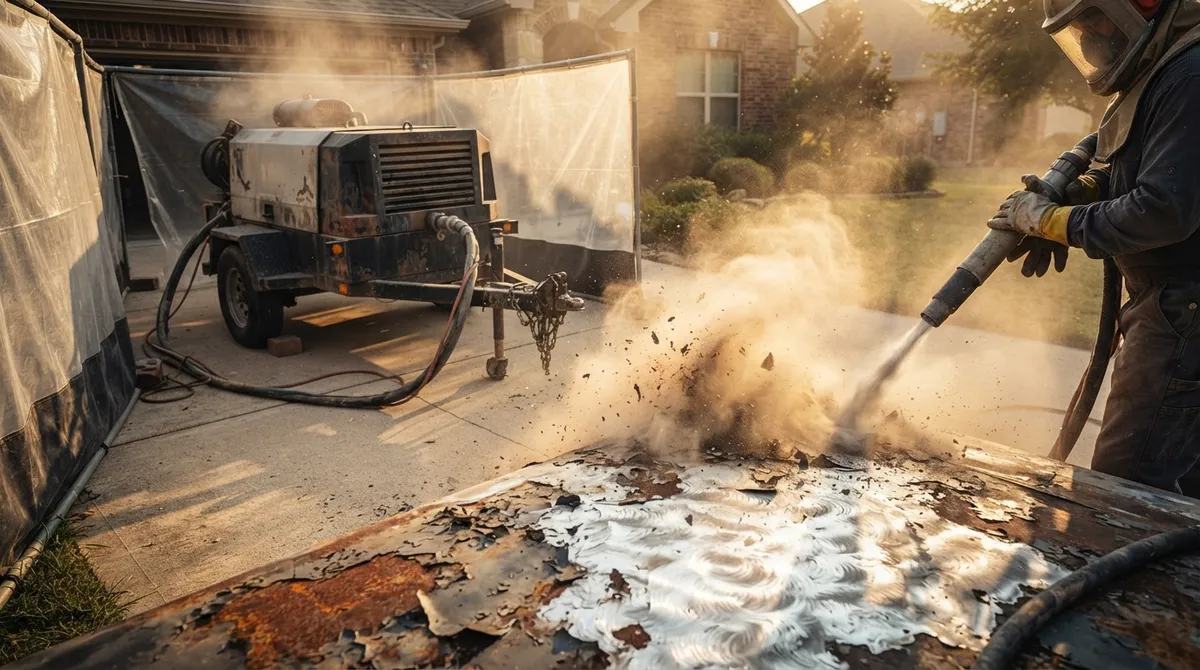
Mobile coating removal services eliminate the need to transport equipment or vehicles to a shop by bringing fully self-contained blasting rigs directly to your location, reducing downtime and handling hassles.
-
Professional coating removal requires matching the right abrasive media and pressure to your specific surface type; using incorrect media can damage delicate surfaces like fiberglass or fail to remove stubborn coatings effectively.
-
Old coatings may contain hazardous materials like lead, chromium, or cadmium requiring special testing and disposal; responsible contractors must check for these before starting work and follow OSHA regulations on silica dust exposure.
-
The complete coating removal process includes site assessment, protection setup, media selection, blasting, proper cleanup, and surface prep confirmation—skipping any step can result in a messier project or coating failure later.
-
Before hiring a contractor, ask about their abrasive media choice, dust control methods, hazardous coating testing procedures, debris disposal practices, insurance coverage, and target surface-prep standards.
-
Mobile blasting works across multiple industries and surfaces—from boat hulls and automotive frames to industrial tanks and residential fences—each requiring different abrasive media and pressure settings for optimal results.
If you’ve ever tried to scrape rust off an old gate or sand paint off a boat hull, you already know how much time it eats up. Coating removal services take that headache off your plate. A mobile blasting crew shows up with the right equipment and strips paint, rust, corrosion, or old finishes fast, without you lifting a scraper. And here’s the best part: the job happens right where your project sits, whether that’s your driveway, a marina, or a job site in Tampa.
At Blastworx, we come to you. Our rig is fully mobile and self-contained, so we don’t need your power or water to get the job done. We’ve stripped everything from boat hulls in Clearwater to structural steel on job sites in Orlando. In this article, we’ll walk through what coating removal really involves, why it takes more skill than people expect, and how to pick a provider who does it right. Let’s get into it.
What Are Coating Removal Services, Exactly?
Coating removal services use abrasive-blasting equipment to strip paint, rust, mill scale, powder coating, marine finishes, and other bonded materials off a surface. Instead of hauling your equipment or vehicle to a shop, a mobile blasting company brings portable gear to your location. That means less downtime, less hassle, and no need to disassemble heavy or immovable items.
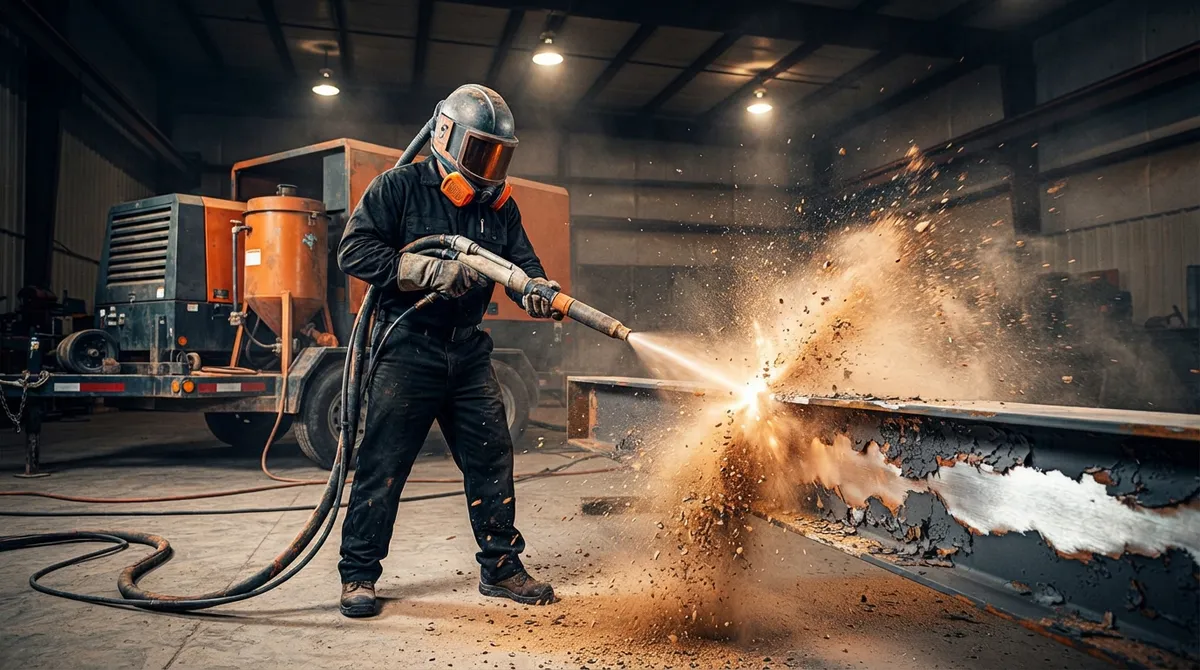
The process itself involves more than just blasting away old material. A good contractor looks at your substrate, figures out what coating is on it, and picks the right pressure, nozzle, and abrasive media for the job. This matters because the wrong media can damage a delicate surface or fail to remove a stubborn coating. We always match the blast to your surface, not the other way around.
Common Methods Used in Mobile Coating Removal
There isn’t just one way to strip a coating. Depending on the surface and the mess you’re dealing with, a mobile blasting company might use:
- Dry abrasive blasting for tough rust and heavy coatings on metal
- Dustless blasting, which mixes water with abrasive to cut down on airborne dust
- Soda blasting for delicate surfaces like fiberglass, wood, or gelcoat
- Vapor or wet blasting for indoor or sensitive job sites
- Vacuum-assisted blasting to contain debris on-site
Each method has its place. For example, soda blasting is gentle enough for a boat hull without damaging the gelcoat underneath, while a stronger abrasive works better on structural steel or heavy equipment. You can learn more about how these methods stack up in our post on wet sandblasting vs dry blasting.
What Surfaces Can Be Treated With Coating Removal Services?
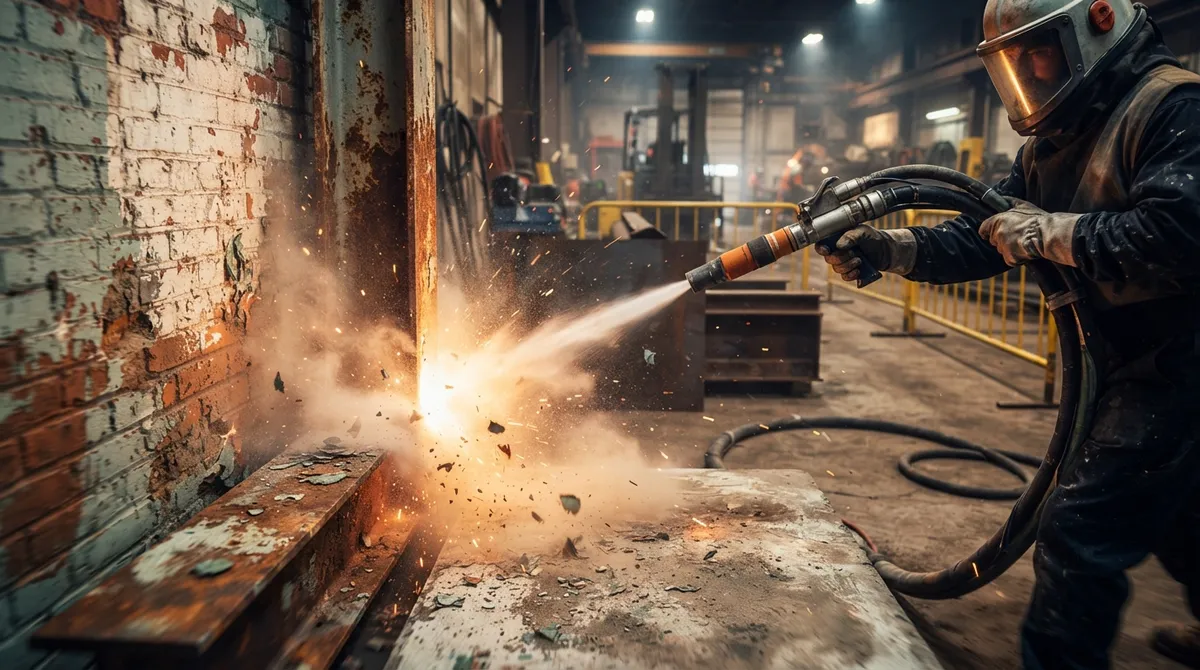
Mobile blasting works on a wide range of materials, and each one needs its own approach. Here’s a quick look at common surfaces and what they typically need:
| Surface Type | Common Coating Removed | Typical Media Used |
|---|---|---|
| Steel & Structural Metal | Rust, mill scale, old paint | Sand, aluminum oxide, steel shot |
| Boat Hulls & Fiberglass | Antifouling paint, bottom paint | Soda, walnut shell |
| Concrete & Masonry | Paint, sealers, graffiti | Sand, dustless blasting |
| Vehicles & Frames | Rust, paint, undercoating | Aluminum oxide, soda (for panels) |
| Wood Decks & Fences | Old paint, stain | Soda, low-pressure media |
Notice how the media changes based on what’s underneath. That’s not a small detail. Using the wrong abrasive on a soft surface like wood or fiberglass can cause real damage, which is why picking an experienced marine or automotive blasting team matters.
Why Coating Removal Involves More Than Just Blasting
A lot of folks think coating removal is as simple as pointing a nozzle and pulling a trigger. It’s really not. A professional job includes several steps, and skipping any of them can mean a messier project or a coating that fails down the road.
The Standard Coating Removal Process
- Site assessment: We check the substrate and figure out what coating we’re dealing with.
- Protection setup: Nearby areas, landscaping, and structures get masked or shielded.
- Media selection: We choose the right abrasive and pressure for your surface.
- Blasting: The coating gets stripped back to clean, sound material.
- Cleanup: Debris and spent media get collected and hauled away properly.
- Prep confirmation: The surface is checked to make sure it’s ready for the next step, whether that’s priming, painting, or resurfacing.
This is basically our four-step process in action. We start with a walkthrough (photos work fine, or we can come look in person), give you a same-day estimate, protect the surrounding area, and blast the surface clean at your location. When we’re done, it’s ready to prime and coat.
Dealing With Hazardous Coatings Safely
Here’s something people don’t always think about: old paint and coatings can contain lead, chromium, cadmium, or other hazardous substances. This is especially true on older homes, older boats, and aging industrial equipment. A responsible coating removal company checks for this before starting work, since spent media might need special testing and disposal instead of just tossing it in a regular dumpster.
Dust control matters here too. Silica dust, which comes from blasting sand and certain other materials, is a serious health concern. The Occupational Safety and Health Administration sets clear limits on this. OSHA’s rules require an action level of 25 micrograms per cubic meter and a permissible exposure limit of 50 micrograms per cubic meter, both measured over an 8-hour period. These aren’t just numbers on paper. They’re the reason a good blasting crew uses proper respiratory gear, dust containment, and sometimes wet or vapor blasting methods instead of dry sand.
If you want to understand the basics of the process itself, what is sandblasting is a good place to start. It covers the history and mechanics behind abrasive blasting in a way that’s easy to follow.
How Contractors Should Handle Containment
Containment isn’t just about keeping your yard clean, though that matters too. It’s about protecting soil, storm drains, and neighboring properties from dust and debris drift. A trustworthy mobile blasting company will:
- Set up physical barriers or tarps around the work area
- Use vacuum-assisted or wet blasting methods when dust control is critical
- Test for hazardous coatings before starting on older structures
- Document how spent media and debris are disposed of
- Follow OSHA guidelines for worker protection, including respirators when needed
We take this seriously on every job, whether we’re working on a bay-area home or an industrial site. We contain the mess and protect the surrounding area, every time.
Mobile Blasting vs. Taking Your Project to a Shop
One of the biggest advantages of mobile coating removal services is exactly what it sounds like: mobility. You don’t have to load up a boat trailer, disconnect heavy machinery, or arrange transport for something that barely fits on a flatbed. The crew comes to you.
This matters a lot for:
- Large industrial tanks or vessels that can’t be moved
- Boats and marine hardware sitting at a dock
- Vehicles or heavy equipment still in daily use
- Structural steel already installed on a job site
- Homes with fences, railings, or pool decks that are, well, attached to the house
We’ve written more about this tradeoff in our post comparing a mobile rig vs. drop-off shop, if you want to dig into the details.
What Should You Ask a Coating Removal Contractor?
Price matters, sure, but it shouldn’t be the only thing you ask about. A contractor who only quotes a number without explaining their process is skipping some important steps. Before hiring anyone, ask about:
- What abrasive media they plan to use and why
- How they’ll control dust and protect nearby property
- Whether they test for hazardous coatings like lead paint
- What their cleanup process looks like
- How they dispose of spent media and debris
- Whether they carry insurance
- What surface-prep standard they’re aiming for before you recoat
If a contractor can’t answer these clearly, that’s worth noting. We’re fully insured, and when you call us, you talk to the people actually doing the work, not a call center reading from a script.
Real-World Applications Across Florida
Coating removal isn’t just for one type of customer. We see all kinds of projects across Tampa Bay and central Florida:
- Marine: Stripping old bottom paint and antifouling from hulls, docks, and davits before a fresh coat goes on. Check out our marine blasting services for more.
- Automotive: Getting frames and body panels back to bare metal for restoration projects. Our automotive blasting page covers what’s involved.
- Industrial: Removing rust and old coatings from tanks, structural steel, and heavy equipment without shutting down a whole facility. See our industrial blasting options.
- Commercial: Stripping paint or graffiti from storefronts, sidewalks, and fleet vehicles, often after hours to avoid disrupting business. Our commercial blasting services handle this regularly.
- Residential: Cleaning up fences, railings, pool decks, and patios so homeowners can refinish or repaint. Our residential blasting page has more details.
We work throughout Tampa, Clearwater, Sarasota, Ocala, Orlando, and Fort Myers, plus smaller bay-area towns like Brandon, Riverview, Plant City, Lutz, and St. Pete. Curious what folks in the area think of our work? You can visit us on Google and see what our customers are saying about us.
How Long Does a Coating Removal Project Take?
This depends on the size of the job and the coating you’re removing. A fence or set of railings might take a few hours. A boat hull or industrial tank could take a full day or more. Heavy rust and multiple coating layers add time, while a single layer of paint on a small surface goes quicker. We always give a clear estimate upfront, including expected time on-site, so there aren’t any surprises.
For a deeper look at what factors into pricing and timelines, our article on sandblasting estimates breaks it down further.
Ready to Get Your Surface Back to Clean, Bare Metal?
Coating removal services save you time, protect your surfaces, and get your project ready for the next step, whether that’s a fresh coat of paint, a new finish, or a full restoration. The key is working with a team that understands the science behind blasting, not just the muscle. From media selection to dust control to proper cleanup, every step matters.
If you’ve got rust, old paint, or stubborn coatings that need to go, we’d love to help. Get a free estimate today, or if you’d rather talk it through first, give us a call. We’re here, we’re local, and we’re ready to get your surface back to clean, sound material.
FAQs
Q: What are coating removal services in mobile blasting?
A: Coating removal services bring blasting equipment right to your location to strip paint, rust, and old coatings off surfaces. Instead of hauling your boat, vehicle, or equipment somewhere else, we come to you and get it done on-site. It’s convenient, and honestly, it saves you a ton of hassle.
Q: Can mobile blasting remove lead paint or hazardous coatings?
A: It depends on the situation, and this is something we always check before starting. Older coatings sometimes contain lead or other hazardous materials, so a careful evaluation upfront matters a lot. If hazards are found, special handling and disposal steps are needed to keep everyone safe.
Q: How do mobile blasters control dust and protect nearby property?
A: We use containment barriers, tarps, and sometimes wet or dustless blasting methods to keep dust from spreading. We also protect landscaping, windows, and anything nearby that shouldn’t get hit with debris. Protecting your property is just as important to us as the blasting itself.
Q: Does blasting damage the underlying substrate?
A: Not when it’s done right. We match the blast media and pressure to your specific surface, so delicate materials like wood or fiberglass get gentler treatment, while tough metal gets a stronger abrasive. The goal is always to strip the coating without harming what’s underneath.
Q: How much do mobile coating removal services cost?
A: Costs vary based on the size of the project, the type of coating, and how much prep work is needed. We always provide a clear, written estimate the same day we look at your project, so you know exactly what to expect. No surprises, just an honest price for honest work.





