
Key Takeaways
-
Steel shot blasting is most effective on tough, durable materials like structural steel, trailers, tanks, and concrete; avoid using it on thin metal panels, fiberglass, or delicate surfaces that could warp under impact.
-
Choose the correct steel shot size based on contamination type: smaller grades (S230-S280) for fine cleaning, medium grades (S330-S390) for standard rust and scale, and larger grades (S460-S550) for heavy buildup on robust surfaces.
-
Steel shot blasting removes rust, mill scale, old paint, and foundry residue effectively, but always test a small area first to confirm the right media and pressure match your specific surface and coating requirements.
-
Steel shot creates a smoother, peened surface finish suitable for cleaning, while steel grit produces a deeper anchor profile required by some coating manufacturers; verify coating specs before choosing between them.
-
Despite producing less dust than mineral abrasives, steel shot blasting still poses respiratory hazards from lead paint, rust, and grime contaminants already on surfaces; always use proper containment and respiratory protection per OSHA guidelines.
-
Mobile steel shot blasting has lower media recovery rates than factory systems due to open-air contamination and debris mixing; recovered shot requires screening and may need disposal testing if contaminated with regulated materials like lead.
If you’ve got rusty steel, old mill scale, or stubborn coatings that just won’t budge, steel shot blasting might be exactly what you need. It’s one of the toughest, most reliable ways to bring metal, concrete, and industrial surfaces back to clean, sound material. But here’s the thing: not every job calls for it, and picking the wrong media size or hardness can waste time and money.
We’ve put together this friendly guide so you know exactly what steel shot blasting is, how it works on a mobile job site, and when it’s the right tool for your project. Whether you’re dealing with a rusted trailer frame, an old tank, or a warehouse floor covered in years of grime, we’ll walk you through it step by step. Grab a coffee, and let’s dig in together.
1. What Steel Shot Blasting Actually Is
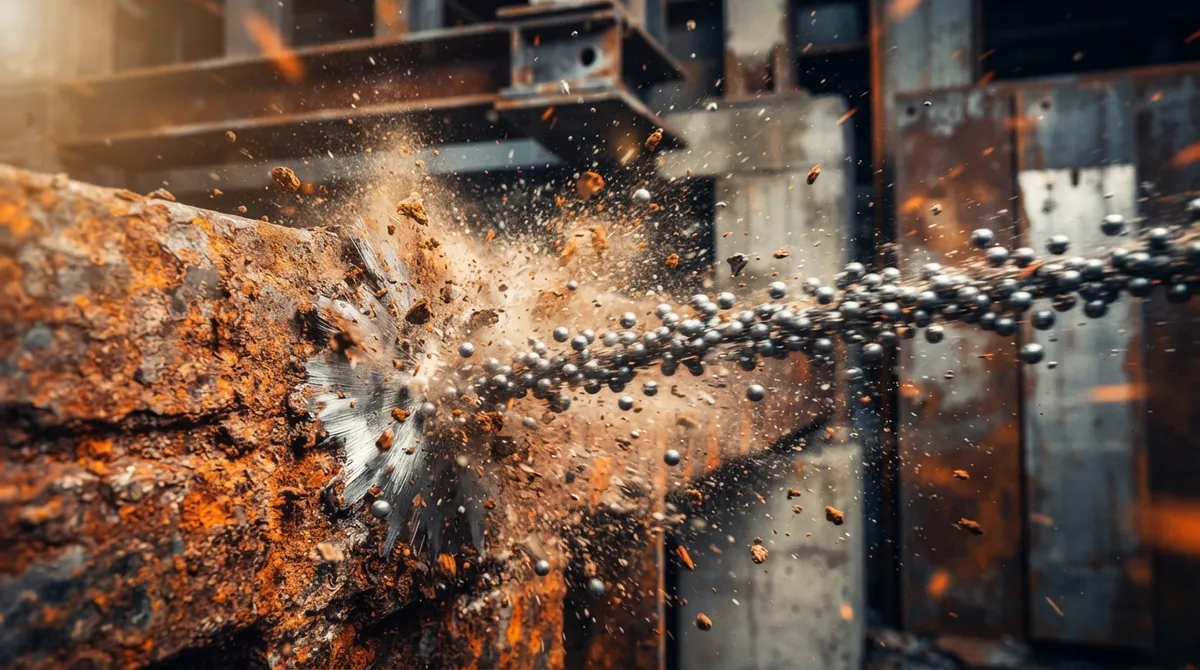
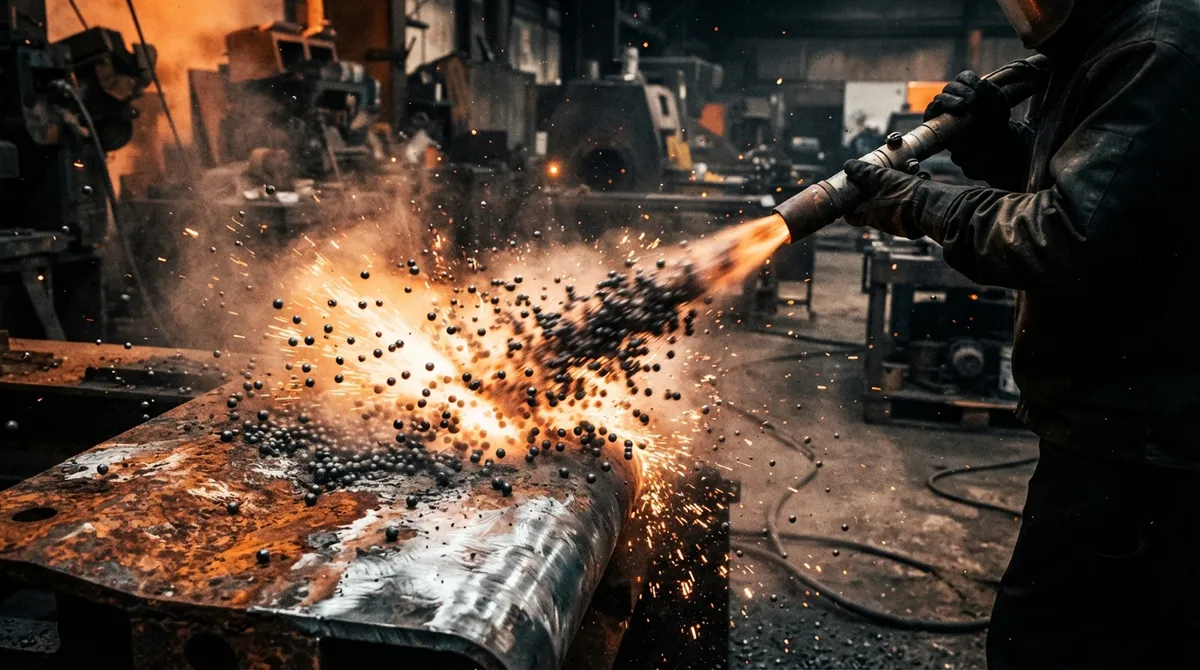
Steel shot blasting uses small, round, cast-steel balls fired at high speed to clean a surface. In a factory setting, big wheel machines throw the shot. Out in the field, mobile crews like ours rely on compressed air systems instead, since we bring the equipment to you rather than the other way around.
The round shape of the shot creates a smoother, almost polished profile compared to sharper abrasives. That makes it a great pick for jobs where you want a clean surface without an aggressive bite. It’s a method that’s been trusted in heavy industry for decades, and you can read more about the broader blasting family on what is sandblasting if you want the full backstory.
2. Surfaces That Handle Steel Shot Well
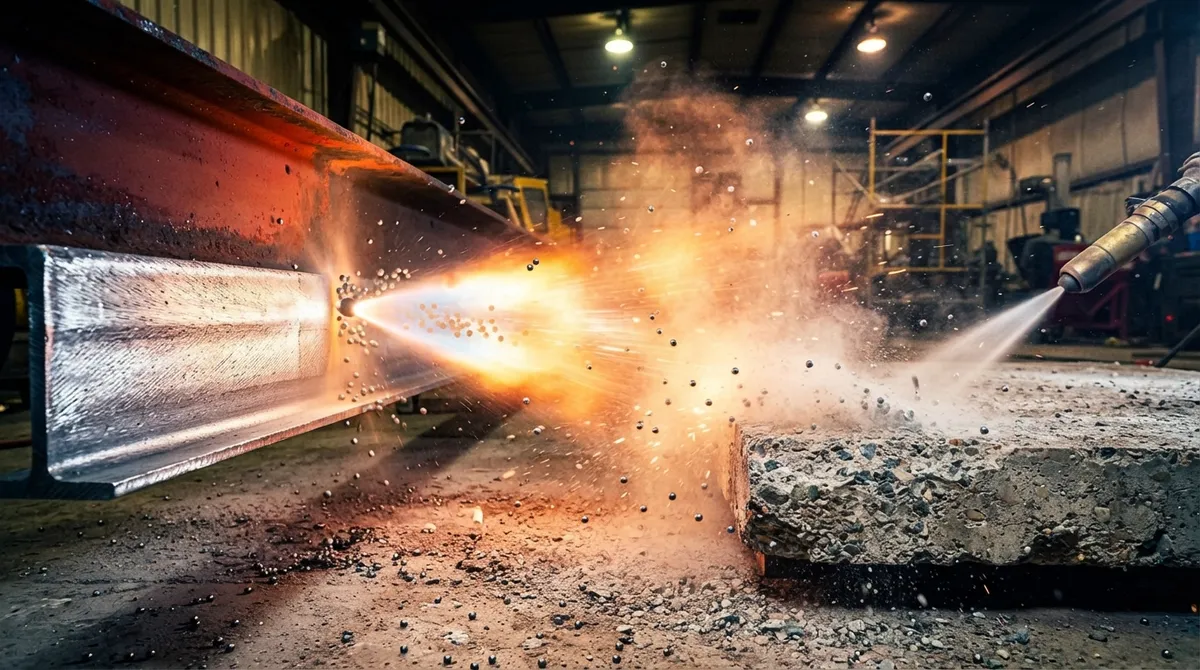
Steel shot isn’t for every surface. It shines on tough, durable materials that can take a hit without warping or wearing thin.
- Structural steel beams and columns
- Heavy equipment and machinery housings
- Trailers and truck frames
- Tanks, vessels, and pipes
- Concrete floors and industrial slabs
- Foundry parts with sand or scale buildup
If your project falls into one of these categories, steel shot blasting is worth a serious look. We handle a lot of this type of work through our Industrial and Commercial service lines here in Tampa Bay.
3. What It Removes Best
Steel shot blasting is a workhorse when it comes to stripping away years of buildup. It’s especially good for these three types of contamination:
- Rust and mill scale on structural steel
- Old paint and worn protective coatings
- Foundry sand, burrs, and casting residue
The goal is always the same: get the surface back to clean, sound material so whatever comes next actually sticks. We match the blast to your surface, not the other way around, and that starts with knowing exactly what’s coming off.
4. Steel Shot Sizes and What They Mean
Steel shot comes in standardized sizes, and picking the right one makes a big difference in your results. The number roughly tells you the particle size in ten-thousandths of an inch.
| Shot Size | Approx. Diameter | Best Use |
|---|---|---|
| S230 | 0.023 in (0.58 mm) | Fine cleaning, lighter finish |
| S280 | ~0.028 in | General surface cleaning |
| S330 | 0.033 in (0.84 mm) | Standard rust and scale removal |
| S390 | ~0.039 in | Medium-heavy scale |
| S460 | ~0.046 in | Heavy scale, larger components |
| S550 | 0.055 in (1.40 mm) | Heaviest scale, robust surfaces |
Bigger numbers mean bigger particles and more impact force. Smaller numbers give finer coverage and a smoother finish. This is exactly why testing a small area first matters so much before we commit to full production on your project.
5. Steel Shot Versus Steel Grit: What’s the Difference
People mix these up all the time, and honestly, it’s an easy mistake. Both are steel abrasives, but they behave very differently on a surface.
| Feature | Steel Shot | Steel Grit |
|---|---|---|
| Shape | Round, spherical | Angular, jagged |
| Surface Profile | Smoother, peened finish | Deeper anchor profile |
| Best For | Cleaning without heavy texture | Coating prep needing strong bite |
| Wear on Equipment | Lower | Higher |
If your coating manufacturer calls for a deep anchor profile, steel grit or another angular abrasive is probably the better call. Steel shot is great when you want clean without going overboard.
6. Steel Shot Chemistry and Hardness, Explained Simply
You don’t need an engineering degree to understand this part, we promise. Steel shot is made from cast steel with a carbon content around 0.80 to 1.20 percent, keeping it tough and durable.
- Sulfur and phosphorus are kept low, usually under 0.05 percent each
- Standard hardness runs about 40 to 50 HRC
- Specialty grades can reach 54 to 61 HRC or higher for demanding jobs
- Density sits around 7.4 g/cm³, making it heavier than most mineral abrasives
That density and hardness combo is exactly why steel shot holds up to repeated use so well, especially in facilities with recovery systems.
7. Steel Shot Blasting Is Not Shot Peening
This trips people up constantly, so let’s clear it up right now. Steel shot blasting cleans a surface. Shot peening is a totally different, highly controlled process.
Shot peening intentionally creates compressive stress in metal to improve fatigue resistance. It requires precise media, intensity, and coverage settings, usually tracked with specific engineering standards. Steel shot blasting, on the other hand, is about surface prep and cleaning, not stress engineering. If someone tells you they’re the same thing, they’re not, and it’s worth double-checking before signing off on any spec sheet.
8. Dust, Debris, and Why Low Dust Doesn’t Mean No Risk
One reason steel shot blasting is popular is that it produces less dust than many mineral abrasives, since the particles resist breaking down. But don’t let that fool you into skipping safety precautions.
The real hazard often comes from what’s already on the surface, not the shot itself. Old coatings can contain lead or other heavy metals. Rust and grime can carry contaminants too. That’s why abrasive blasting safety guidance stresses respiratory protection and proper containment, even on jobs that look straightforward. OSHA’s rules under 29 CFR 1910.94 exist for exactly this reason, and we take them seriously on every mobile job.
9. Media Recovery on a Mobile Job Site
Here’s something a lot of folks don’t realize: steel shot is magnetic, which makes it much easier to recover than sand or other expendable media. In a closed factory system, manufacturers report hundreds of reuse cycles for grades like S330.
But mobile blasting is a different story. Open-air jobs mean media gets lost, mixed with debris, or contaminated by removed coatings. That drops the practical reuse rate significantly compared to a sealed facility. Recovered shot also needs screening to filter out broken particles and debris before reuse. Spent material may even require disposal testing if it picked up lead or other regulated contaminants along the way.
10. Steps We Follow Before Any Steel Shot Blasting Job
We keep our process simple and transparent, because nobody likes surprises on a job site. Here’s how it typically goes:
- Walkthrough: We look at photos or visit in person to figure out the right media for your surface.
- Free estimate: You get a clear, written estimate the same day. No games, no hidden fees.
- Containment setup: We protect the surrounding area before any blasting starts.
- Blast and strip: We clean the surface using steel shot or another media matched to the job.
- Final inspection: We check the surface profile and cleanliness before calling it done.
This process is the backbone of everything we do, whether it’s a small trailer or a full structural steel job. We contain the mess, we protect the surrounding area, and you talk to the people doing the work the whole time.
11. When Steel Shot Blasting Might Not Be the Right Choice
As much as we love steel shot for the right project, it’s not always the answer. A few situations call for a different approach entirely.
- Thin metal panels that could warp under heavy impact
- Delicate fiberglass or gelcoat surfaces on boats
- Wood or softer materials needing gentler media
- Coating specs requiring a sharper, deeper anchor profile
- Small detail work where finer, softer abrasives work better
For those jobs, we might reach for soda blasting, sand, or another dustless option instead. That’s really the heart of our philosophy: the right media for the job, not a one-size-fits-all approach. You can see examples of how we adjust methods across different projects on our Marine and Automotive pages, where surface sensitivity really matters.
Choosing the Right Mobile Blasting Partner
Steel shot blasting takes the right equipment, the right media selection, and a crew that knows how to contain the job properly. It’s not something you want to hand off to just anyone with a compressor and a hose.
At Blastworx, we’re fully mobile and self-contained, so we bring everything needed straight to your location in Tampa, Ocala, Orlando, Fort Myers, or anywhere else along the central Florida corridor. We’re fully insured, and because we’re a small, owner-operated crew, your job gets our full attention from start to finish. Curious what past customers have to say? You can visit us on Google to see what our customers are saying about us before you decide.
We’ve handled everything from rusted structural beams to industrial tanks and heavy equipment across the Tampa Bay area. If you want to learn more about how we approach different surfaces, check out our structural steel blasting facts or our breakdown on blasting versus hand tools for steel prep.
Wrapping It Up
Steel shot blasting is a fantastic option when you need durable, low-dust cleaning on tough surfaces like structural steel, trailers, tanks, and concrete. It’s not the answer for every project, but when it fits, it delivers a clean, sound surface ready for the next step, whether that’s priming, coating, or just getting equipment back into service.
Got a project that might need steel shot blasting, or you’re just not sure which media fits best? Reach out and get a free estimate from our team, or give us a call to talk through your options. We’re happy to walk you through it, no pressure, just honest advice from the people who’ll actually be doing the work.
FAQs
Q: What is steel shot blasting used for in mobile blasting?
A: It’s used to clean rust, mill scale, old coatings, and foundry sand off tough surfaces like structural steel, trailers, tanks, and concrete. On a mobile job, we bring compressed air equipment right to your site so there’s no need to haul heavy parts anywhere.
Q: Is steel shot blasting safe for lead-based paint?
A: Steel shot itself creates relatively low dust, but that doesn’t mean the job is automatically safe. Old lead paint or other hazardous coatings can still create serious risks, so we always plan proper containment and respiratory protection when needed.
Q: How do I know which steel shot size is right for my project?
A: It really depends on your surface and how much scale or coating needs to come off. Smaller grades like S230 give a finer finish, while larger grades like S550 handle heavy rust and scale, and we’re always happy to test a small area first to confirm the right fit.
Q: Can steel shot blasting damage thin metal?
A: Yes, it can if the wrong size or pressure is used on delicate panels. That’s why we always match the blast to your surface, adjusting media and pressure so thin metal doesn’t warp or distort during the job.
Q: Does steel shot blasting leave enough profile for a new coating?
A: It depends on your coating specs. Steel shot creates a smoother, peened finish, which works great for many projects, but if your coating manufacturer requires a deeper anchor profile, we might recommend steel grit instead.





