
Key Takeaways
-
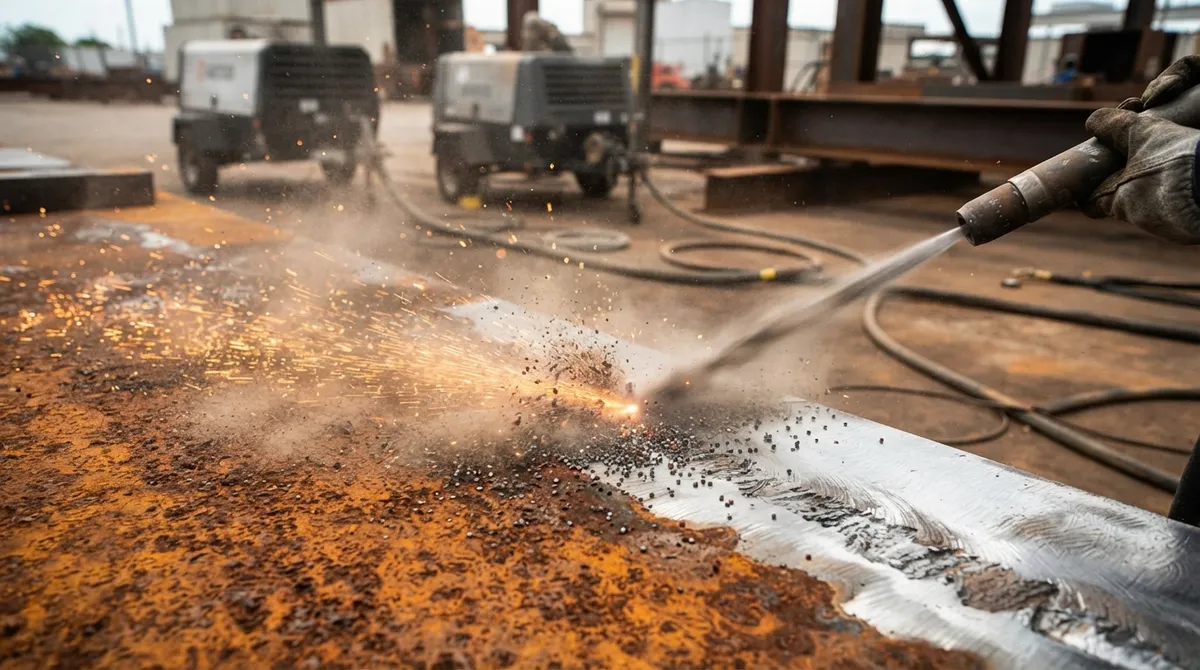
Proper surface preparation blasting is more critical than the coating itself—coating quality fails within months if rust or contaminants remain hidden beneath, making professional blasting essential for long-term durability.
-
Mobile blasting eliminates the need to transport large, fixed assets like 40-foot tanks or structural steel beams to a shop; equipment comes to your site fully self-contained without requiring existing power or water hookups.
-
Match abrasive media type to your specific metal and contamination level: garnet and steel grit for heavy rust removal, glass bead for delicate parts, and walnut shell or soda for fiberglass and marine hardware.
-
Surface profile texture created by abrasive media at speeds exceeding 600 mph dramatically increases bonding area for coatings; too smooth a profile leads to poor adhesion and early coating failure.
-
Blast cleanliness standards (SSPC-SP5, Near White, Commercial, Brush-Off) determine coating performance; industrial chemical tanks require White Metal Blast, while residential railings typically need only Commercial Blast.
-
Professional containment during mobile blasting includes tarps, vacuum recovery systems, and debris cleanup to prevent overspray onto neighboring properties, vehicles, and landscaping.
Rust never sleeps, and neither does the Florida humidity that feeds it. If you have a steel tank, a rusty gate, or an old boat trailer that needs new paint, the surface underneath matters more than the paint itself. That’s where metal surface preparation blasting comes in. It’s the process that strips away rust, old coatings, and grime so whatever goes on next actually sticks around.
We get asked about this a lot at Blastworx, because folks in Tampa Bay deal with salt air, sun, and storms that chew through metal fast. In this article, we’ll walk through what metal surface preparation blasting actually means, how it works, which media gets used, and why doing it right the first time saves you money down the road. Grab a coffee, and let’s get into it.
What Is Metal Surface Preparation Blasting?
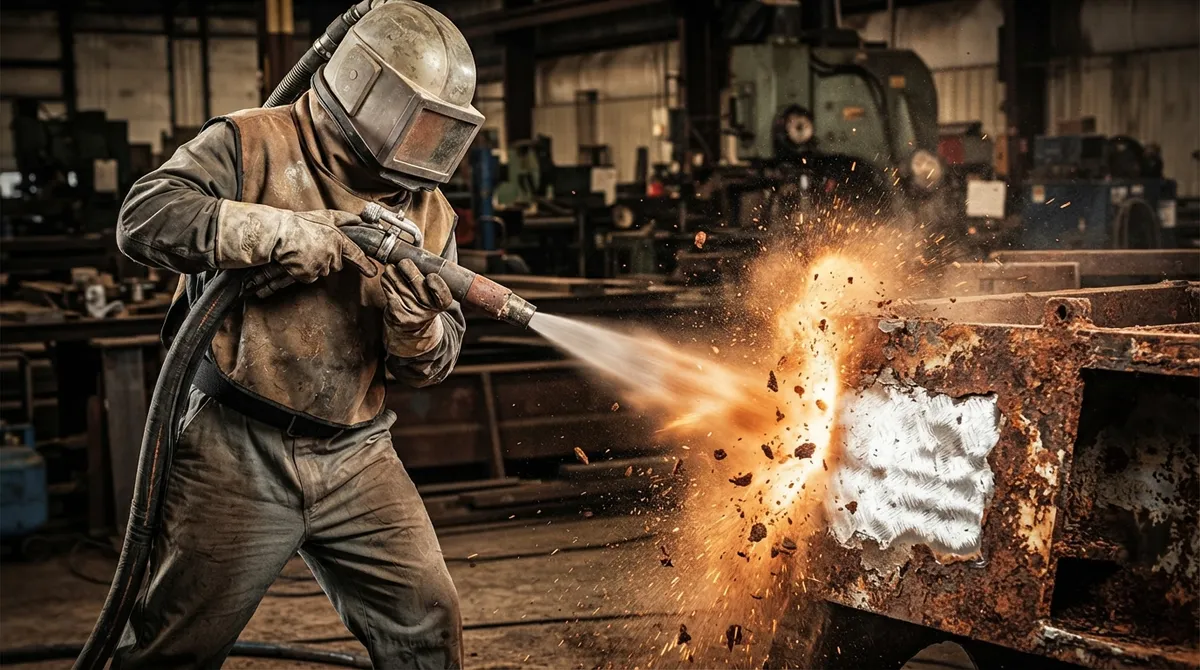
Metal surface preparation blasting is the process of using abrasive media, propelled by air or water, to remove rust, mill scale, old paint, and other buildup from metal. The goal is simple: get the surface back to clean, sound material so a new coating, weld, or repair can bond properly.
This isn’t a new idea. What is sandblasting has been used in industry for over a century, and the core concept hasn’t changed much. Blast media hits the surface at high speed, knocking off contaminants without damaging the base metal underneath, at least when it’s done by someone who knows what they’re doing.
Why Prep Matters More Than the Paint Job
Here’s a truth that surprises a lot of people: the coating is only as good as what’s underneath it. You can spend a fortune on marine-grade paint or industrial coating, but if there’s rust hiding in the seams, that paint will bubble and peel within months.
Hand-sanding and wire brushing just don’t cut it for most jobs. They miss corners, pits, and tight spots where rust likes to hide. Blasting takes the whole surface back to clean, bare metal at once, so nothing gets left behind.
How Mobile Blasting Differs From Shop Blasting
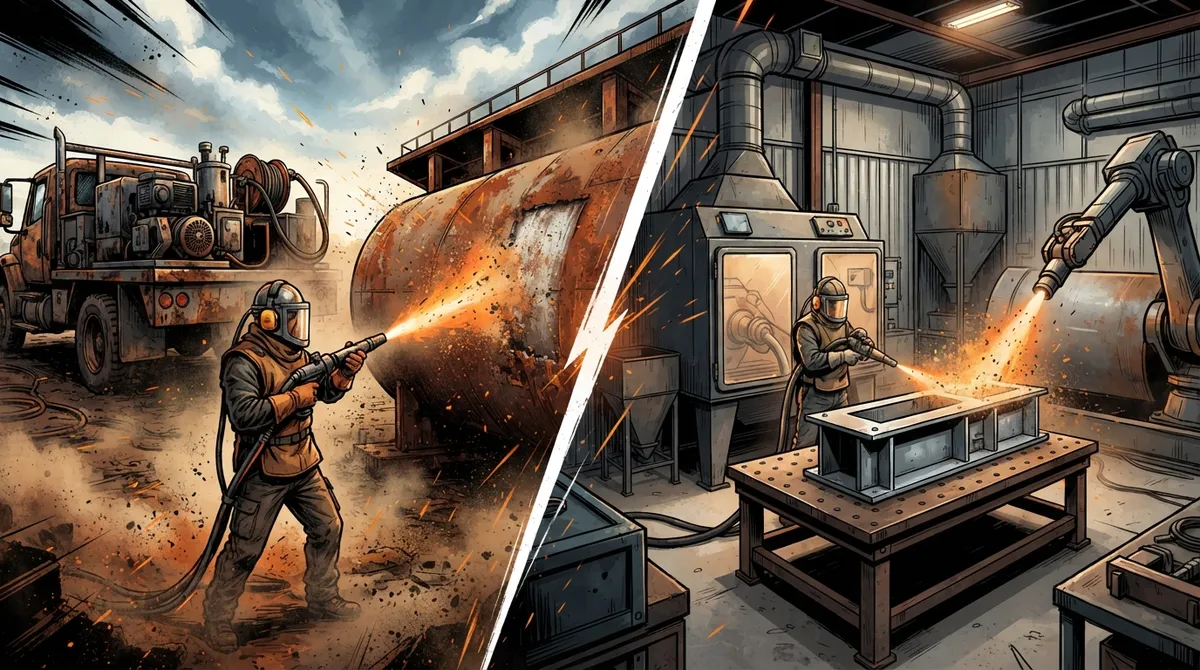
Traditional blasting happens in a fixed shop. You haul your item in, they blast it, you haul it back out. That works fine for small parts. But what happens when your “part” is a 40-foot steel tank or a bridge support beam that can’t be moved?
Mobile blasting solves that problem. We bring the equipment to you. Our rig is fully mobile and self-contained, so we can set up dockside, in your driveway, at a job site, or inside a warehouse without needing your power or water hookup.
- We do a walkthrough, either in person or through photos you send us, to figure out the right media for your surface.
- We provide a free, written estimate the same day, so there are no surprises later.
- We protect the surrounding area, then blast the surface clean right where it sits.
- The surface comes out clean and ready for the next step, whether that’s priming, coating, or welding.
This approach is especially valuable for large or immovable assets like storage tanks, structural steel, heavy machinery, and industrial equipment. You can read more about how this plays out for larger jobs in our piece on structural steel blasting facts Florida owners need.
Common Metals We Prep and Where They Show Up
Mobile abrasive blasting works on a wide range of metals, each with its own quirks. Here’s a quick rundown of what we see most often across Tampa Bay and central Florida.
- Steel structures, beams, and framing on commercial and industrial sites
- Boat hulls, trailers, props, cleats, and marine hardware
- Automotive frames, body panels, wheels, and undercarriages
- Iron railings, gates, and fences around homes and pools
- Storage tanks, vessels, and fabrication equipment
- Machinery parts that need weld prep or rust removal before repair
Because each metal reacts differently to abrasive pressure, we match the blast to your surface, not the other way around. Thin body panels need lower pressure to avoid warping, while heavy steel frames can handle a much more aggressive approach.
Marine Metal Prep
Boats and trailers take a beating from salt water. Metal hardware like cleats, rails, and fittings corrode fast, and old bottom paint builds up layer after layer. Our marine blasting service handles this by using softer media for gelcoat and fiberglass hulls, then switching to stronger abrasives for the metal hardware attached to them.
Automotive Metal Prep
Restoring a classic car or prepping a frame for powder coat requires precision. Our automotive blasting work strips rust and old paint back to bare metal, using cooler media and lower pressure on thin panels so they don’t warp under the abrasive stream.
Abrasive Media Choices for Metal Surface Prep
Not all blast media is created equal. The right choice depends on the metal, how bad the contamination is, and what kind of finish you need afterward. Here’s how the most common options stack up.
| Media Type | Best Used For | Surface Result |
|---|---|---|
| Garnet | Steel structures, tanks, heavy rust removal | Aggressive profile for strong coating adhesion |
| Steel Shot | Cleaning without changing surface profile much | Smoother, polished finish |
| Steel Grit | Heavy corrosion, mill scale removal | Sharp, angular profile for maximum bonding |
| Glass Bead | Delicate metal parts, cosmetic finishing | Soft, matte finish with minimal material removal |
| Walnut Shell | Fiberglass, gelcoat, softer metals | Gentle cleaning without gouging |
| Soda | Marine hardware, delicate surfaces | Clean strip with low surface damage |
We keep several media types on hand because the right media for the job changes from one project to the next. A rusty steel beam and a polished aluminum part need two completely different approaches, and we plan for that before we ever fire up the rig.
Understanding Blast Cleanliness Standards
If you’ve ever gotten a quote for blasting work, you may have seen terms like SSPC-SP5 or “commercial blast” tossed around. These are industry standards that describe how clean the metal needs to be after blasting, and they matter a lot for coating performance.
The Four Common Blast Grades
- White Metal Blast (SSPC-SP5/NACE No. 1): The strictest standard. The surface is completely free of rust, mill scale, paint, and any visible contaminants. Used for severe service conditions where coating failure isn’t an option.
- Near White Metal Blast: Allows at least 95% bare metal, with only light shadowing or staining remaining. Common for high-performance industrial coatings.
- Commercial Blast: Requires at least two-thirds of each square inch to be free of visible residue. This is the most common blast type for general commercial work, like metal stairwells, fire hydrants, and machinery.
- Brush-Off Blast: The lightest touch, mainly used to remove loose material and roughen the surface slightly without full rust removal.
Choosing the right standard depends on what the metal will face after it’s coated. A fence railing in a backyard doesn’t need the white metal treatment, but a tank holding chemicals in an industrial setting probably does.
Why Surface Profile Matters for Coating Adhesion
Here’s something that trips people up: blasting isn’t just about cleaning. It’s also about creating texture. That texture is called a surface profile, and it’s what gives paint or coating something to grip onto.
Think of it like sanding wood before you stain it. A completely smooth surface doesn’t hold stain well. Metal works the same way. Abrasive blasting media, sometimes moving at speeds exceeding 600 mph at the nozzle, creates tiny peaks and valleys across the metal surface. That texture dramatically increases the surface area available for coatings to bond to.
- Too smooth a profile leads to poor adhesion and early coating failure
- Too aggressive a profile can leave peaks that poke through thin coatings
- The right profile depends on the coating thickness and type being applied
This is why picking a blasting contractor who understands coating requirements matters just as much as picking one with good equipment. According to guidance referenced in industry surface prep resources, abrasive blasting remains the most commonly used surface preparation method because of its balance of cost, speed, and reliable results.
Safety and Containment During Mobile Blasting
Blasting kicks up dust, debris, and spent media, and none of that should end up on your neighbor’s car or in your koi pond. A professional mobile blasting job includes real containment steps, not just showing up and firing away.
- Tarps and barriers to catch overspray and debris
- Vacuum recovery systems for dustless blasting in sensitive areas
- Protection for landscaping, vehicles, windows, and nearby structures
- Proper respiratory and eye protection for the blasting crew
- Cleanup of spent media and debris once the job is finished
We contain the mess and protect the surrounding area on every job, whether we’re working on a residential fence or a commercial job site downtown. If you want a deeper look at how this works for bigger commercial projects, check out our guide on surface prep steps before commercial coating.
Is Mobile Blasting Right for Your Metal Project?
Mobile blasting makes the most sense when your project involves something big, heavy, or fixed in place. It’s also a great option when you need work done fast without the hassle of transporting equipment to a shop.
| Situation | Mobile Blasting Fit |
|---|---|
| Large steel tank or structure | Excellent, cannot be transported |
| Boat hull or trailer | Excellent, on-site work saves hauling time |
| Small metal bracket or bolt | Possible, but shop blasting may be cheaper |
| Active job site with other trades | Excellent, dustless options reduce disruption |
| Iron fence or gate at a home | Excellent, no need to remove hardware |
For most homeowners and business owners across Tampa, Clearwater, Sarasota, Ocala, Orlando, and Fort Myers, mobile blasting saves time and hassle compared to hauling metal parts across town. We travel throughout the central Florida corridor and beyond for the right job.
What to Expect When You Book a Blasting Job
We keep things simple and transparent. Here’s the general process from your first call to a finished, ready-to-coat surface.
- You reach out by phone, text, or through our contact page describing your project
- We schedule a walkthrough or ask for photos to assess the metal and contamination level
- We provide a written estimate the same day, and the price we give is the price you pay
- On the scheduled day, we set up containment and protect the surrounding area
- We blast the metal surface using the media matched to your specific job
- You get a clean, prepped surface, ready to prime, coat, or repair
Because you talk to the people doing the work, there’s no runaround with sales reps or subcontractors. That direct line matters, especially when timing is tight on a commercial or industrial project.
Curious what other customers experienced? You can visit us on Google — see what our customers are saying about us before booking your own project.
Ready to Get Your Metal Project Prepped Right?
Metal surface preparation blasting isn’t just a cleaning step, it’s the foundation for everything that comes after, whether that’s paint, powder coat, welding, or repair. Skimping on prep almost always costs more in the long run, especially in Florida’s tough climate. If you’ve got rusty railings, a tank that needs recoating, or a frame that needs stripping, doing it right the first time saves headaches later.
We’ve helped property owners and businesses across Tampa Bay tackle everything from small residential gates to large industrial equipment, and we bring the same care to every job regardless of size. If you’re ready to see what proper metal prep looks like, get a free estimate today, or give us a call to talk through your project with our crew directly.
FAQs
Q: What is metal surface preparation blasting?
A: It’s the process of using abrasive media to strip rust, old paint, and mill scale off metal so it’s ready for coating, welding, or repair. Think of it as hitting the reset button on a metal surface before anything new goes on. We match the blast to your surface every single time, so nothing gets damaged in the process.
Q: How does mobile blasting differ from shop blasting?
A: Mobile blasting means we come to you, whether that’s a dock, driveway, or job site, instead of you hauling equipment to a shop. Our rig is fully mobile and self-contained, so we bring our own power and water. It’s a game changer for anything too big or heavy to move, like tanks, steel beams, or boat hulls.
Q: Which abrasive media is best for rust removal on metal?
A: undefined
Q: Which abrasive media is best for rust removal on metal?
A: Steel grit and garnet are usually the go-to choices for heavy rust removal because they create an aggressive profile that grips coatings well. For lighter jobs or delicate metal, glass bead or soda blasting work great too. We pick the right media for the job based on what we see during the walkthrough.
Q: What blast cleanliness standards are used for coated steel?
A: The most common standards are White Metal Blast, Near White Metal Blast, Commercial Blast, and Brush-Off Blast, each describing how much residue can remain after blasting. White Metal is the strictest, leaving zero visible contamination, while Commercial Blast allows a bit more. We help you pick the right standard based on your coating and how the metal will be used.
Q: Is mobile blasting suitable for large industrial equipment?
A: Absolutely, that’s actually where mobile blasting shines the brightest. Tanks, structural steel, and heavy machinery are often impossible or impractical to transport, so bringing the equipment to the asset just makes sense. We’ve handled plenty of these jobs across the central Florida corridor and beyond.





