
Key Takeaways
-
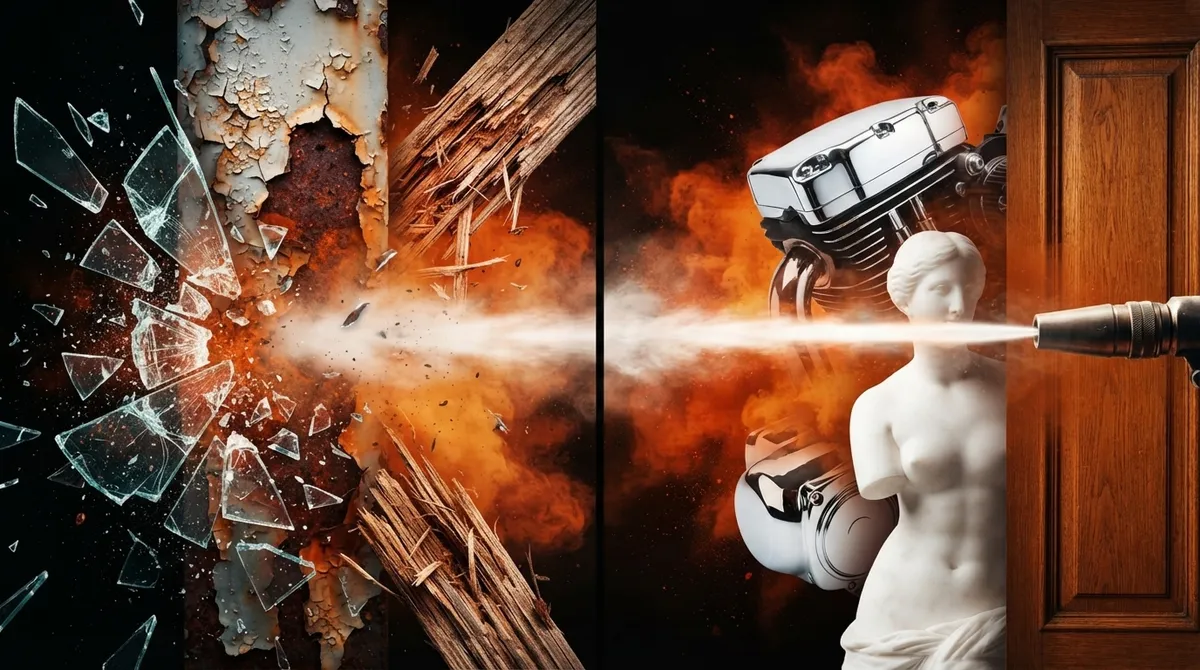
Avoid sandblasting glass, crystal, plastic, and PVC entirely as these materials crack, shatter, or melt under blast pressure and impact, causing permanent damage that cannot be repaired.
-
Lead-based paint (common on surfaces painted before 1978) requires special containment during blasting to prevent hazardous dust release; never blast without proper evaluation and protective equipment.
-
Soft metals like aluminum and copper need low pressure settings and gentle media to prevent scratching, denting, or wear; standard blasting procedures will damage these materials quickly.
-
Varnished or coated wood surfaces lose their protective layer when sandblasted, exposing bare wood to humidity and rain which causes rapid deterioration; use lighter removal methods instead.
-
Thin sheet metal below 18 gauge and fiberglass panels risk warping, pinholes, or gouging; these require carefully adjusted pressure or alternative media like soda or walnut shell.
-
Always request a professional walkthrough and small-section test before committing to sandblasting any unfamiliar surface; this prevents costly repairs and ensures the right method is matched to your material.
So you’re staring at a rusty gate, a dirty pool deck, or maybe an old boat hull, and you’re wondering if sandblasting is the answer. Great question to ask! Here’s the thing: blasting is powerful. It strips away years of grime, rust, and old paint in a fraction of the time hand tools would take. But that same power can wreck certain surfaces if you’re not careful. Not every material can handle the abrasive treatment, and knowing the difference can save you from an expensive mistake.
At Blastworx, we’ve spent years learning what is sandblasting good for and what it can ruin. We match the blast to your surface, not the other way around. That’s not just a nice phrase, it’s literally how we protect your property while getting it back to clean, sound material. Today we’re walking through 13 surfaces that should raise a red flag before anyone fires up a blaster nearby. Grab a coffee, and let’s get into it.
Why Surface Selection Matters So Much
Think of sandblasting like a power tool with a mind of its own. Point it at rusty steel, and you get a beautiful clean surface ready to prime. Point it at the wrong material, and you could end up with cracks, warping, or a surface that’s worse off than before you started.
The abrasive media travels at high speed and hits the surface with real force. Some materials can take that impact all day long. Others crumble, melt, or scratch almost instantly. That’s why a good mobile blasting company always asks questions before they ask what media to load.
13 Surfaces That Should Not Be Sandblasted
Here’s our rundown of materials that need extra caution, gentler methods, or a hard pass altogether.
1. Glass and Crystal
Glass is one of the most fragile surfaces you’ll come across. The blast pressure can scratch it permanently or shatter it outright. Even a gentle media choice carries real risk here, so most professionals avoid blasting glass or crystal surfaces entirely.
2. Treated or Varnished Wood
Varnish and other protective wood coatings exist for a reason. Blasting strips that layer away, leaving bare wood exposed to Florida’s humidity and rain. Once that protection is gone, the wood starts deteriorating fast, so this one needs a lighter touch or a different removal method.
3. Soft Metals Like Aluminum and Copper
Aluminum and copper are softer than steel, and abrasive media can scratch, dent, or wear them down quickly. If you’ve got aluminum trim, gutters, or copper fixtures, they need low pressure and a gentle media, or another cleaning approach altogether.
4. Plastic and PVC Panels
Plastic just isn’t built for this kind of impact. The heat and friction from blasting can melt or deform PVC panels, especially at higher pressures. We do not blast vinyl fencing for this exact reason. It’s simply too delicate for the process.
5. Ceramic and Glazed Tiles
That shiny glaze on ceramic tile is a protective coating, and blasting can chip, crack, or dull it fast. Once that glaze is damaged, the tile’s whole appearance changes, and there’s no putting it back.
6. Thin Sheet Metal Below 18 Gauge
Thin metal panels can warp or develop pinholes under abrasive impact. Anything thinner than 18 gauge needs careful pressure adjustments, or it risks permanent damage. This comes up a lot in automotive work with body panels.
7. Fiberglass Panels (Without Adjustment)
Fiberglass isn’t automatically off-limits, but it demands respect. Standard sand media at high pressure can gouge or thin out a fiberglass hull or panel. That’s why marine jobs on boats often call for softer media like soda or walnut shell instead.
8. Lead-Based Painted Surfaces (Without Proper Handling)
This one’s less about the surface and more about what’s on it. Paint applied before 1978 is often assumed to contain lead, and by regulation, paint is considered lead-based if it has 0.5% total lead or more. Blasting this kind of paint without proper containment can release hazardous dust into the air.
9. Cultured Stone and Veneer
These decorative surfaces look great but can be surprisingly fragile underneath. They often need an in-person evaluation before anyone even considers blasting, since the wrong pressure can crack or dislodge the veneer entirely.
10. Glass Block Windows
Similar to regular glass, glass block is decorative but not built to withstand abrasive impact. It’s easy to scratch the surface permanently or crack the block itself.
11. Delicate Painted Interior Walls
Interior drywall and softer painted surfaces can crumble or tear under blasting pressure. These need a different approach entirely, or at minimum, a very gentle media and low pressure setting.
12. Surfaces in ATEX Zone 1 and Zone 2 Areas
This one’s more about location than material. In classified hazardous zones, like certain offshore assets and refineries, abrasive blasting is prohibited outright because of spark ignition risks in flammable atmospheres. Safety regulations here aren’t optional.
13. Rubber and Weatherstripping
Rubber seals, gaskets, and weatherstripping tear and degrade fast under abrasive media. They’re just not designed to handle that kind of friction, so these areas usually get masked off or protected during a job.
Quick Reference Table: Surface Risk Levels
| Surface Type | Risk Level | Better Approach |
|---|---|---|
| Glass and Crystal | High | Avoid blasting entirely |
| Varnished Wood | High | Soft media, low pressure, or hand methods |
| Aluminum and Copper | Medium-High | Low pressure, gentle abrasive |
| Plastic/PVC | High | Do not blast |
| Ceramic/Glazed Tile | Medium-High | Avoid or use extreme caution |
| Thin Sheet Metal | Medium | Adjust pressure and media carefully |
| Fiberglass | Medium | Soda or walnut shell media |
How Mobile Blasting Pros Decide What’s Safe
A good crew doesn’t just show up and start blasting. There’s a process behind it, and it usually looks something like this:
- Inspect the surface material and its current condition, including thickness and coating type
- Identify any hazardous coatings, like old lead paint, that need special handling
- Choose the right media based on the surface, whether that’s soda, sand, or dustless options
- Test a small section first to confirm the pressure and media are safe
- Protect surrounding areas, windows, landscaping, and anything nearby that shouldn’t get hit
- Blast the approved surface using the matched settings
- Inspect the finished result to confirm the surface is clean and undamaged
This is exactly the walkthrough-first approach we use on every job. We look, we assess, and only then do we recommend an approach. You can read more about why choosing sandblasting for your next big project makes sense once the right media is matched to your surface.
Safer Alternatives for Delicate Surfaces
Just because a surface can’t handle traditional sandblasting doesn’t mean it’s stuck dirty forever. Here are some alternatives worth considering:
- Soda blasting for gentle cleaning on fiberglass, gelcoat, and softer materials
- Dustless (wet) blasting to reduce heat and abrasion while still removing contaminants
- Walnut shell media for delicate marine surfaces that need a lighter touch
- Lower pressure settings combined with a softer abrasive for thin metals
- Hand-scraping or chemical stripping for small, highly sensitive areas
- Professional evaluation before committing to any method on veneer or cultured stone
We’re big fans of dustless blasting for exactly this reason. It’s gentler, contains the mess better, and works great for indoor spaces or areas near other structures. If you want to learn more, check out what makes dustless blasting in Tampa so effective.
Common Mistakes Homeowners and Businesses Make
We’ve seen it all over the years, and a few mistakes come up again and again:
- Assuming all metal can handle the same pressure and media
- Blasting painted surfaces without testing for lead first
- Using sand media indoors without proper dust control
- Skipping a professional walkthrough to save time
- Not protecting nearby glass, plants, or fixtures before starting
Sand as a blasting media isn’t even recommended anymore in most cases, due to health hazards and environmental concerns. Eco-friendly alternatives like recycled glass or soda media are usually the better call. If you’re curious how these choices play out on residential jobs, our article on mistakes to avoid with residential sandblasting covers this in detail.
When to Call in a Professional
Here’s a simple truth: if you’re unsure whether a surface can handle blasting, that’s your sign to call someone who knows. A quick phone call can save you from a costly repair down the road.
- You’re dealing with an unfamiliar material or coating
- The surface shows signs of age, thinness, or previous damage
- There’s a chance the paint contains lead
- The job is near glass, landscaping, or other delicate features
- You want a written estimate before committing to any work
That’s exactly how we operate. We start with a walkthrough, either in person or with photos, then provide a free estimate the same day. The price we give is the price you pay. No surprises, no guesswork.
Why Choose a Mobile Blasting Team You Can Trust
Whether it’s a boat hull down in Fort Myers, a rusty fence in Riverview, or a commercial building in Orlando, the surface always dictates the method. We’re fully mobile and self-contained, so we come to you, whether that’s dockside, in a driveway, or on an active job site. And when you call, you talk to the people doing the work, not a call center reading from a script.
We serve Tampa, Clearwater, Sarasota, Ocala, Orlando, Fort Myers, and plenty of towns in between, including Brandon, Plant City, Lutz, and St. Pete. Check out our service areas page to see if we cover your neighborhood, or browse our gallery to see the kind of transformations we handle every week.
Ready to Get Your Surface Assessed?
Knowing what surfaces should not be sandblasted is half the battle. The other half is having a team that respects those limits and finds the right solution anyway. We’d love to take a look at your project and figure out the safest, most effective approach together.
Don’t guess when it comes to your property. Get a free estimate today, or give us a call to talk through your specific surface concerns. And if you want to see what our neighbors around Tampa Bay are saying, visit us on Google — see what our customers are saying about us. We’re here, we’re insured, and we’re ready to help get your surface back to clean, ready for the next step.
FAQs
Q: Can you sandblast glass or crystal without damaging it?
A: Honestly, we’d steer you away from it every time. Glass and crystal are just too fragile for blast pressure, and even a light touch can leave permanent scratches or cause cracking. If you’ve got a glass surface that needs cleaning, let’s talk about a gentler method instead.
Q: What happens if you sandblast varnished wood?
A: That protective varnish layer gets stripped right off, leaving the bare wood exposed to Florida’s humidity and rain. Once that happens, the wood starts breaking down much faster than it should. We always recommend a lighter approach for finished wood surfaces.
Q: Is aluminum safe to sandblast for mobile blasting services?
A: It can be, but it needs a gentle hand. Aluminum scratches and dents easily under standard blasting pressure, so we typically dial back the pressure and choose a softer media. It’s all about matching the blast to the metal, not the other way around.
Q: Why is plastic not suitable for sandblasting?
A: Plastic and PVC just aren’t built to handle the heat and friction that comes with blasting. They can melt, warp, or deform pretty quickly, especially at higher pressures. That’s actually why we don’t blast vinyl fencing at all, it’s simply too delicate for the process.
Q: Are there safer alternatives for delicate surfaces that can’t be sandblasted?
A: Absolutely, and this is where dustless blasting really shines. Combining water with eco-friendly media lets us clean sensitive surfaces without the heat and heavy abrasion of traditional blasting. It’s gentler, contains the mess better, and still gets great results.





