Key Takeaways
-
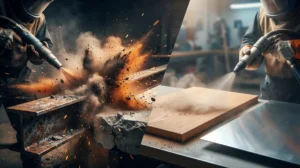
Shot blasting technically means a spinning wheel (impeller) flings steel shot at a surface to remove rust, scale, and old coatings while leaving a rough profile that helps new coatings bond.
-
Wheel shot blasting suits fixed factory production of uniform parts, while portable compressed-air blasting is the go-to for on-site work on large, fixed, or irregularly shaped surfaces.
-
Media choice drives results: steel shot is aggressive for heavy rust on steel, while soda or walnut shell protects delicate surfaces like fiberglass and gelcoat.
-
Surface prep matters more than the coating itself, since paint or powder coat fails early without proper profile; blasting cleans seams and corners that hand sanding often misses.
-
Abrasive blasting can produce hazardous dust and may involve lead in old coatings, so confirm containment, ventilation, respiratory protection, and testing before work begins.
-
Because 'shot blasting' is used loosely, confirm the exact process, media, containment, and cleanliness standard (such as SSPC-SP 6 or SP 10) with your coating maker before comparing quotes.
If you’ve ever searched for “shot blasting” while staring at a rusty gate or a tired steel beam, you’re not alone. The term gets tossed around a lot, and it can mean a few different things depending on who you ask. Here in Florida, where heat, humidity, and salt air chew up metal and coatings fast, getting the right kind of blasting matters more than most folks realize.
So let’s clear things up in a friendly, no-jargon way. In this guide, we compare true shot blasting with the portable air-blast method that most mobile crews use. You’ll learn what each one does, where each one shines, and how to pick the right approach for your surface. Whether you own a home, a boat, a warehouse, or a piece of heavy equipment, you’ll walk away knowing what to ask for and what to expect.
At Blastworx, we come to you, so we’ve seen how often these terms get mixed up. A little clarity up front saves time, money, and headaches later.
What Does Shot Blasting Actually Mean?
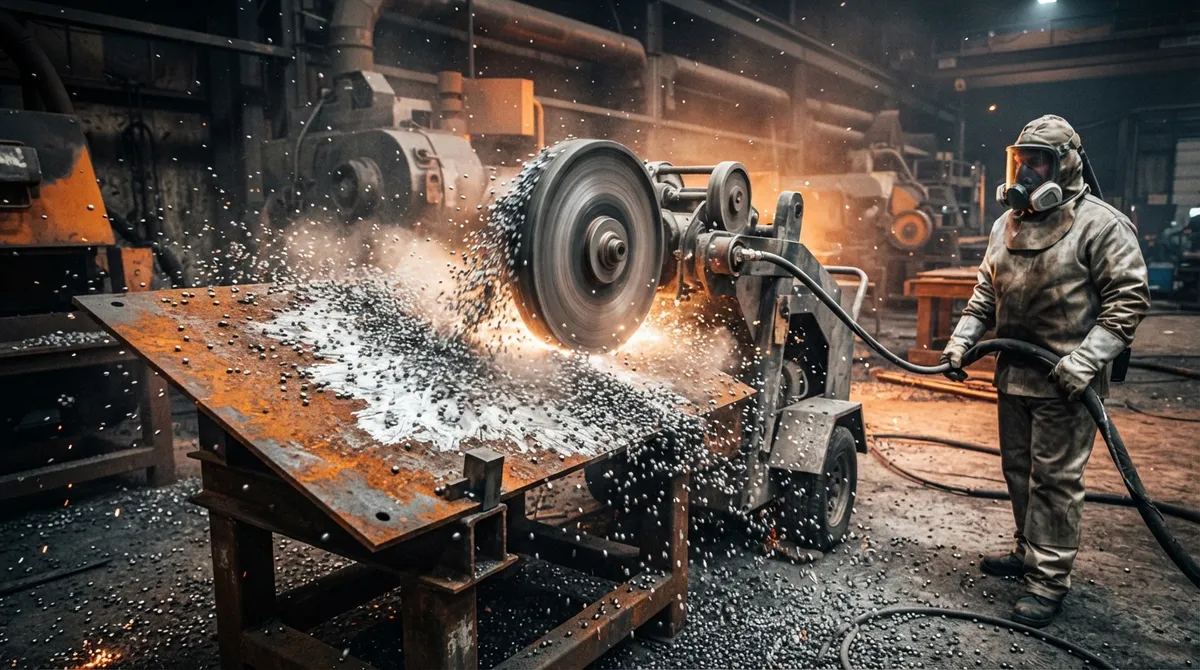
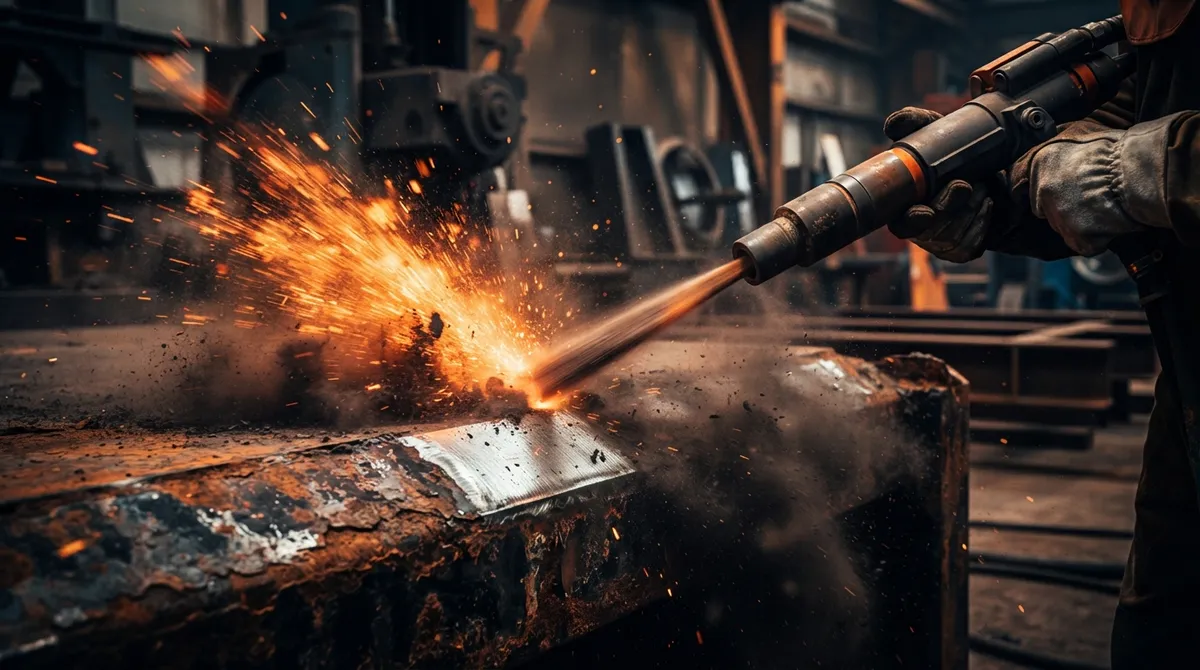
Technically, shot blasting means throwing small metal pellets at a surface to clean it. A spinning wheel, called an impeller, flings the steel shot at high speed. The shot hits the surface, knocks off rust, scale, and old coatings, and leaves a rough texture behind.
That rough texture is called a surface profile. It gives new paint or coating something to grip. Without it, even the best coating can peel early.
Wheel-based shot blasting is common in factories and fixed production lines. Think of a big machine that cleans steel parts as they roll through. It’s fast and very consistent, but it usually lives in one place.
Why the Term Gets Mixed Up
In everyday talk, many people say “shot blasting” to mean any kind of abrasive blasting. That’s why you’ll see the phrase used for sandblasting, soda blasting, and even concrete floor prep. It’s a loose label, and that’s okay. You just need to confirm what process is really being offered before you compare quotes.
The what is sandblasting overview is a good starting point if you want the bigger picture of how abrasive blasting works.
How Mobile Blasting Fits In
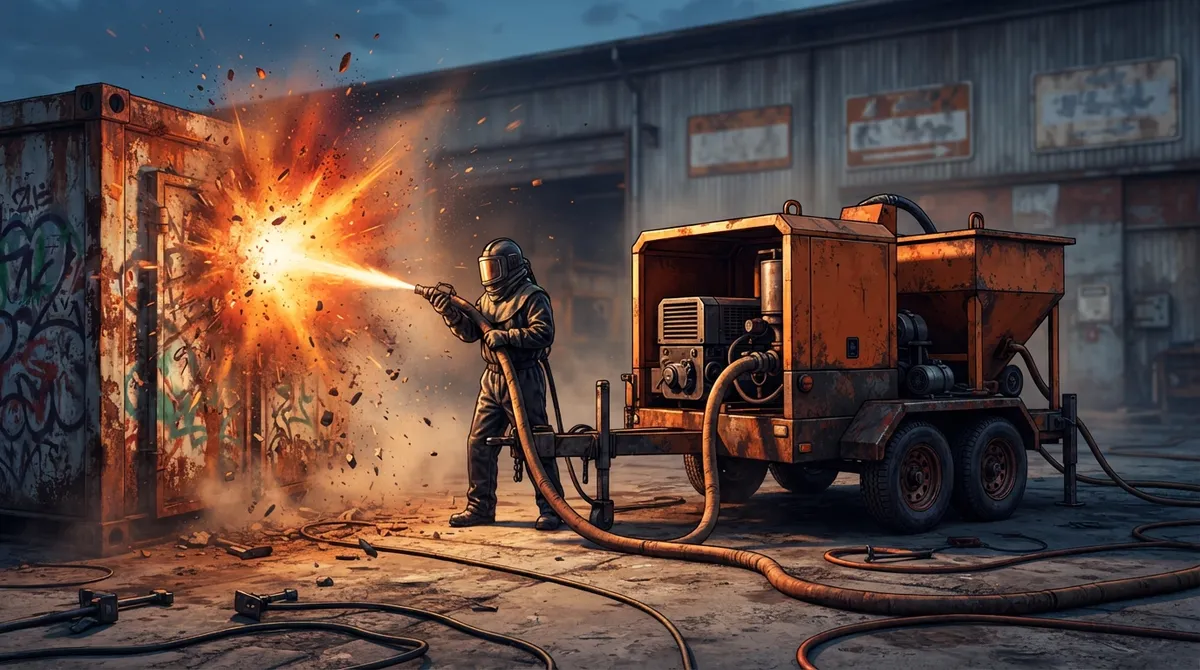
In the mobile blasting world, “shot blasting” usually means bringing the blasting equipment to a surface that can’t be moved. Think structural steel, big tanks, fences, pool decks, docks, and heavy machinery. Instead of hauling your item to a shop, the crew shows up where the work is.
Most mobile crews use portable compressed-air blasting. Air pushes the media through a hose and nozzle, and the operator aims it right where it’s needed. It’s flexible, it reaches tight spots, and it works on lots of different surfaces.
The EPA notes there are three basic ways to propel abrasive: compressed air, centrifugal wheels, and water pressure. Wheel systems dominate fixed plants. Air and water systems dominate mobile work. That’s the heart of this comparison.
Shot Blasting vs. Air Blasting: Side by Side
Here’s a quick look at how the two stack up for the kinds of jobs people call us about.
| Feature | Wheel Shot Blasting | Portable Air Blasting |
|---|---|---|
| How media is thrown | Spinning impeller wheel | Compressed air through a nozzle |
| Typical setting | Factory or fixed machine | On-site, wherever the surface is |
| Best for | Flat or uniform parts and floors | Odd shapes, tight corners, large fixed items |
| Media choices | Mostly metallic shot | Sand, soda, walnut shell, glass bead, and more |
| Control on delicate surfaces | Limited | High, by changing media and pressure |
| Portability | Low | High |
The big takeaway? Wheel machines are great for repeat production work. Air blasting is the go-to when the job is at your location and the surface is anything but uniform.
Where On-Site Blasting Works Best
Mobile blasting suits large or fixed surfaces that are hard or impossible to move. Here are the places we see it used most:
- Structural steel such as beams, columns, and frames
- Tanks, vessels, and heavy equipment that stay put
- Concrete like sidewalks, parking areas, and pool decks
- Fences, gates, and railings with rust or peeling paint
- Boat trailers, docks, and davits exposed to salt air
- Brick and masonry that need paint or grime removed
If you’re curious about steel in particular, our post on structural steel blasting facts breaks it down. And for metal-heavy jobs, our industrial blasting page shows what we handle.
What Blasting Can and Can’t Do
Blasting is powerful, but it isn’t magic. It can remove rust, mill scale, old paint, and buildup. It can also create the profile that helps a new coating stick. What it can’t do is fix a surface that’s too far gone, or decide your coating system for you.
The right cleanliness level and profile depend on the coating going on next. That’s why we say it plainly: we match the blast to your surface, not the other way around.
Common Steel Cleanliness Standards
If you work with steel, you may hear about standards from AMPP (formerly SSPC and NACE). They describe how clean the metal needs to be before coating. Here’s a simple view of four common ones:
| Standard | Common Name | Plain-English Meaning |
|---|---|---|
| SSPC-SP 5 / NACE No. 1 | White metal | Cleanest finish, all visible residue removed |
| SSPC-SP 10 / NACE No. 2 | Near-white | Almost fully clean, with very light staining allowed |
| SSPC-SP 6 / NACE No. 3 | Commercial | Thorough, with some staining left on part of the surface |
| SSPC-SP 14 / NACE No. 8 | Industrial | Cleans most of the surface while allowing some tight residue |
For example, the commercial level allows staining on up to 33% of each defined unit area. Always check the current edition of the standard and your project spec. Your coating maker can tell you the level they require.
Choosing the Right Media
The media you pick changes everything. Harder media cuts fast but can damage soft surfaces. Softer media protects the base material but works slower. This is why we say we use “the right media for the job.”
- Steel shot or grit: Aggressive. Used for heavy rust, scale, and profile on steel.
- Sand or similar abrasives: Strong and versatile for metal and concrete.
- Soda: Gentle. Great for fiberglass, gelcoat, and delicate parts.
- Walnut shell: Soft and good for tight cleaning without harming the base.
- Glass bead: Smooth finish for certain metal parts.
Want to dig deeper? Our guides on steel shot blasting facts and how to decide if soda blasting fits your surface can help you narrow it down.
Dust, Safety, and Cleanup
Here’s the part nobody loves talking about, but it’s important. Abrasive blasting can create hazardous dust. Old coatings may also contain lead or other harmful substances. Good crews plan for this before the first pass.
OSHA points to three main controls: substitute safer materials, contain the work area, and ventilate. Proper respiratory protection and training matter too. OSHA’s silica rule sets a permissible exposure limit of 50 micrograms per cubic meter over an 8-hour shift, with an action level of 25. Rules vary by task and location, so always verify what applies to your job.
The EPA also reports that blasting with grit produces far less particulate than sand in its comparison, about 24% of the emissions. That’s a source-specific figure, not a promise for every jobsite. Still, it shows why media choice affects dust.
What a Careful Crew Does
- Tests old coatings when lead is possible
- Protects nearby people, plants, pools, and windows
- Contains dust and debris during the work
- Recovers or handles spent abrasive properly
- Follows local, state, and federal rules
This is why we contain the mess and protect the surrounding area on every job. Dustless options are also available when you’re working indoors or near active equipment. Learn more in what makes dustless blasting so effective.
Why Prep Matters More Than the Coating
A coating is only as good as the surface underneath it. Paint, powder coat, resurfacing, and antifouling all depend on good prep. Hand sanding often misses rust in seams and corners. Blasting takes the whole surface back to clean, sound material at once.
In Florida, that matters even more. Heat, humidity, and salt air test every coating. If you want to see how blasting compares with doing it by hand, check out blasting vs. hand tools for steel prep.
How to Pick the Right Approach
Not sure which way to go? Walk through this simple list:
- Look at the surface. Is it steel, concrete, fiberglass, wood, or brick?
- Check the size and location. Can it move, or does it have to stay where it is?
- Decide your finish. What coating or result do you want next?
- Think about the surroundings. Are people, water, or equipment nearby?
- Ask what process is really offered. Confirm the media, containment, and expected result.
That last step is key. When you compare quotes, make sure everyone means the same thing by “shot blasting.” Our post on why quotes vary so much explains how different methods change the price.
Mobile Rig or Drop-Off Shop?
If your item is small and easy to move, a shop can work. But for large, fixed, or awkward surfaces, bringing the rig to the job is usually simpler and cheaper. No hauling, no crane, no downtime. Our mobile rig vs. drop-off shop comparison walks through the tradeoffs.
Our rig is fully mobile and self-contained, so we don’t need your power or water. We serve Tampa, Clearwater, Sarasota, Ocala, Orlando, and Fort Myers, plus towns like Brandon, Riverview, and Plant City. See all service areas to check your location.
Our Simple Four-Step Process
- Walkthrough. Send photos or we come look, and we choose the right media.
- Free estimate. You get a clear, written estimate the same day. The price we give is the price you pay.
- Blast and strip. We protect the area, then clean the surface at your location.
- Ready to finish. The surface comes out clean and ready for the next step.
We handle marine, automotive, commercial, and residential work too. We’re fully insured, and you talk to the people doing the work. Want to see results? Browse our gallery, or Visit us on Google — see what our customers are saying about us.
The Bottom Line
True wheel shot blasting is a fantastic tool for factories and production lines. But for most on-site jobs around Tampa Bay and central Florida, portable air blasting gives you the flexibility to match the media to your surface. Either way, the goal is the same: back to clean, bare metal or clean, sound material, ready for the next step.
Ready to talk through your project? Get a free estimate today, or give us a call at 813-380-8092. You can text us too. We’d love to help you get it right the first time.
FAQs
Q: What is mobile shot blasting?
A: Mobile shot blasting means bringing blasting equipment to a surface that can’t easily be moved, like structural steel, fences, or pool decks. Most mobile crews use portable air blasting, which lets them pick the right media for each job. We come to you, so there’s no hauling involved.
Q: What is the difference between shot blasting and abrasive blasting?
A: Shot blasting usually means a spinning wheel throws metal pellets at a surface, while abrasive blasting is the broader group that includes air, wheel, and water methods. In casual talk, people often use the two terms to mean the same thing, so always confirm the actual process in your quote.
Q: Can blasting remove rust and old paint?
A: Yes, it can strip rust, mill scale, old paint, and other buildup, then leave a profile that helps new coatings bond. The right media and pressure depend on your surface, so we match the blast to the material instead of the other way around.
Q: Does on-site blasting create a lot of dust?
A: It can, but a careful crew plans for it with containment, protection of nearby areas, and smart media choices. Dustless blasting is also an option for indoor spaces or active job sites. We contain the mess so your property stays protected.
Q: How do I know which cleanliness standard my project needs?
A: Start with your coating maker or project spec, since they set the surface profile and cleanliness level needed. Common steel standards include white metal, near-white, commercial, and industrial. If you’re unsure, send us photos and we’ll help point you in the right direction.