
Key Takeaways
-
Modern industrial blasting uses safer abrasive media like garnet, steel grit, and crushed glass instead of silica sand, which causes serious health hazards including silicosis and lung cancer under OSHA regulations.
-
Mobile blasting crews eliminate equipment downtime and hauling costs by coming on-site fully self-contained, making it the better choice for large fixed assets like tanks, bridges, and structural steel that can’t be moved.
-
OSHA requires medical monitoring for workers exposed to respirable crystalline silica at action levels for 30+ days annually, and contractors must use supplied-air respirators, dust control, and containment to stay compliant.
-
Surface prep quality directly affects coating longevity—poor preparation causes premature paint failure; proper prep requires cleanness, correct surface profile, controlled humidity, and prompt priming per SSPC and AMPP standards.
-
Blasting contractors should match abrasive media to your specific surface type rather than using one-size-fits-all approaches; garnet and steel grit suit heavy rust while gentler media protect delicate materials.
-
When selecting a mobile blasting partner, prioritize full insurance coverage, willingness to explain media and safety plans, clear written estimates, and direct communication with the crew doing the actual work.
If you’ve got rusted steel, old coatings, or stubborn buildup on equipment that can’t be moved, you’ve probably searched for industrial sandblasting near you. But here’s the thing nobody tells you upfront: the old idea of “sandblasting” with actual sand is mostly a thing of the past. Today’s industrial sandblasting is really industrial abrasive blasting, and choosing between a mobile crew and a drop-off shop makes a bigger difference than most folks realize.
We’re going to walk through both options together, plain and simple. No confusing jargon, just honest facts about what works, what’s safe, and what actually saves you time and money. By the end, you’ll know exactly which route fits your project, whether it’s a rusty tank, a piece of heavy equipment, or a structural steel beam that isn’t going anywhere.
What Is Industrial Sandblasting, Really?
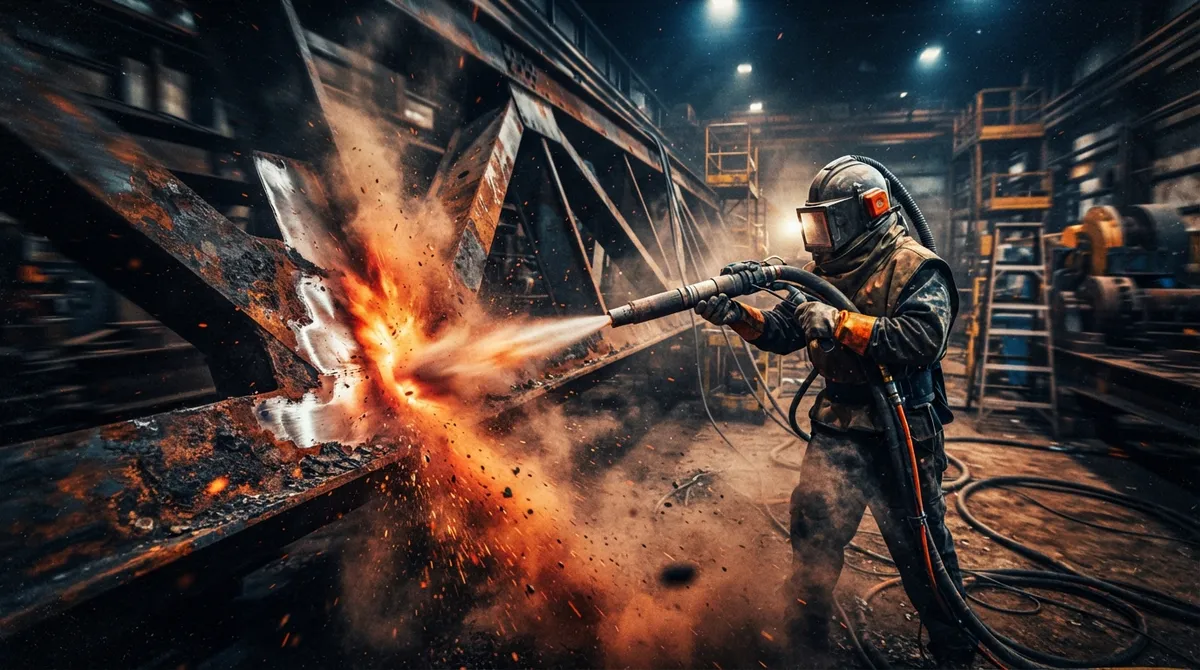
Industrial sandblasting uses compressed air or water to shoot abrasive media at a surface. The goal is simple: strip away rust, mill scale, old paint, coatings, and contamination until you reach clean, sound material underneath. Learn more about the general process on what is sandblasting if you want the full technical background.
The word “sandblasting” stuck around from decades ago, but professionals rarely use plain silica sand anymore. We’ll get into why in a moment, because it matters a lot for your health and your legal exposure as a business owner.
Common Surfaces and Projects
Mobile abrasive blasting handles a wide range of industrial jobs. Here are the most common ones we see across Tampa Bay and central Florida:
- Structural steel beams and support columns
- Storage tanks and pressure vessels
- Heavy equipment and agricultural machinery
- Pipelines and fittings
- Bridges and marine structures
- Trailers and fleet vehicles
- Concrete floors and loading docks
- Weld prep and fabrication surfaces
Our industrial blasting services cover most of these applications, and we bring our own power and water to your site so nothing sits idle waiting on us.
Mobile Blasting vs. Shop Blasting: The Real Comparison
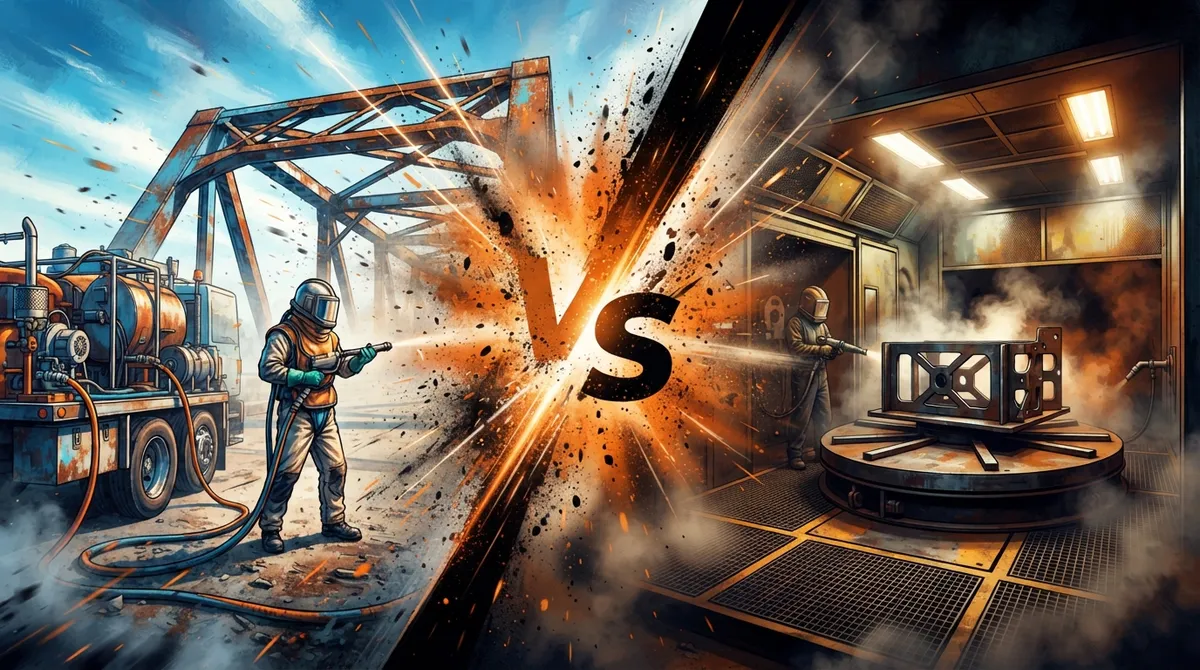
This is where the decision gets interesting. Both approaches can deliver a clean surface, but the process, cost, and convenience differ quite a bit.
| Factor | Mobile Blasting | Shop Blasting |
|---|---|---|
| Location | Comes to your site | You haul the asset to them |
| Large or fixed assets | No problem, blasted in place | Often impossible or very costly |
| Downtime | Minimal, work happens on-site | Equipment offline during transport |
| Setup for containment | Built around your location | Fixed booth, consistent controls |
| Scheduling flexibility | Can work nights or weekends | Limited to shop hours |
| Best for | Tanks, bridges, heavy equipment, structural steel | Small parts that fit in a booth |
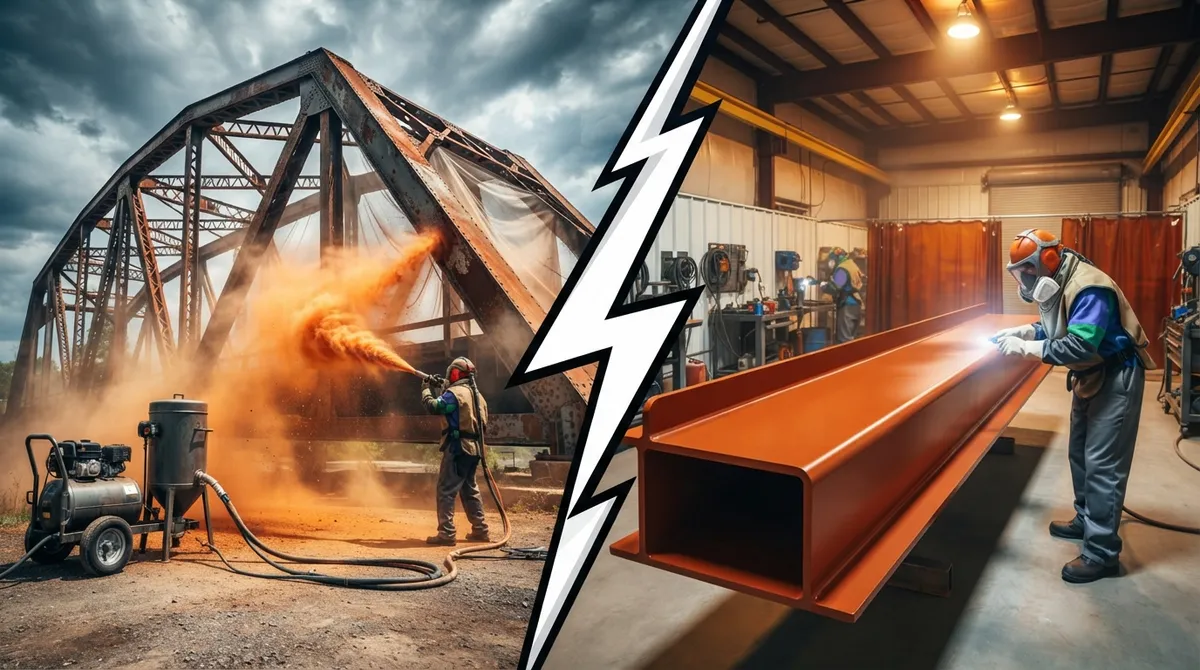
For most industrial customers, especially anyone with a piece of equipment too big to move, mobile blasting is the clear winner. That’s really the whole idea behind services like ours. We come to you, fully mobile and self-contained, so you skip the hauling costs and the downtime.
Why Silica Sand Isn’t the Answer Anymore
Here’s something every business owner should know. Ordinary silica sand creates a serious health hazard when it’s blasted. The dust contains tiny particles called respirable crystalline silica, and breathing it in can cause silicosis, lung cancer, kidney disease, and other long-term health problems.
Because of this, OSHA created strict rules to protect workers. Under 29 CFR 1910.1053, the action level for respirable crystalline silica is 25 micrograms per cubic meter of air, measured over an 8-hour shift. The permissible exposure limit is 50 micrograms per cubic meter over the same period. Construction work falls under a similar rule, 29 CFR 1926.1153. You can read OSHA’s official fact sheet for the full breakdown of requirements.
These aren’t just numbers on paper. They shape how a responsible blasting contractor plans every job, from the media they choose to the safety gear their crew wears.
Safer Media Options
Modern industrial abrasive blasting relies on a range of media, chosen based on the surface and the job. Some popular choices include:
- Garnet, a natural mineral that cuts fast and works well on steel
- Crushed glass, a recycled option good for general surface prep
- Coal slag and copper slag, common for heavy corrosion removal
- Steel grit or shot, ideal for aggressive rust and scale removal
- Aluminum oxide, used for tougher coatings and finer finishes
- Glass bead, gentler and often used for cleaning without heavy profile
- Plastic media, suited for delicate substrates
- Baking soda, great for fiberglass and softer materials
We match the blast to your surface, not the other way around. That’s the whole philosophy behind picking the right media for the job, and it’s a big part of why mobile blasting contractors invest in multiple media types instead of relying on one abrasive for everything.
Health and Safety Requirements You Should Know
Blasting isn’t just about the abrasive. The coating being removed matters too. Old paint on steel structures, bridges, or industrial tanks can contain lead, chromium, cadmium, or other hazardous substances. A responsible contractor tests or evaluates the coating before starting work.
OSHA’s guidance on abrasive blasting points to a few key safety controls that reduce risk for everyone involved:
- Blast-rated supplied-air respirators for the operator
- Protective blast helmets, gloves, and heavy clothing
- Hearing protection, since blasting is loud enough to cause damage over time
- Eye and face protection for anyone nearby
- Ventilation, local exhaust, or wet methods to control dust
- Containment sheeting and clearly marked exclusion zones
- Grounded equipment and inspected hoses
- Dead-man controls that shut off air instantly if dropped
OSHA specifically recommends wet methods, local exhaust ventilation, and full enclosures as the best ways to cut down on silica and abrasive dust. Dry sweeping or using compressed air to clean up afterward should be avoided whenever safer alternatives exist.
Medical Monitoring for Workers
Under the general industry standard, employers must generally offer medical exams to workers exposed at or above the action level for 30 or more days per year. This isn’t optional paperwork. It’s a real commitment to keeping blasting crews healthy over the long haul, and it’s one more reason to hire a contractor who takes compliance seriously rather than cutting corners.
Step-by-Step: How a Mobile Industrial Blasting Job Works
Wondering what actually happens when you call a mobile blasting company? Here’s the typical process, broken into simple steps:
- Walkthrough and assessment. We look at photos or visit in person to figure out the right media and approach for your surface.
- Written estimate. You get a clear, same-day quote. The price we quote is the price you pay, no surprises later.
- Site protection. We contain the work area and protect nearby equipment, landscaping, or structures before any blasting starts.
- Blasting and stripping. The crew blasts the surface on-site, using the media and pressure matched to your project.
- Cleanup and inspection. We clear away spent media and debris, leaving the surface ready for the next step.
- Ready to finish. Your steel, tank, or equipment comes out clean, with the right surface profile for priming or coating.
This approach saves you the headache of moving heavy equipment or shutting down operations for days. It’s also why so many facility managers across Tampa, Ocala, Orlando, and Fort Myers call us instead of scheduling a shop visit.
Surface Prep Quality: What Actually Matters
A coating is only as good as the surface underneath it. This is true whether you’re prepping a bridge girder, a storage tank, or a piece of factory equipment. Poor prep means paint or coatings fail early, and you end up paying for the same job twice.
Quality surface prep depends on a few key factors:
- Cleanliness, meaning no leftover rust, oil, or contamination
- Correct surface profile, so the coating has something to grip onto
- Ambient conditions like humidity and temperature during the job
- Flash-rust control, especially important in Florida’s humid climate
- Prompt priming after blasting, before rust has a chance to return
Many industrial projects reference SSPC and AMPP surface-preparation standards, along with the coating manufacturer’s specific requirements. A contractor familiar with these standards will give you documentation and verification, not just a visual once-over.
Cost Factors for Industrial Sandblasting
Pricing varies quite a bit depending on the job. Here’s a quick breakdown of what typically drives the cost:
| Factor | How It Affects Price |
|---|---|
| Surface size | Larger areas take more time and media |
| Coating type | Multiple layers or hazardous coatings cost more to remove |
| Media selection | Specialty abrasives can cost more than standard options |
| Containment needs | Sensitive sites require more setup time |
| Site access | Remote or difficult locations may add travel time |
| Disposal requirements | Hazardous waste handling adds to the total |
The best way to get an accurate number is to request a walkthrough. Every job is different, and a contractor who gives you a number over the phone without seeing the site is guessing.
Choosing the Right Mobile Blasting Partner
Not every blasting company operates the same way. Here’s what to look for when you’re comparing options:
- Insurance coverage that protects your property and their crew
- Experience with your specific type of surface or equipment
- Willingness to explain media choices and safety plans
- Clear, written estimates with no hidden fees
- Proper containment and dust control practices
- Direct communication with the people doing the actual work
We’re fully insured, and when you call us, you talk to the people doing the work, not a call center reading from a script. That direct line matters when you’re trying to schedule around a busy facility or a tight project deadline.
If you’re curious what past clients think, you can see what our customers are saying about us on Google. It’s a good way to get an honest read on how a company handles real jobs, not just polished marketing copy.
Why Mobile Wins for Most Industrial Jobs
At the end of the day, mobile blasting solves a problem shop blasting simply can’t. You don’t have to disconnect, transport, and reconnect massive equipment. You don’t lose days of downtime. And you get a team that protects the surrounding area while working directly at your facility.
This is especially true for facilities across the central Florida corridor. Whether you’re in Tampa, Sarasota, Brandon, or Fort Myers, having a crew show up ready to blast on-site beats coordinating a shop drop-off every time. If you want to see examples of past work, check out our project gallery for a sense of what’s possible.
Ready to Get Your Project Started?
Industrial sandblasting has come a long way from the days of plain silica sand and guesswork. Today it’s about matching the right media to your surface, following strict safety rules, and getting a clean result that’s actually ready for the next step. Whether you’re dealing with rusted steel, an aging tank, or heavy equipment that can’t be moved, mobile blasting gives you a faster, safer path forward.
If you’re ready to see what mobile industrial blasting can do for your facility, get a free estimate today, or give us a call to talk through your project with our team directly. We proudly serve Tampa Bay, Ocala, Orlando, Fort Myers, and the surrounding central Florida corridor, and we’re ready to bring the right equipment straight to your job site.
FAQs
Q: What is industrial sandblasting and how does mobile blasting work?
A: Industrial sandblasting uses compressed air or water to blast abrasive media against a surface, stripping away rust, coatings, and buildup. Mobile blasting means we bring our fully self-contained rig straight to your site, so there’s no hauling heavy equipment anywhere. It’s honestly the easiest way to handle big or fixed assets.
Q: Is silica sand legal or safe for industrial sandblasting?
A: Plain silica sand creates serious health risks because it releases dangerous respirable dust when it’s blasted. OSHA regulates this closely under 29 CFR 1910.1053, with strict exposure limits designed to protect workers. Most professional contractors, including us, use safer alternatives like garnet, crushed glass, or soda instead.
Q: Which abrasive media is best for removing rust and industrial coatings?
A: It really depends on your surface. Garnet and steel grit work great on heavy rust and thick coatings on steel, while gentler media like soda or glass bead protect more delicate materials. We always match the blast to your surface instead of using a one-size-fits-all approach.
Q: How much does mobile industrial sandblasting cost?
A: Pricing depends on surface size, coating type, media needed, and site access, so every project looks a little different. The best way to get real numbers is a quick walkthrough or photos sent our way. We’ll give you a clear, written estimate the same day, and that price is what you pay.
Q: What safety precautions are required during industrial abrasive blasting?
A: A proper job includes supplied-air respirators, protective gear, hearing protection, and dust control methods like wet blasting or ventilation. We also contain the work area and protect everything around it before we start. Safety isn’t an afterthought, it’s built into every step of the process.





