

Key Takeaways
-
Micro sandblasting uses tiny nozzles (0.8-1.3mm) and fine abrasive media (25-250 micrometers) at low pressure (3-4 bar) to precisely clean, deburr, or remove coatings from small areas without damaging surrounding surfaces.
-
Always test on a hidden area first before treating the entire piece to confirm the right pressure, media, and technique will not warp, gouge, or damage delicate materials like thin metal, fiberglass, or old wood.
-
Never use silica sand for abrasive blasting due to OSHA regulations—respirable crystalline silica exposure is a serious health hazard; use safer alternatives like glass bead, soda, garnet, plastic media, or aluminum oxide instead.
-
Mobile micro-blasting eliminates the need to transport fragile parts to a shop; the equipment comes to your location (home, dock, or driveway), reducing handling damage and allowing you to inspect work in real-time.
-
Choose media based on your substrate and coating type: use glass bead for gentle polishing, plastic media for delicate aluminum/fiberglass, aluminum oxide for versatility, and silicon carbide only for tough coatings on strong materials.
-
Proper site assessment before quoting includes checking substrate fragility, coating hazards (like lead paint), containment options, drainage, and desired finish to ensure accurate estimates and prevent on-site surprises.
Have you ever needed a small metal part cleaned without stripping the whole piece down? Or maybe you have a delicate antique sign, a set of trim pieces, or a marine fitting that needs careful attention, not a full-blast approach. That’s where micro sandblasting comes in. It’s a precise, controlled way to clean, deburr, or remove coatings from small areas without harming what’s around them.
At Blastworx, we get calls all the time from folks in Tampa, Ocala, Orlando, and Fort Myers who need this kind of pinpoint work done right at their home, shop, or dock. We come to you, and we match the blast to your surface, not the other way around. In this guide, we’ll walk through what micro sandblasting really means, how it works, what it’s good for, and what questions you should ask before hiring anyone to do it. Let’s dig in together.
What Micro Sandblasting Actually Means
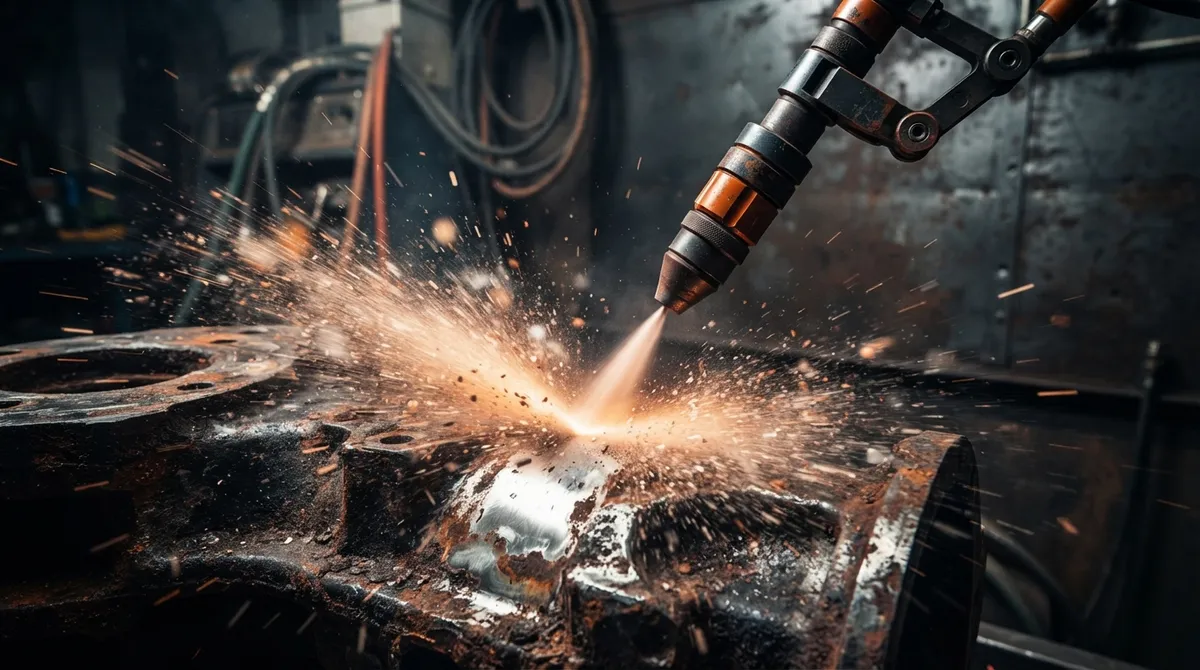
The term “micro sandblasting” gets used loosely, but the more accurate name is micro-abrasive blasting or precision abrasive blasting. Instead of a big nozzle blasting a wide area, this method uses a tiny nozzle and fine abrasive media to work on small, specific spots. Think of it as the difference between painting a wall with a roller versus touching up a scratch with a fine brush.
This precision matters a lot for on-site jobs. When we’re working in someone’s driveway or at a marina, we often need to clean a small bracket, a set of fittings, or a weld seam without disturbing everything else nearby. Micro-abrasive blasting gives us that kind of control. You can learn more about how what is sandblasting works in general, then think of micro blasting as its scaled-down, more delicate cousin.
How It Differs From Standard Blasting
Regular sandblasting is built for speed and coverage. It’s great for stripping a boat hull, a fence, or a large steel structure. Micro sandblasting, on the other hand, is built for control. It uses smaller nozzles, lower pressure, and finer media to avoid damaging delicate parts.
- Standard blasting covers large surfaces quickly with bigger nozzles and higher pressure
- Micro blasting focuses on small, precise areas with pencil-style nozzles
- Standard blasting often uses coarser media for speed
- Micro blasting uses fine media, often between 50 and 250 micrometers
- Standard blasting suits hulls, fences, and structural steel
- Micro blasting suits trim, small parts, welds, and detail work
Where Micro Sandblasting Fits Into Mobile Work
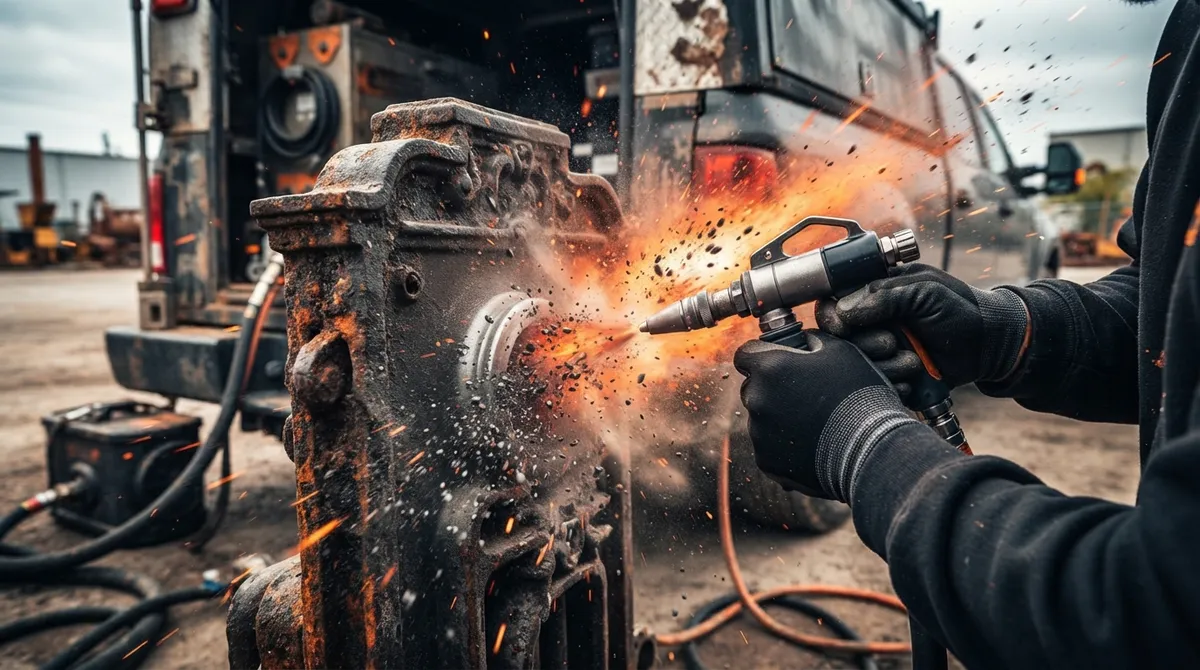
Because we’re a mobile operation, portability matters just as much as precision. Our rig is fully mobile and self-contained, so we can bring micro-blasting capability right to your location, whether that’s a garage in Brandon or a dock in Sarasota.
Here are some of the most common jobs where this technique shines:
- Automotive trim pieces, emblems, and small engine parts
- Motorcycle components and chrome detailing
- Marine hardware like cleats, fittings, and small brackets
- Antiques, signs, and decorative metalwork
- Masonry details and small carved features
- Localized rust spots or paint chips on a larger piece
- Tool and machinery component cleaning
If you’ve got a bigger project in mind, like a full hull strip or a set of railings, check out our marine blasting or residential blasting services instead. Micro blasting is really meant for the small, careful stuff.
Typical Equipment and Specs
Micro-blasting tools look different from the big blast pots you might picture. They’re small, often handheld, and give the operator fine control with a foot pedal.
| Component | Typical Range |
|---|---|
| Nozzle diameter | 0.8 mm to 1.3 mm |
| Operating pressure | 3 to 4 bar (up to 7 bar max) |
| Media particle size | 25 to 250 micrometers |
| Compressed air requirement | 90 psi minimum, 1.5 to 2.5 CFM |
These numbers come from equipment specs like those published by WIWOX and Vaniman, two well-known names in micro-abrasive tools. Actual settings will vary depending on the job and the machine, but this gives you a sense of just how fine-tuned this process can be compared to standard blasting.
Choosing the Right Media for Micro Sandblasting
One of the most important parts of micro sandblasting is picking the right media. The wrong choice can scratch a delicate surface or fail to remove the coating you’re trying to strip. We always say, the right media for the job makes all the difference.
Common Media Options
- Glass bead: Gentle, good for polishing and light cleaning without changing the surface profile much
- Crushed glass: A step up in aggressiveness, useful for moderate coating removal
- Aluminum oxide: Durable and versatile, works well on metal and harder substrates
- Garnet: A strong, sharp media for tougher jobs that still need some control
- Silicon carbide: Very hard and aggressive, best for tough coatings on strong substrates
- Plastic media: Soft and safe for delicate parts like aluminum or fiberglass
- Walnut shell: Organic and gentle, often used on wood or soft metals
- Soda: Very soft, ideal for gelcoat, fiberglass, and other delicate surfaces
Choosing between these options depends on the substrate, the coating you’re removing, and whether you need to preserve the base material. If you’re not sure which media fits your project, that’s exactly the kind of question we love answering during a walkthrough. Feel free to get a free estimate and we’ll help you figure it out.
Why Silica Sand Is Not the Answer
Here’s something important to understand. Despite the name “sandblasting,” using actual silica sand is generally discouraged, and in many cases prohibited, for good reason. Dry blasting with silica sand can release respirable crystalline silica, which is a serious health hazard.
The Occupational Safety and Health Administration has strict rules around this. OSHA’s respirable crystalline silica standard sets an action level of 25 micrograms per cubic meter of air and a permissible exposure limit of 50 micrograms per cubic meter, measured over an 8-hour period. These standards apply to construction work under 29 CFR 1926.1153 and general industry under 29 CFR 1910.1053.
OSHA also specifically names abrasive blasting with sand as a task that can expose workers to harmful silica dust. That’s why professional operators lean on safer alternatives like soda, glass bead, garnet, or plastic media instead of plain sand. Some states, like California, go even further and classify abrasive blasting as a high-exposure trigger task requiring extra precautions, according to guidance from the California Department of Industrial Relations.
Steps We Take to Keep Things Safe
- Assess the substrate and coating before choosing media
- Avoid silica sand in favor of safer abrasives
- Use containment to protect nearby surfaces, landscaping, and people
- Apply proper respiratory protection and PPE for the crew
- Manage dust with ventilation or dust collection when needed
- Dispose of spent media according to local rules
We contain the mess and protect the surrounding area on every job, whether it’s a small micro-blasting task or a full commercial strip-down. Safety isn’t optional, it’s just part of doing the work right.
Will Micro Sandblasting Damage Your Part?
This is probably the question we hear most often. The short answer is, it shouldn’t, if it’s done correctly. But there are real risks if the wrong settings or media are used.
Factors That Prevent Damage
- Lower air pressure reduces impact force on delicate materials
- Smaller nozzles allow tighter, more controlled application
- Shorter dwell time limits heat and material removal
- Testing a hidden area first helps confirm the right approach
- Shielding nearby seals, glass, and wiring protects what you don’t want touched
We always test on a small, hidden spot before committing to the whole piece. That way, if something needs adjusting, we catch it early instead of after the fact. This is especially important for thin metal, old wood, or fiberglass, where too much pressure can warp or gouge the surface.
Comparing Micro Sandblasting to Other Methods
Micro-abrasive blasting isn’t the only precision cleaning method out there. Here’s how it stacks up against a few alternatives.
| Method | Best For | Limitations |
|---|---|---|
| Micro sandblasting | Small parts, detail work, localized coating removal | Still produces dust and spent media |
| Dry ice blasting | Delicate surfaces, no secondary waste | Less aggressive mechanical removal |
| Soda blasting | Gelcoat, fiberglass, soft substrates | Not ideal for heavy rust or thick coatings |
| Conventional abrasive blasting | Large surfaces, heavy coatings, structural steel | Too aggressive for small, delicate parts |
If you want to read more about how soda blasting compares to traditional methods, our article on choosing between soda blasting vs sandblasting covers that in detail. And if you’re curious about the difference between wet and dry approaches, our piece on wet sandblasting vs dry blasting is a great next read.
What a Site Assessment Looks Like
Before we quote any mobile micro-blasting job, we like to take a good look at the situation. A proper site assessment helps us plan for containment, access, and safety, so there are no surprises on blast day.
What We Check Before Quoting
- Site access and how our rig will reach the work area
- Power and compressed-air needs for the equipment
- Containment options to protect nearby property
- Presence of people, pets, or plants that need protecting
- Drainage and where runoff or waste will go
- Coating type and any hazard concerns, like old lead paint
- Substrate condition and how fragile the material is
- The finish you’re hoping to achieve
This process helps us give you an honest, accurate estimate the first time, without hidden surprises later. It’s part of why folks across the Tampa Bay and central Florida area trust us with everything from small trim pieces to full commercial jobs.
Common Applications by Industry
Micro sandblasting shows up in more places than people expect. Here’s a quick look at where it fits across different types of work we do.
- Marine: Cleats, fittings, small hardware, and detail work on boats and docks, alongside our broader marine blasting services
- Automotive: Trim, emblems, and small parts, complementing our full automotive blasting work
- Industrial: Weld prep, small component cleaning, and detail work tied to larger industrial blasting projects
- Commercial: Signage, fixtures, and small structural elements alongside our commercial blasting services
- Residential: Decorative ironwork, small furniture pieces, and detail cleaning on top of standard residential blasting work
How Much Does Mobile Micro Sandblasting Cost?
Costs vary quite a bit depending on the size of the job, the media used, and how much prep and containment is needed. Small, quick jobs might only take an hour or two, while more detailed restoration work can take longer. The best way to get an accurate number is to reach out directly. We’re happy to walk through your project and give you a clear, written estimate the same day, with no guessing involved.
If you want a broader sense of pricing across different blasting services, our guide on how much sandblasting estimates really cost is a helpful starting point.
Why Choose a Mobile Team for Micro Sandblasting
Not every job needs to be hauled off to a shop. In fact, moving small delicate parts around can sometimes cause more damage than the blasting itself. That’s the beauty of mobile service. We bring the equipment to you, whether you’re in Tampa, Clearwater, Lutz, or out toward Fort Myers.
- You skip the hassle of transporting fragile or awkward parts
- We’re fully insured and equipped for on-site work
- You talk to the people doing the work, not a call center
- We match the blast to your surface, protecting what matters most
Curious what other folks in the area think? You can visit us on Google and see what our customers are saying about us before you decide who to trust with your project.
Ready to Get Started?
Micro sandblasting is a specialized skill that blends precision, the right media, and careful safety practices. Whether you’ve got a small marine fitting, a set of trim pieces, or a delicate antique that needs gentle cleaning, doing it right the first time matters. We’d love to help you figure out the best approach for your specific project.
If you’re ready to move forward, get a free estimate today, or if you’d rather talk it through first, feel free to give us a call and we’ll answer your questions. We come to you, and we’re always happy to help.
FAQs
Q: What is micro sandblasting and how is it different from regular sandblasting?
A: Micro sandblasting uses a tiny nozzle and fine media to work on small, precise areas, while regular sandblasting covers large surfaces with more force. Think of it as the detail brush to standard blasting’s paint roller. It’s perfect for trim pieces, small parts, and delicate spots that need a gentler touch.
Q: Can a mobile blasting company perform micro sandblasting on-site?
A: Absolutely, and that’s actually one of the best parts about it. Since our rig is fully mobile and self-contained, we can bring precision blasting equipment right to your driveway, dock, or shop without you needing to haul fragile parts anywhere.
Q: Will micro sandblasting damage or warp a thin metal part?
A: It shouldn’t, as long as it’s done with the right pressure, media, and technique. We always test a hidden spot first and use lower pressure with shorter dwell time on delicate pieces, so you don’t have to worry about warping or gouging.
Q: Does micro sandblasting create dust, and what safety precautions are required?
A: Yes, dry blasting can create dust even at a small scale, so proper precautions matter. We avoid silica sand, use safer media, and follow OSHA guidelines around respirable crystalline silica to keep everyone safe and the job site clean.
Q: How much does mobile micro sandblasting cost?
A: Costs really depend on the size of the job, the media needed, and how much containment is required. The best way to know for sure is to reach out for a walkthrough, and we’ll give you a clear, written estimate the same day.





