
Key Takeaways
-
Document your fence with photos before restoration to identify damage, note missing pieces, and create records for insurance or repair quotes.
-
Use low-pressure dry-grit blasting (70-100 mesh at ~80 psi) for detailed ironwork, or soda blasting for delicate ornate sections, to avoid warping thin metal.
-
Complete drying of the fence is critical after blasting—trapped moisture can restart corrosion within days, especially in Florida’s humid climate.
-
Apply rust-inhibiting primer by hand-brushing or rolling (not spraying) to penetrate pores and crevices, then wait at least 4 hours before adding two coats of rust-resistant paint.
-
Most old iron fences with surface or moderate rust can be restored through blasting and repainting; full replacement is rarely necessary unless there’s structural failure.
-
Protect landscaping, pools, windows, and nearby structures during blasting, and address the fence base where it meets soil, as these areas hide rust and cause fastest deterioration.
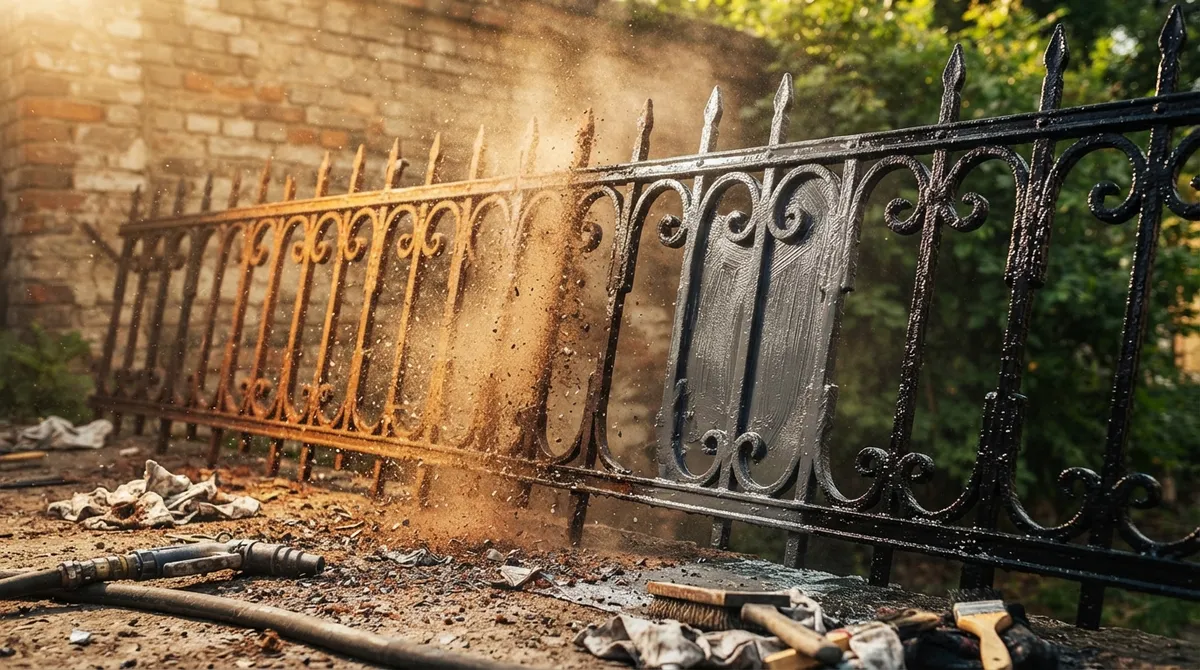
If you’ve got an old iron fence sitting in your yard covered in rust and peeling paint, you’re not alone. We see this all the time across Tampa Bay, from historic homes in St. Pete to older properties out in Brandon and Riverview. The good news? That fence probably isn’t ready for the scrap pile. With the right approach, most old iron fences can look brand new again, and the process is a lot more straightforward than people think.
The best way to restore an old iron fence usually comes down to five steps: document the fence, strip away rust and old paint, clean and dry the metal completely, prime it right, and finish with a coat that actually protects it from Florida’s weather. Skip a step, or rush one, and you’ll be back to square one in a year or two. We’ve put this list together based on what actually works, backed by guidance from restoration experts and our own experience blasting fences all over the central Florida corridor.

Why Old Iron Fences Rust So Fast in Florida
Florida’s humidity is brutal on metal. Add in salt air near the coast, sprinkler overspray, and soil contact at the base, and you’ve got a recipe for rust that spreads fast. Once rust gets a foothold, it doesn’t just sit on the surface. It works its way into pits and crevices, which is exactly why simple scraping or sanding often isn’t enough.
This is where mobile blasting really shines. Unlike hand tools, blasting reaches into every curve, joint, and decorative scroll on an ornate iron fence. It’s one of the reasons Tampa homeowners lean on mobile sandblasting for their Tampa home instead of spending a weekend with a wire brush that barely scratches the surface.
5 Steps to Restore an Old Iron Fence the Right Way
1. Document the Fence Before You Touch It
This step gets skipped constantly, and it shouldn’t. The National Park Service recommends photographing and documenting historic ironwork before any restoration begins, especially if the fence has decorative details or is part of an older home. Take photos from multiple angles, note any bent or missing pieces, and mark spots with heavy corrosion.
- Photograph the entire fence, plus close-ups of rust spots and damaged sections
- Note any loose posts, broken finials, or missing decorative elements
- Check the base where the fence meets the ground for hidden rot or rust
- Keep records in case you need repair quotes or insurance documentation later
2. Remove Loose Paint, Rust, and Vegetation
Before any real cleaning starts, clear away vines, weeds, and dirt built up around the fence base. This exposes the true condition of the metal so you know what you’re actually working with. Old iron fences often look worse than they are once the surface grime comes off.
Hand tools like wire brushes work fine for light surface rust, but they struggle with pitted or heavily corroded sections. That’s usually the point where property owners start looking into mobile blasting rather than spending hours on a ladder scraping flakes off scrollwork.
3. Blast the Metal Back to Bare, Clean Surface
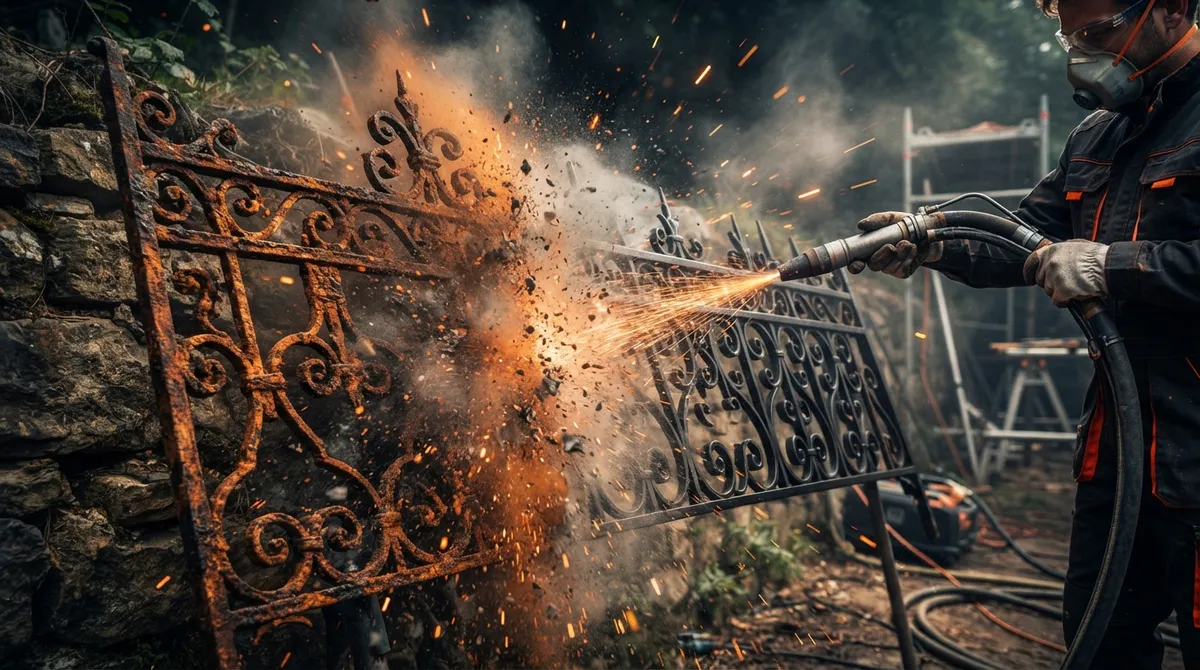
This is where the real transformation happens. Professional guidance from Traditional Building magazine recommends low-pressure dry-grit blasting for cleaning rust and scale on detailed ironwork, typically using media in the 70 to 100 mesh range at no more than 80 psi. That’s a gentle enough touch to protect the base metal while still stripping years of rust and old paint.
We always match the blast to the surface, not the other way around. Ornate Victorian-style fences need a different approach than a heavy iron security fence. Soda blasting works well on more delicate ironwork, while sand or specialty abrasives handle thicker rust buildup. If you want to see this in action, our guide on stripping paint from a metal fence or gate fast covers the media options in more detail.
| Blasting Method | Best For | Pressure Level |
|---|---|---|
| Soda Blasting | Delicate or decorative ironwork | Low |
| Dry-Grit Blasting | General rust and paint removal | Low to Medium |
| Sand Blasting | Heavy rust and thick coatings | Medium to High |
| Dustless Blasting | Areas near homes, pools, or landscaping | Adjustable |
4. Clean and Fully Dry the Fence
Once the rust and old coatings are gone, the fence needs to be completely clean and bone dry before anything else happens. Trapped moisture is one of the fastest ways to restart corrosion, sometimes within days. This step gets overlooked more than it should, especially in Florida’s humidity.
- Wipe down the fence to remove blasting residue and dust
- Allow the metal to air dry fully, ideally on a low-humidity day
- Check joints, welds, and crevices where water tends to hide
- Confirm the fence base isn’t sitting in standing water or wet soil
5. Prime and Paint for Long-Term Protection
This last step is what actually makes the restoration last. Apply a rust-inhibiting primer first, and give it time to cure. DoItYourself.com recommends letting rust-inhibiting primer dry for at least 4 hours before adding paint. Traditional Building notes that primers are best applied by hand-brushing or roll-and-brushing rather than spraying, since this works the coating into pores and crevices that a spray gun might miss.
After priming, apply your topcoat. DoItYourself.com suggests two fairly thick coats of rust-resistant paint for solid coverage. If you’re using spray paint instead, Outback Fencing notes it may take up to four coats to fully cover wrought iron, since spray applications go on thinner than brushed coats.
- Use a rust-inhibiting primer designed for exterior metal
- Apply primer by hand or roller for better penetration into details
- Wait at least 4 hours before adding paint
- Finish with two coats of rust-resistant exterior metal paint
- Inspect the fence yearly and touch up chipped areas quickly
Should You Blast, Repair, or Replace a Heavily Rusted Fence?
Not every fence needs full replacement, even when it looks rough. Here’s a quick way to think through the decision.
| Fence Condition | Recommended Approach |
|---|---|
| Surface rust, intact structure | Blast, prime, and repaint |
| Heavy rust with some pitting | Blast, assess for weld repair, then coat |
| Bent, broken, or missing sections | Blast and repair damaged sections |
| Structural failure or severe rot | Consider partial or full replacement |
If you’re on the fence about which category your fence falls into, sending photos to a local blasting crew is usually the fastest way to get a clear answer. This is a normal first step before committing to any restoration project, and it costs nothing to ask.
Protecting Your Property During the Blasting Process
A responsible mobile blasting crew won’t just show up and start blasting without a plan. Protecting your landscaping, pool, windows, and nearby structures matters just as much as the fence work itself.
- Nearby plants and shrubs should be covered or temporarily moved
- Pool areas need extra protection from dust and blasting media
- Windows and painted siding should be shielded from overspray
- Workers should wear proper respiratory and eye protection throughout the job
This is standard practice for any reputable crew, and it’s something we take seriously on every residential job across Tampa, Clearwater, and the surrounding areas. If you’d like to see examples of finished fence and railing work, our gallery has before-and-after photos from real jobs.
Mobile Blasting vs. Traditional Sandblasting for Iron Fences
People often ask whether mobile blasting is really different from traditional sandblasting. The short answer is yes, mainly because of convenience and control. According to general references on what is sandblasting, the process involves propelling abrasive media at high speed to clean or shape a surface. Mobile blasting applies that same basic idea, but the equipment comes to your property instead of you hauling the fence to a shop.
That matters a lot for something like a permanent iron fence that can’t exactly be removed and dropped off somewhere. A mobile rig lets the crew adjust pressure and media on-site, section by section, based on how each part of the fence has held up over the years.
Common Mistakes That Ruin Iron Fence Restoration
We’ve seen plenty of DIY fence projects go sideways. Here are the mistakes that come up most often.
- Painting over rust without removing it first
- Using pressure that’s too high, which warps thin decorative iron
- Skipping the primer step entirely
- Not letting the metal dry fully before coating
- Ignoring the base of the fence where it meets the soil
- Choosing the wrong media for delicate, ornate ironwork
Any one of these can undo months of work within a single rainy season. If you’re not confident tackling the prep work yourself, it’s worth reaching out to a crew that handles this regularly. You can always get a free estimate before deciding how to move forward.
What Makes Blastworx a Good Fit for Iron Fence Restoration
We’re based in Tampa and work throughout the central Florida corridor, including Ocala, Orlando, and Fort Myers. Our rig is fully mobile and self-contained, so we come to you, whether that’s a driveway in Valrico or a historic property in downtown Tampa. We match the blast to your surface, not the other way around, which matters a lot when you’re dealing with delicate scrollwork versus a heavy security fence.
We contain the mess, protect the surrounding area, and leave the fence ready to prime and coat. You talk to the people doing the work, and we’re fully insured for your peace of mind. If you want to know what past customers have said about their experience, you can visit us on Google — see what our customers are saying about us.
Final Thoughts on Restoring Your Old Iron Fence
An old iron fence doesn’t have to be an eyesore forever. With the right steps, in the right order, most fences can be brought back to a clean, sound surface that’s ready for a fresh finish. Document the fence, strip it properly, dry it completely, prime it well, and finish strong. That’s really the whole process.
If your fence needs more attention than a weekend project can handle, we’re happy to take a look. Give us a call at 813-380-8092, or reach out to get a free estimate and we’ll figure out the right approach for your fence together.
FAQs
Q: What is the best way to restore an old iron fence without damaging it?
A: The safest route is low-pressure blasting matched to your fence’s condition, followed by a proper primer and rust-resistant paint. Skipping straight to sanding or high-pressure blasting can warp thin or decorative sections, so it’s worth having someone experienced take a look first.
Q: Is mobile blasting better than sandblasting for wrought iron fence restoration?
A: Mobile blasting uses the same basic idea as traditional sandblasting, but the crew comes to you and can adjust media and pressure right on-site. That’s a huge plus for a permanent fixture like a fence that can’t be hauled off to a shop.
Q: What blasting media is safest for restoring old iron fences?
A: Low-pressure dry-grit blasting, typically in the 70 to 100 mesh range at around 80 psi, is a common recommendation for detailed ironwork. Softer media like soda works well for more delicate, ornate sections.
Q: How do you remove rust from an old wrought iron fence before painting?
A: Start by clearing debris and vegetation, then blast away loose paint and rust to expose clean metal. Let everything dry completely before moving on to primer, since trapped moisture can bring the rust right back.
Q: Should an iron fence be repaired, blasted, or replaced if it has heavy rust?
A: Most fences with surface or moderate rust can be blasted, repaired at weak spots, and repainted successfully. Full replacement usually only makes sense when there’s structural failure or serious rot, which is pretty rare compared to how often people assume the worst.





