
Key Takeaways
-
Match the abrasive media to your surface type—using steel grit on fiberglass or hard media on wood causes permanent damage; soda blasting works best for delicate substrates like gelcoat and historic masonry.
-
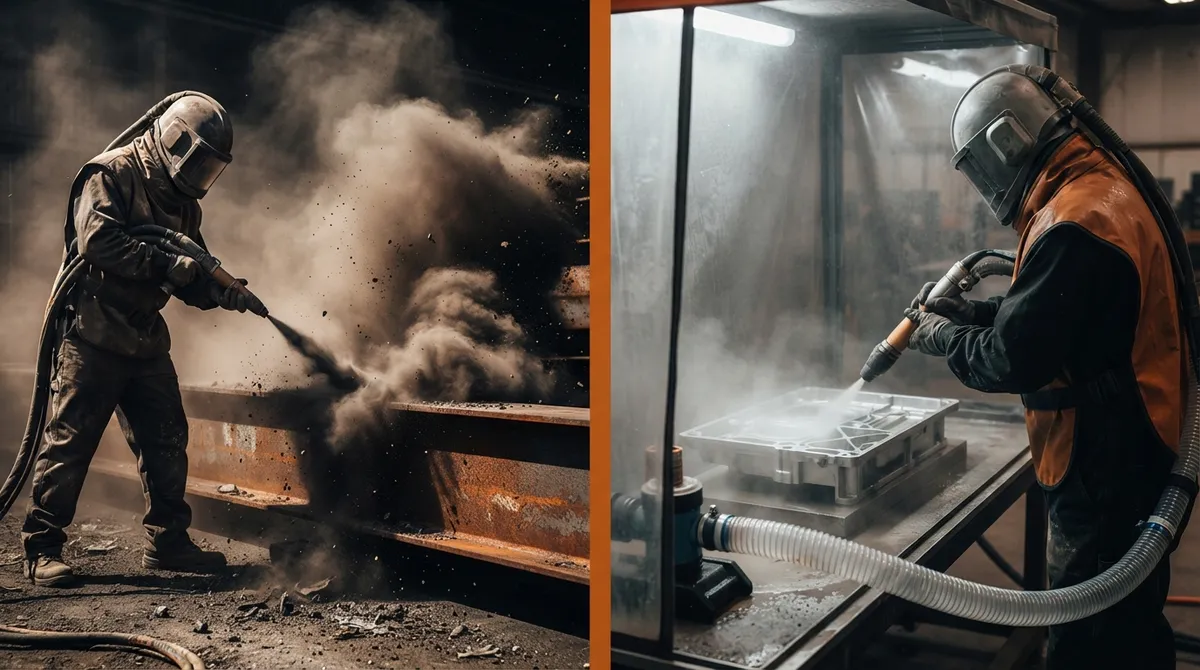
Wet or dustless blasting suppresses 90-95% of airborne dust compared to dry blasting, making it essential for residential jobs near pools, windows, or occupied commercial spaces to protect health and surrounding areas.
-
Pressure and media must be matched to metal thickness; thin automotive body panels risk permanent warping with high pressure or heavy media, while structural steel can handle aggressive blasting without damage.
-
Vacuum blasting with instant dust collection is the best solution for confined spaces like interior tanks, basements, and crawl spaces where standard dry blasting creates visibility and cleanup problems.
-
Hire contractors who ask about your surface before quoting, explain their media and method choice, carry insurance, provide written estimates, and let you talk directly to the operators—price alone is a poor selection criteria.
-
Mobile blasting’s on-site flexibility prevents damage to large or sensitive items that cannot be hauled to a shop, and proper containment with tarps and barriers protects surrounding landscaping, windows, and vehicles from overspray.
Picking the wrong abrasive blasting method can ruin a good project fast. We’ve seen it happen. A homeowner tries a rental sandblaster on a wood fence and ends up with fuzzy, torn-up boards. A boat owner uses the wrong media on gelcoat and now has scratches everywhere. The good news? These mistakes are totally avoidable once you know what to look for.
Abrasive blasting is a broad term that covers sandblasting, media blasting, and grit blasting. The main variables are the abrasive you use and how you propel it. In mobile blasting, we bring the equipment to you, whether that’s a driveway in Tampa, a dock in Clearwater, or a job site in Ocala. That on-site flexibility is what makes mobile blasting so valuable for large or sensitive items that can’t be hauled to a shop.
In this guide, we’ll walk through the most common mistakes people make with abrasive blasting methods. By the end, you’ll know exactly what questions to ask and what to expect from a mobile blasting job done right.
Mistake 1: Assuming All Abrasive Blasting Methods Are the Same
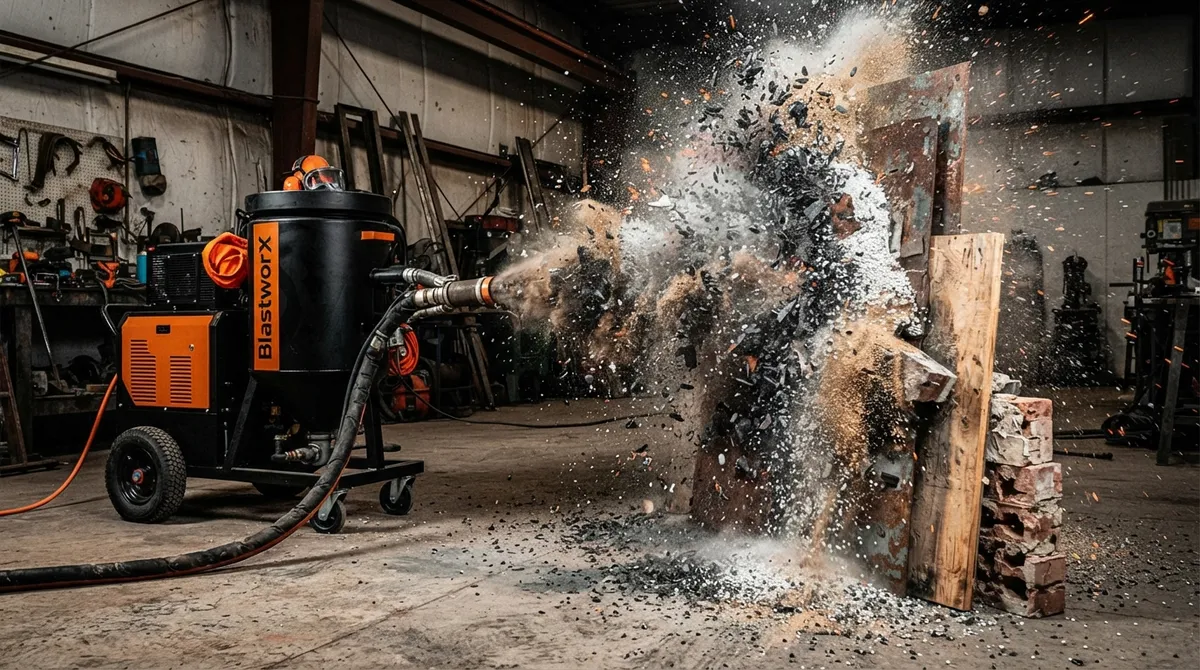
A lot of folks picture one thing when they hear “sandblasting.” In reality, there are several distinct methods, and each one behaves differently. Lumping them all together is where the trouble starts.
Here’s a quick breakdown of the main methods used in mobile blasting today.
| Method | How It Works | Dust Level | Best For |
|---|---|---|---|
| Dry Air Blasting | Compressed air propels media | High | Heavy rust, thick coatings, structural steel |
| Wet/Dustless Blasting | Water mixed into the abrasive stream | Low | Residential, marine, sensitive job sites |
| Vacuum Blasting | Blasting plus instant dust collection | Very Low | Confined or occupied spaces |
| Vapor Blasting | Water and abrasive combined at the nozzle | Low to Moderate | Automotive parts, engine blocks |
| Soda Blasting | Sodium bicarbonate media | Moderate | Fiberglass, gelcoat, delicate substrates |
Abrasive blasting is generally propelled by one of three basic methods: air pressure, centrifugal wheels, or water pressure, according to EPA AP-42 guidance. Mobile contractors mostly rely on air and water systems since they travel well and don’t require a fixed setup. If you want to see how these methods stack up for concrete surfaces specifically, check out our breakdown on sandblasting vs. pressure washing for concrete.
Mistake 2: Ignoring the Dust Problem Until It’s Too Late
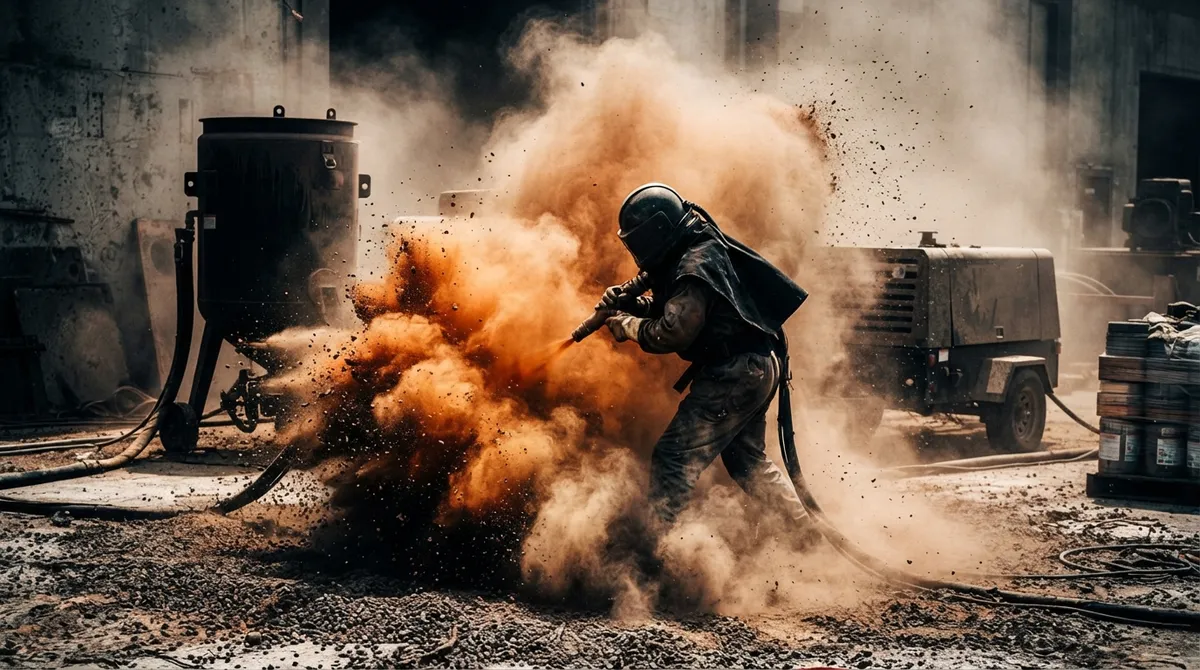
Dry blasting is fast and aggressive. It rips through heavy rust and old paint without much effort. But it also throws a lot of dust into the air, and that’s a problem if you’re working near a home, a marina, or an active job site.
Wet or “dustless” blasting solves this by mixing water into the abrasive stream before it hits the surface. This suppresses somewhere between 90% and 95% of airborne dust, according to industry sources. That’s a massive difference if you’re blasting in a neighborhood or near other equipment.
Here’s when dust control really matters:
- Residential jobs near pools, windows, or landscaping
- Commercial sites in busy shopping centers or downtown areas
- Marine work at crowded marinas
- Indoor or semi-enclosed industrial spaces
- Any job near people who aren’t wearing protective gear
If dust control is a top priority for your project, ask your contractor directly what method they’ll use. To learn more about why this matters so much in the Tampa area, take a look at what makes dustless blasting in Tampa so effective.
The OSHA Silica Angle
Airborne silica dust from certain blasting media is a real health hazard. That’s why OSHA has strict rules around silica exposure on job sites. Choosing a contractor who understands and follows these rules protects everyone on site, including your neighbors.
Mistake 3: Using the Wrong Media for a Delicate Surface
This is probably the most common and most costly mistake we see. Not every surface can handle the same abrasive. Blast a wood fence with hard, heavy media and you’ll tear the grain apart. Use steel grit on fiberglass and you’ll leave permanent scratches.
We always say it this way: we match the blast to your surface, not the other way around. That means picking softer, gentler media for anything delicate.
Common abrasive choices and what they’re good for:
- Sodium bicarbonate (soda) — delicate substrates, gelcoat, degreasing
- Walnut shells — soft wood, delicate automotive parts
- Crushed glass — general purpose, moderate hardness
- Garnet — fast cutting, common for steel and concrete
- Coal slag — economical, used on structural steel
- Aluminum oxide — precision work, fine finishing
- Steel grit — heavy rust and thick coatings on tough metal
- Plastic media — light paint removal without damaging the base
Conventional abrasive blasting with materials like garnet and metal shot or slag is considered the most commonly used surface prep method in the industry because it’s affordable, fast, and simple. But affordable and fast doesn’t mean it’s right for every job. If you’re dealing with wood surfaces, our article on whether sandblasting damages wood is worth a read before you commit to a method.
Mistake 4: Overlooking Soda Blasting for Sensitive Jobs
People sometimes rule out soda blasting because they assume it’s too weak to get the job done. That’s a mistake. Soda blasting shines exactly where stronger media would cause damage.
Soda blasting is generally the pick when you’re dealing with:
- Fiberglass boat hulls and gelcoat
- Engine blocks that need degreasing without corrosion
- Historic masonry or brick that can’t take an aggressive blast
- Delicate trim, molding, or architectural details
- Situations where a non-sparking media is required near flammable materials
It’s a milder option, but it still gets the surface back to clean, sound material. For a deeper dive into why this method works so well for Tampa Bay projects, check out why soda blasting is Tampa’s gentlest cleaning fix.
Mistake 5: Skipping Vacuum Blasting in Confined Spaces
Trying to run standard dry blasting in a tight, enclosed area is asking for trouble. Dust has nowhere to escape, visibility drops, and cleanup becomes a nightmare.
Vacuum blasting solves this by combining the blast nozzle with a vacuum recovery system. Media and debris get pulled up almost instantly, right at the point of impact. This makes it a great fit for:
- Interior tanks and vessels
- Basements and crawl spaces
- Areas near sensitive electronics or machinery
- Jobs where the surrounding surfaces must stay spotless
If your project is in a tight or occupied space, ask your contractor whether vacuum blasting is an option before work begins.
Mistake 6: Not Matching Pressure and Media to Metal Thickness
This one trips up a lot of automotive and metal fabrication projects. Thick structural steel can handle high pressure and aggressive media without a second thought. Thin body panels cannot.
Blast a thin panel with too much pressure or heavy media, and you risk warping the metal permanently. That’s a costly fix, sometimes more expensive than the original job.
Here’s a simple comparison of pressure needs by material:
| Material Type | Typical Approach | Risk If Mismatched |
|---|---|---|
| Structural steel beams | High pressure, aggressive media | Minimal risk |
| Vehicle frames | Moderate to high pressure | Low risk with proper technique |
| Thin body panels | Low pressure, cooler media | Warping, heat damage |
| Fiberglass and gelcoat | Very low pressure, soft media | Surface pitting, scratches |
Experienced operators know how to dial this in on the fly. If you’re restoring a classic car or working on a fabrication project, our page on automotive blasting covers what to expect for frames, panels, and undercarriages.
Mistake 7: Forgetting About Containment and Site Protection
Even the right abrasive blasting method can cause problems if the surrounding area isn’t protected. Overspray can damage landscaping, stain siding, or scratch nearby vehicles.
A solid mobile blasting job always includes proper containment. Here’s what that typically looks like, step by step:
- Walk the site and identify anything that needs covering or moving
- Set up tarps, barriers, or containment screens around the work zone
- Protect pools, windows, plants, and outdoor furniture nearby
- Choose the media and method based on dust and mess concerns
- Blast the surface while monitoring wind and drift
- Clean up spent media and debris before leaving
We take this seriously on every job, whether it’s a pool deck in Riverview or a fence in Brandon. We contain the mess and protect the surrounding area, every time. Curious what this looks like on a real project? Our guide on prepping a pool deck for resurfacing walks through the full process.
Mistake 8: Hiring Based on Price Alone
We get it, everyone wants a fair price. But choosing a contractor purely on the lowest quote often backfires. Cheap jobs sometimes skip containment, use the wrong media, or rush the surface prep.
Instead, look for these signs of a trustworthy mobile blasting contractor:
- They ask about your surface before quoting a price
- They explain which media and method they plan to use
- They carry insurance and can prove it
- They give you a written estimate, not a vague number
- You talk directly to the people doing the work
At Blastworx, we walk every job through this process before we touch a nozzle. We look at photos or visit in person, figure out the right media for your surface, and give you a same-day written estimate. The price we quote is the price you pay. You can get a free estimate for your project, or give us a call to talk through your specific needs.
High-velocity abrasive blasting typically moves particles at speeds around 100 meters per second, which is part of why it works so well for cleaning and profiling tough surfaces. That kind of force needs an experienced hand to control properly, especially on mixed-material projects. If you want to learn more about the science behind the process, what is sandblasting offers a solid technical overview.
Which Method Fits Your Project?
Let’s simplify things with a quick reference table you can use before your next project.
| Your Situation | Recommended Method |
|---|---|
| Heavy rust on structural steel | Dry air blasting with garnet or steel grit |
| Boat hull with gelcoat | Soda blasting or walnut shell |
| Residential fence near a pool | Wet/dustless blasting |
| Interior tank or confined space | Vacuum blasting |
| Engine block degreasing | Vapor blasting |
| Thin automotive body panels | Low-pressure wet blasting |
Every job is a little different, which is why we don’t offer a one-size-fits-all approach. Whether it’s marine blasting, industrial blasting, or residential blasting, we bring the right equipment to your location and figure out the best method on-site.
Wrapping It Up
Abrasive blasting methods aren’t a one-and-done decision. The right choice depends on your surface, your surroundings, and what you need the finished result to look like. Avoid these eight mistakes, and you’ll set your project up for success from the start.
We’ve spent years matching the right media and method to jobs across Tampa, Clearwater, Sarasota, Ocala, Orlando, and Fort Myers, plus smaller communities like Plant City and Lutz. Our rig is fully mobile and self-contained, so we come to you, whether that’s a driveway, a dock, or a job site. We’re fully insured, and when you call, you talk to the people actually doing the work.
Want to see what other folks in the area are saying about working with us? Visit us on Google — see what our customers are saying about us before your next project. And if you’re ready to get your surface back to clean, sound material and ready for the next step, get a free estimate today. We’re happy to walk you through exactly which method fits your job.
FAQs
Q: What are the main abrasive blasting methods used in mobile blasting?
A: The big ones are dry air blasting, wet or dustless blasting, vacuum blasting, vapor blasting, and soda blasting. Each one has its own strengths, so we pick based on your surface and job site conditions. We’re always happy to walk you through which method fits best for your project.
Q: What is the difference between dry blasting and wet blasting?
A: Dry blasting uses compressed air alone and works fast, but it kicks up a lot of dust. Wet blasting mixes water into the stream, cutting airborne dust by roughly 90 to 95 percent. If you’re working near a home or a busy area, wet blasting is usually the friendlier choice.
Q: When should a mobile blasting contractor use soda blasting instead of garnet or steel grit?
A: Soda blasting is the go-to when you’re working with something delicate, like fiberglass, gelcoat, or historic masonry. It’s gentle enough to protect the surface underneath while still stripping paint and buildup. We reach for it whenever a stronger media would do more harm than good.
Q: Which abrasive blasting method creates the least dust?
A: Vacuum blasting takes the crown here since it captures dust and debris right at the point of contact. Wet blasting is a close second, suppressing most airborne particles before they ever spread. Both are great picks for tight spaces or jobs near people and property.
Q: What surfaces are best suited for mobile abrasive blasting?
A: Honestly, just about anything benefits from mobile blasting, from boat hulls and vehicle frames to fences, pool decks, and structural steel. The beauty of mobile work is that we come to you, so large or immovable items never need to leave your property. If you’re not sure whether your surface qualifies, just give us a call and we’ll talk it through.





