
Key Takeaways
-
Apply industrial-grade metal primer within hours of blasting to prevent bare iron from oxidizing immediately, as this simple step is critical for long-lasting finishes.
-
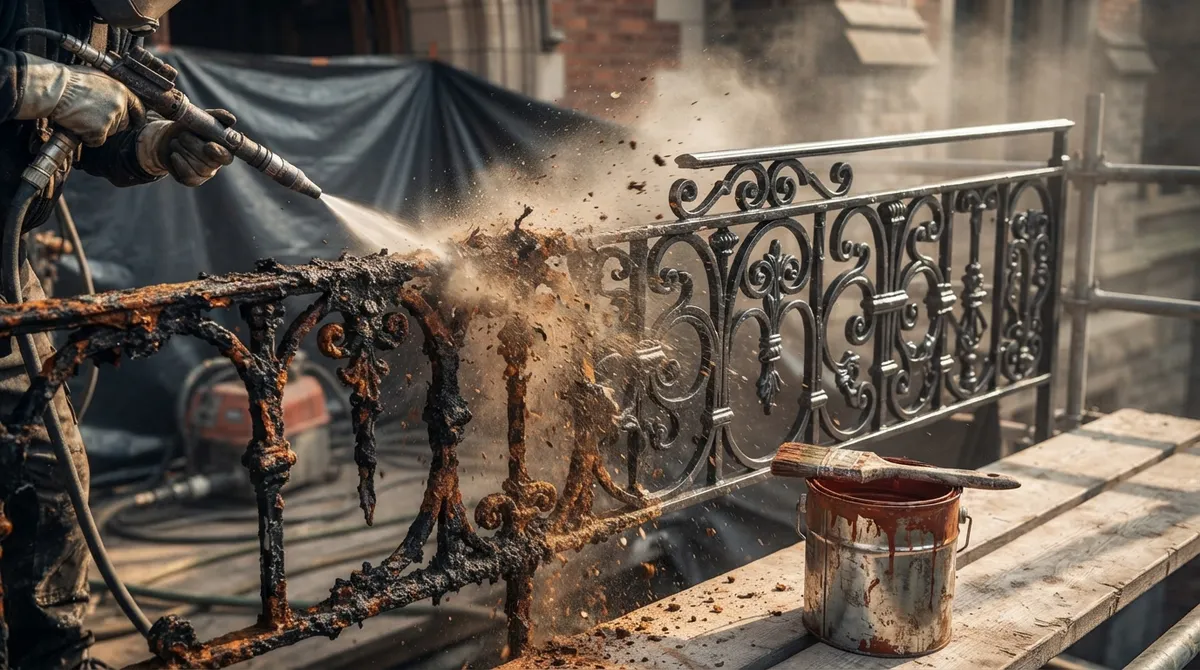
Mobile dustless blasting removes rust and paint in one pass while reaching every scroll and crevice, completing in hours what manual wire brushing and sanding take days to accomplish.
-
Choose soda blasting for historic or ornate railings to preserve intricate details, while sand blasting works better for heavy rust and thick paint buildup on standard ironwork.
-
Protect surrounding landscaping, pools, windows, and siding with proper containment setup before blasting, especially important in residential areas near valuable outdoor features.
-
Avoid common mistakes including painting over rust without complete removal, skipping primer application, and ignoring joints where rust hides, as these lead to premature failure.
-
Get a free written estimate from professionals after a walkthrough assessment to understand exact pricing based on railing length, rust severity, and media type selected.
If you’ve got rusty, flaking wrought iron railings on your Tampa Bay home, you’re not alone. Florida’s heat, humidity, and salt air are tough on iron. Old paint bubbles up, rust creeps into every scroll and curl, and before long, your once-beautiful railings look tired and neglected. The good news? You don’t have to replace them. Learning how to restore wrought iron railings properly can bring that ironwork back to life, and mobile blasting makes the process faster and easier than you might think.
We’ve worked on plenty of railings across the central Florida corridor, from Tampa to Ocala to Orlando, and we’ve seen firsthand how a good blasting job transforms rusty, sad-looking iron into something you’re proud to show off. In this guide, we’ll walk you through exactly how professional mobile blasting restores wrought iron, why it beats scraping and sanding by hand, and what happens after the blast to keep your railings looking sharp for years to come.
Why Wrought Iron Railings Need Special Care
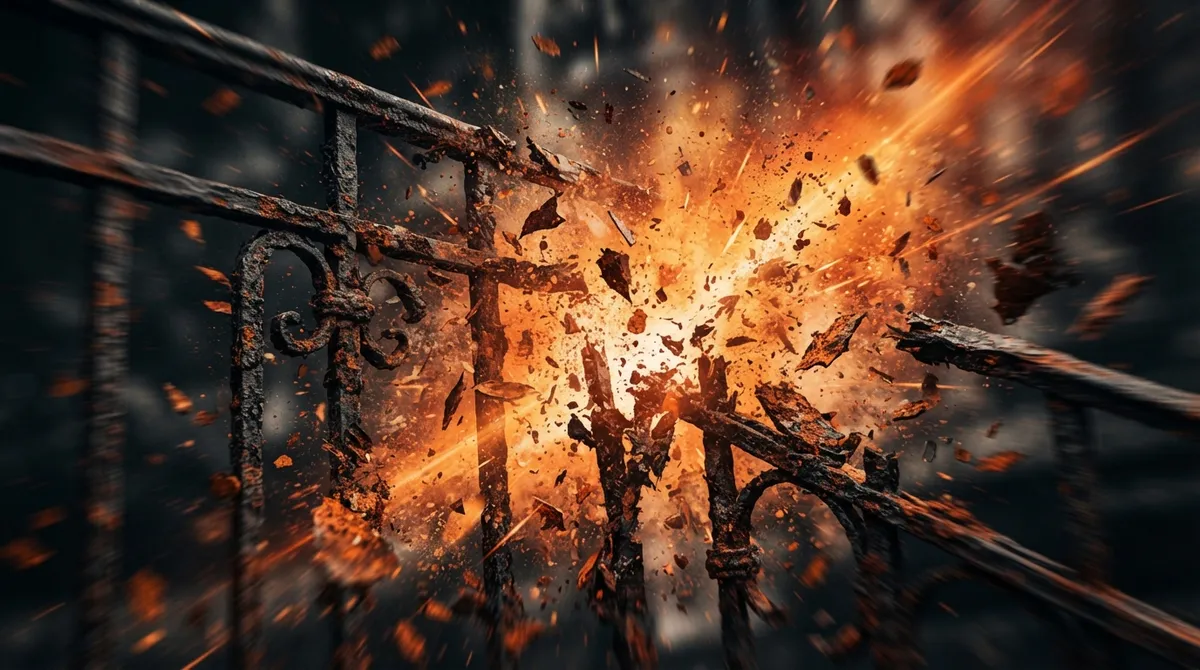
Wrought iron is beautiful, but it’s also high-maintenance. Unlike aluminum or vinyl, iron rusts easily when its protective paint layer breaks down. Once rust starts, it spreads into every crevice, scroll, and joint, making manual cleanup a real headache.
Here’s why railings need more attention than a quick coat of paint:
- Rust hides in tight curves and decorative details that are hard to reach by hand
- Old paint layers trap moisture underneath, speeding up corrosion
- Florida’s humidity accelerates rust formation compared to drier climates
- Salt air near coastal areas like Clearwater and Sarasota eats through iron faster
- Flaking paint looks bad and can flake onto walkways, patios, and pool decks
Ignoring these issues doesn’t make them go away. It just means more rust, more damage, and eventually a railing that’s too far gone to save. That’s where restoration comes in, and blasting is the most effective way to get started.
The Problem With Manual Restoration Methods
Before mobile blasting became widely available, homeowners and contractors relied on wire brushes, sandpaper, and chemical strippers to remove rust and old paint from iron railings. These methods work, technically, but they come with some serious downsides.
Why Hand Tools Fall Short
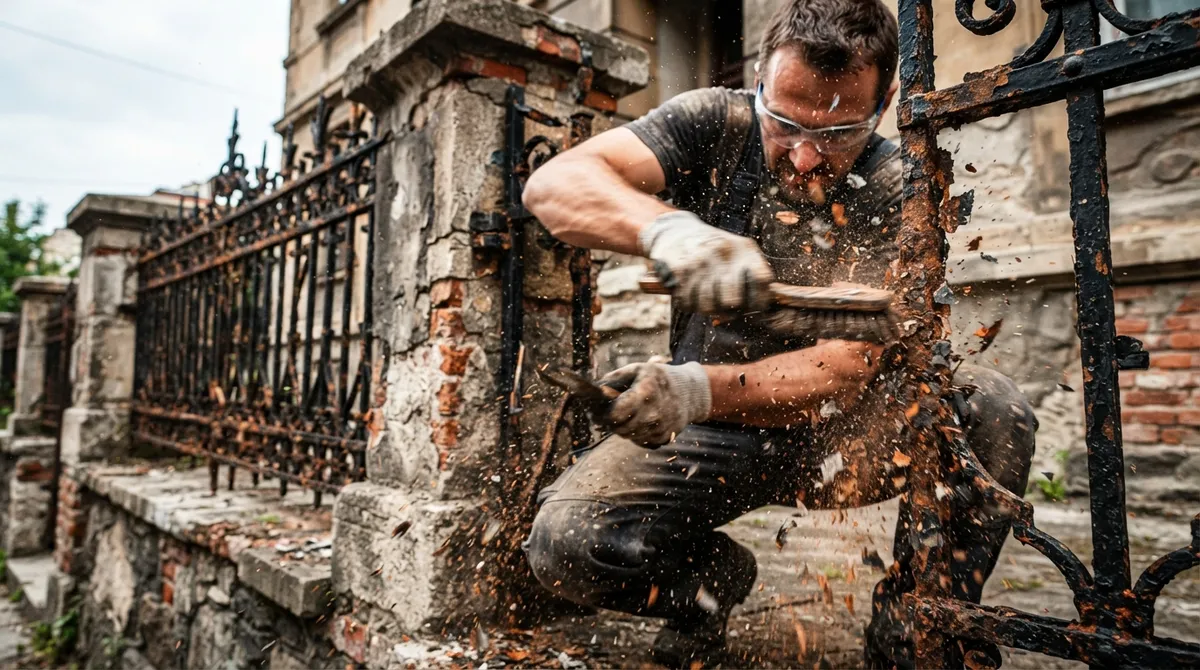
Wire brushing and sanding take forever, especially on railings with lots of scrollwork or decorative flourishes. You can spend an entire weekend on a single section of railing and still miss rust hiding in tight corners. It’s exhausting, and the results are often inconsistent.
Chemical strippers can help loosen old paint, but they’re messy, they smell bad, and they still require a lot of manual scraping afterward. Plus, some strippers aren’t great for the environment or for the plants and grass around your railings.
- Wire brushing removes surface rust but leaves pitted metal untouched
- Sanding is slow and often misses tight curves and joints
- Chemical strippers require multiple applications and lots of scraping
- Manual methods can take days for a single set of railings
- Inconsistent results mean primer and paint may not adhere evenly
Compare that to mobile blasting, which strips the entire surface down to what is sandblasting in a fraction of the time, reaching every nook and cranny without the elbow grease.
How Mobile Blasting Restores Wrought Iron Railings
Mobile blasting uses pressurized media, like sand, soda, or specialty abrasives, to blast away rust, paint, and grime in one pass. It’s faster, more thorough, and leaves you with a clean, even surface ready for priming.
Step-by-Step: The Restoration Process
- Walkthrough and assessment: We look at your railings, check for damage, and figure out the right media for the job
- Free written estimate: You get a clear price with no surprises, provided the same day
- Containment setup: We protect surrounding landscaping, walls, windows, and pool decks before we start
- Blasting: We strip the railings back to clean, bare metal using the right pressure and media
- Inspection: We check every scroll, joint, and post to make sure rust and old paint are fully gone
- Ready to finish: The railings are left clean and ready for primer and paint
This process works whether your railings are freestanding or cemented into a porch or patio. In some cases, railings cast into concrete may need extra care or partial disassembly, but mobile units can often blast in place with the right containment setup, saving you time and hassle.
Choosing the Right Blasting Media for Iron Railings
Not all blasting media are created equal, and picking the right one matters a lot when you’re working with detailed ironwork. We always match the blast to your surface, not the other way around.
| Media Type | Best For | Pros | Considerations |
|---|---|---|---|
| Sand Blasting | Heavy rust, thick paint buildup | Fast, aggressive, great for stubborn corrosion | Can remove fine detail if not handled carefully |
| Soda Blasting | Historic or ornate railings | Gentle, rust-inhibiting, preserves detail | May take longer on very thick coatings |
| Dustless Blasting | Residential areas, tight spaces | Minimal dust, less than 1/10th of traditional blasting | Requires water management on-site |
For historic or delicate ironwork, sodablasting is often the safer choice. It cleans and protects the metal at the same time without wearing down fine details the way aggressive sandblasting can. If you’re restoring an older home’s railings, this method preserves the craftsmanship while still getting the job done.
Why Dustless Blasting Is Ideal for Residential Railings
If your railings are close to your house, pool, or landscaping, dustless blasting is usually the smartest option. It uses water alongside the abrasive media to keep dust way down, which means less mess on your patio furniture, less overspray on your siding, and a cleaner overall job site.
Here’s what makes dustless blasting a great fit for homes in Tampa, Brandon, Riverview, and beyond:
- Produces a fraction of the dust compared to traditional dry blasting
- Keeps neighbors happy since there’s less airborne mess
- Works well in tight spaces like porches and lanais
- Reduces cleanup time after the job is done
- Safer for nearby pools, windows, and landscaping
We always contain the mess and protect the surrounding area, whether we’re blasting a small porch railing or a full perimeter fence. That’s part of what makes mobile blasting such a clean, efficient option compared to old-school methods.
What Happens After Blasting: Priming and Painting
Here’s something a lot of homeowners don’t realize: bare iron starts rusting again almost immediately once it’s exposed to air and moisture. That’s why priming right after blasting is so important.
Steps to Protect Freshly Blasted Iron
- Apply an industrial-grade metal primer within hours of blasting
- Choose a rust-inhibitive primer designed for exterior iron
- Let the primer cure fully before adding a top coat
- Apply two coats of exterior paint rated for metal surfaces
- Inspect the railings yearly for any new rust spots
We handle the strip and prep work, getting your railings back to clean, sound metal and ready to prime and coat. Painting and refinishing are usually handled by the homeowner or a painting contractor, but we’re happy to recommend next steps based on what your project needs.
Cost Considerations for Iron Railing Restoration
Pricing varies depending on the size of your railings, how much rust and paint buildup there is, and how detailed the ironwork is. Generally speaking, blasting saves significant time and money compared to manual wire brushing and sanding, especially on larger projects.
| Factor | Impact on Cost |
|---|---|
| Railing length and complexity | Longer runs and more scrollwork increase blasting time |
| Amount of rust and paint buildup | Heavier corrosion requires more passes |
| Media type chosen | Soda blasting can cost more but preserves detail |
| Containment needs | Nearby pools, windows, or landscaping may add setup time |
| Accessibility | Hard-to-reach railings may require extra labor |
Every job is different, which is why we always start with a walkthrough and provide a written estimate before any work begins. The price we give is the price you pay, no surprises.
Common Mistakes to Avoid When Restoring Railings
We’ve seen a lot of DIY railing projects go sideways. Here are some pitfalls to watch out for:
- Skipping primer and letting bare metal sit exposed too long
- Using the wrong media, which can wear down fine details on ornate railings
- Painting over rust instead of removing it completely
- Ignoring joints and seams where rust likes to hide
- Not protecting surrounding landscaping, pools, or siding during the process
Avoiding these mistakes is a lot easier when you bring in professionals who know how to remove rust from railings the right way the first time. It saves you money in the long run and keeps your railings looking great for years.
When to Call a Professional Mobile Blasting Company
DIY projects are great for small touch-ups, but full railing restoration is usually a job best left to professionals, especially if you’re dealing with historic ironwork, large properties, or heavy rust damage.
Consider calling a professional blasting company if:
- Your railings have deep pitting or structural rust damage
- You want to preserve intricate, ornate details without wearing them down
- You’re short on time and need the job done quickly
- You want a consistent, even finish across the entire railing
- You’d rather avoid the mess and labor of manual stripping
At Blastworx, we’re fully mobile and self-contained, so we come to you, whether you’re in Tampa, Ocala, Orlando, or Fort Myers. We’re fully insured, and when you call, you talk to the people actually doing the work. Check out our gallery to see some of our recent railing restoration projects, or browse our residential blasting services to learn more about what we offer homeowners across central Florida.
We also serve plenty of neighboring communities. If you’re curious about our work in specific areas, check out our posts on residential sandblasting in Brandon or mobile sandblasting for Valrico homes. And if your railings share space with a fence or gate that needs attention too, our guide on stripping paint from a metal fence or gate covers that process in detail.
Wrapping Up Your Railing Restoration Project
Restoring wrought iron railings doesn’t have to mean days of scraping, sanding, and frustration. Mobile blasting strips away rust and old paint fast, reaches every scroll and curve, and leaves your railings ready for a fresh coat of primer and paint. Whether you’re bringing an old family home back to life or just tired of looking at flaky, rusty railings every time you pull into your driveway, blasting is the smart way to go.
We’d love to help you get your railings looking their best. Feel free to get a free estimate for your project, or give us a call to chat about what your railings need. You can also visit us on Google — see what our customers are saying about us before you decide. We’re proud of the work we do across Tampa Bay, and we can’t wait to help bring your railings back to clean, sound metal, ready for the next step.
FAQs
Q: What is the difference between sandblasting and sodablasting for wrought iron railings?
A: Sandblasting is more aggressive and works great on heavy rust and thick paint, but it can wear down fine details on ornate railings. Sodablasting is gentler and rust-inhibiting, making it our go-to pick for historic or delicate ironwork where we want to preserve every curl and scroll.
Q: Can wrought iron railings be sandblasted while still attached to the porch?
A: In many cases, yes! We can blast railings in place with proper containment to protect your siding, windows, and landscaping. If your railings are cast into concrete, we’ll take a closer look during our walkthrough to figure out the best approach.
Q: How do you prevent rust from forming immediately after blasting?
A: The key is priming fast. Bare iron starts to oxidize the moment it’s exposed to air and moisture, so we always recommend applying an industrial metal primer within hours of blasting. It’s a simple step that makes a huge difference in how long your finish lasts.
Q: Is dustless blasting better than traditional sandblasting for outdoor railings?
A: For most residential jobs, yes. Dustless blasting produces a fraction of the dust of traditional blasting, which means less mess on your patio, pool, and landscaping. It’s especially handy for homes in tighter neighborhoods where dust control really matters.
Q: How much does it cost to professionally blast and restore iron railings?
A: Costs vary based on railing size, rust severity, and media type, but blasting typically saves you time and money compared to hand sanding. We always provide a free, written estimate after our walkthrough, so you’ll know the exact price before we start any work.





