Key Takeaways
-
Mobile sandblasting has no single national price; published 2026 guides give planning ranges only, such as about $1.50 to $7 per square foot for standard jobs, so treat them as starting points.
-
Four factors drive the price: the surface and coating, the finish you need, access and travel to the site, and protection, cleanup, and disposal.
-
A thick, multi-layered, or heavily rusted coating takes more passes to remove, so share clear photos to help the blaster choose media and estimate time.
-
Specify the finish you need before getting quotes, since near-white or bare-metal prep costs far more than light cleaning, and confirm whether the next coating requires it.
-
Compare quotes only after checking what is included: mobilization, containment, cleanup, disposal, and whether coating or repainting is part of the scope.
-
Bundling nearby items like a fence, gate, and railing at one address often lowers the per-item cost compared with separate visits.
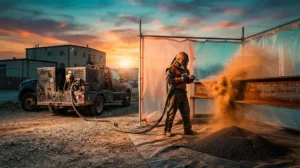
If you have ever asked a few shops what sandblasting rates look like, you probably got a few very different answers. That can feel confusing, and a little frustrating. The good news is that the price swings are not random. Mobile blasting is priced by the job, and every job is different.
Think of it like asking what a haircut costs. A quick trim and a full restyle are not the same service, even if both happen in the same chair. Blasting works the same way. A rusty gate and a painted storefront can both need blasting, yet they take very different time, media, and care.
In this guide, we break down the four things that shape sandblasting rates when a crew comes to you. We also share planning ranges from published 2026 guides, explain how pricing styles differ, and show you how to compare quotes fairly. By the end, you will know what to ask and what to expect, so you can feel confident when the estimate lands in your inbox.

A Quick Look at Sandblasting Rates
First, a friendly reality check. There is no single national price for mobile blasting. Published cost guides offer planning ranges, but they come from individual providers and are not guaranteed market averages. Treat them as a starting point, not a promise.
With that in mind, here are some of the numbers that appear in 2026 guides. One contractor-published guide lists a broad standard-job range of about $1.50 to $7 per square foot. The same guide gives $75 to $150 per hour for a two-person crew and $150 to $500 for mobilization. These are examples from one provider, so your local rates may land above or below them.
| Pricing Item | Example Planning Range | What It Usually Means |
|---|---|---|
| Standard jobs, per square foot | About $1.50 to $7 | Measurable surfaces like fences, decks, and concrete |
| Hourly crew rate | About $75 to $150 per hour | Two-person crew, often used for small or uncertain work |
| Mobilization | About $150 to $500 | Getting equipment to your site and set up |
| Industrial shop blasting | About $8 to $16 per square foot | Specified preparation grades, before field adjustments |
| Field work, near-white finish, with containment | Roughly $11 to $31 per square foot | Demanding industrial prep done on site |
Notice how wide those ranges are. That is the whole point. The surface, the coating, the finish you need, and the site all move the number. Let’s walk through the four biggest factors.
1. The Surface and the Coating on It
The first thing a blaster looks at is what you want cleaned and what is stuck to it. Steel, concrete, wood, brick, and fiberglass all respond differently. Each one needs the right media and the right pressure. At Blastworx, we match the blast to your surface, not the other way around.
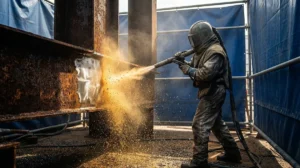
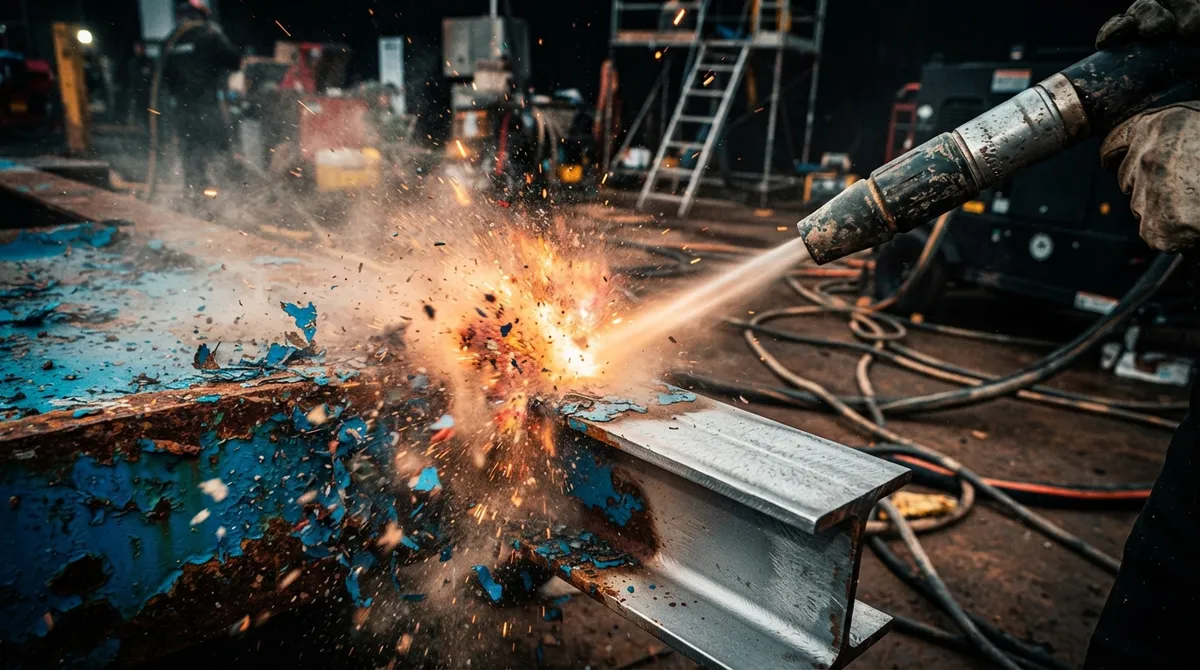
Condition matters just as much as material. A lightly weathered fence is quick work. A fence with heavy rust in every seam takes longer. The coating counts too. One thin coat of old paint comes off faster than several thick layers built up over decades.
What the Coating Does to Your Price
- Thickness: Thick, hardened coatings take more passes to remove.
- Layers: Multiple layers of paint add time, especially when they are bonded tightly.
- Rust level: Light surface rust clears fast. Deep pitting and rust in corners take more effort.
- Coating type: Some coatings, like thick epoxy, resist blasting more than basic paint.
This is why photos help so much. When we can see the surface, we can pick the right media and estimate the time more closely. If you want to dig deeper into how coatings affect the job, our post on how to get industrial coating removal right the first time is a helpful read.
2. The Finish You Need
Here is a factor many people miss. The cleaner the finish you ask for, the more work it takes. Cleaning a surface to a light, even look is not the same as taking steel back to clean, bare metal for a protective coating.
In industrial work, buyers often specify a preparation grade. A near-white metal finish takes more effort than a commercial-grade cleaning, and it may need checking after the work is done. Industrial cost guides reflect this. They cite roughly $8 to $16 per square foot for shop blasting to specified grades, and field work with containment can push the total much higher. Those figures are not comparable to light residential work, so please do not hold a backyard gate job up against them.
Why does the finish matter so much? Because a coating is only as good as the surface underneath it. Paint, powder coat, resurfacing, and sealers will not last if the prep is bad. Good prep helps the next step bond properly and hold up in Florida’s heat, humidity, and salt air. If you are planning to paint afterward, our guide to sandblast painting prep steps that make paint last shows what good prep looks like.
Questions to Ask About the Finish
- What does the next coating or product require from the surface?
- Do I need bare metal, or is a cleaned and roughened surface enough?
- Will anyone verify the finish before coating starts?
Answering these up front keeps quotes honest and comparable. It also avoids paying for a finish you do not need.
3. Access, Travel, and the Site
Mobile blasting means the crew comes to you. That is a big convenience, and it is how we work. We are fully mobile and self-contained, so we can work dockside, in a driveway, at a shop, or on a job site without needing your power or water. But getting a rig to your location and working safely there has real costs.
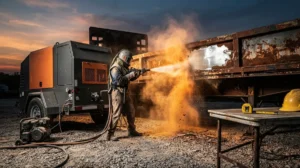
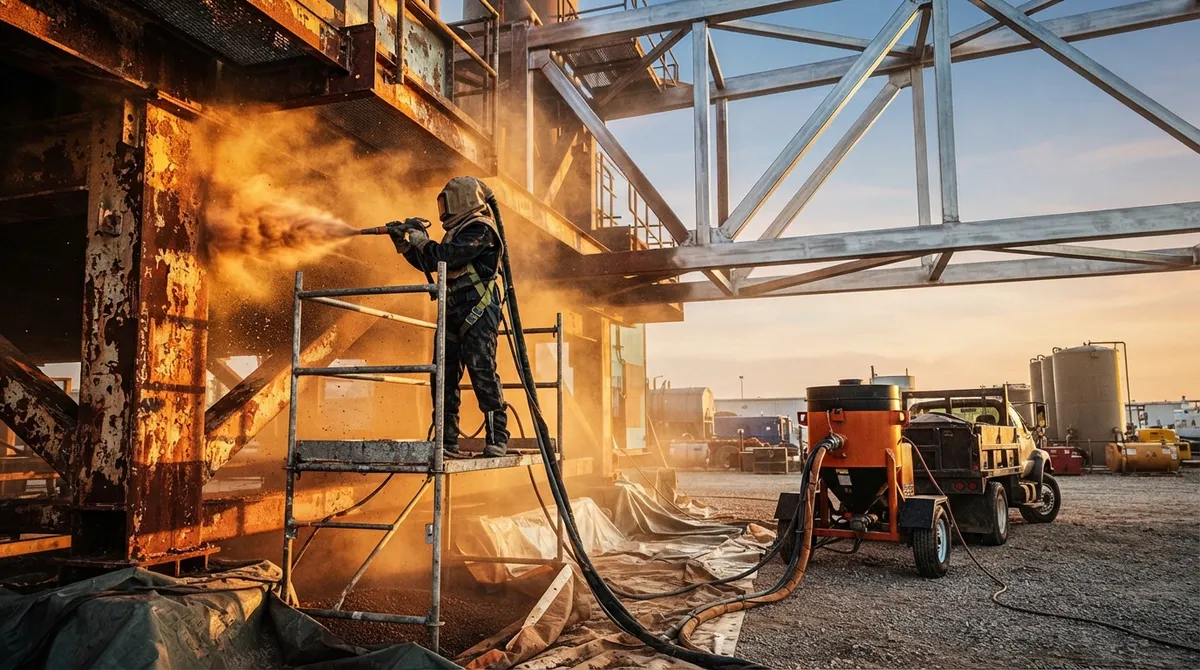
Mobile work can cost more than shop blasting because the contractor has to transport and set up equipment on site. Field work may also involve rigging, weather delays, containment, and less efficient abrasive recovery. One 2026 cost guide estimates a 10 to 25 percent field premium for industrial work. That is a single guide’s estimate, not a rule that applies everywhere.
Site Details That Can Move the Number
- Distance: Longer drives mean more travel time and fuel. We are based in Tampa and work across Tampa Bay and the central Florida corridor, including Ocala, Orlando, and Fort Myers.
- Access: Tight gates, stairs, or limited parking slow setup.
- Height: Working up high may need lifts or scaffolding.
- Geometry: Detailed, curved, or intricate surfaces take longer than flat ones.
- Weather: Florida storms can pause outdoor work.
If you are weighing a mobile crew against hauling an item to a shop, our comparison of mobile vs. shop sandblasting lays out the tradeoffs. For large or fixed items like fences, docks, and building exteriors, bringing the blaster to the work often makes the most sense. You can also find sandblasting near you that comes to you with a bit of simple searching.
4. Protection, Cleanup, and Disposal
The last big driver is everything around the blasting itself. A good crew protects what you care about. We contain the mess and protect the surrounding area. That takes masking, barriers, and careful cleanup, and all of it takes time.
This is where quotes can quietly differ. One estimate may include containment, cleanup, and disposal. Another may leave them out and add them later. When you compare numbers without checking what is included, the cheaper-looking quote can end up costing more.
What Protection and Cleanup May Include
- Masking windows, doors, and landscaping
- Barriers or containment to control dust and overspray
- Cleanup of spent media and removed coatings
- Disposal of waste, which may have special rules for some coatings
Dustless and wet methods can help on sites near homes, pools, or active equipment. If that sounds like your project, take a look at what makes dustless blasting in Tampa so effective. And if you want a broader picture of how pros keep dust under control, see how pros handle sandblasting dust control safely.
Per-Square-Foot vs. Hourly Pricing
Now that you know the four drivers, let’s talk about how a price gets built. Most mobile blasters use one of two styles. Each fits different jobs.
| Pricing Style | Best For | Watch Out For |
|---|---|---|
| Per square foot | Large, measurable surfaces like concrete, fences, and building walls | Surface condition can change the real effort needed |
| Hourly or time and material | Small, detailed, or uncertain jobs where speed is hard to predict | Final total depends on actual time spent |
| Flat project price | Clearly defined jobs with a fixed scope | Make sure the scope is written down |
Per-square-foot pricing is generally easier to compare when the surface is big and easy to measure. Hourly pricing tends to suit small or intricate work, since blasting speed is hard to guess. At Blastworx, we keep it simple. You get a clear, written estimate, and the price we give is the price you pay.
How to Get a Quote You Can Trust
A good estimate starts with good information. Here is a simple way to get one that is accurate and easy to compare.
- Share photos. Send clear pictures of the surface, the rust, and any tight spots.
- Give measurements. Even rough sizes help, such as fence length or deck footage.
- Describe the finish. Tell us what comes next, like painting, powder coating, or sealing.
- Share site details. Mention access, parking, nearby plants, pools, or windows.
- Ask what is included. Check mobilization, minimum charges, media, containment, cleanup, and disposal.
Also ask whether the quote includes any coating or repainting. Most blasting quotes cover strip and prep only. That is how we work too. For marine, residential, and commercial jobs, we strip and prep, and refinishing is handled by you or your painter. Matching scope and finish across quotes is the only fair way to compare. For more on reading estimates, see how sandblasting quotes work for mobile jobs and what to expect from a mobile quote.
Smart Ways to Keep Costs Fair
Nobody wants to overpay, and nobody wants a cut-rate job that fails in a year. The goal is fair pricing with solid prep. A few habits help.
- Bundle nearby jobs. A fence, gate, and railing at the same address often cost less per item than three separate visits.
- Be flexible on timing. Weekday scheduling can make planning easier for everyone.
- Clear the area. Moving furniture, cars, and pots saves setup time.
- Choose the right method. Soft media for delicate surfaces avoids repair costs later.
- Skip the cheapest bid by default. A low number with missing scope can grow fast.
Cheaper is not always the problem, and pricier is not always better. Clear scope is what protects you. Our post on how to get affordable sandblasting without cutting corners goes deeper on this. And if you want to understand why quotes in one area can look so different, read why sandblasting service quotes nearby vary so much.
Real-Life Examples From Around Tampa Bay
Let’s make this less abstract with a few everyday scenarios. These are not price quotes. They simply show how the four factors play out.
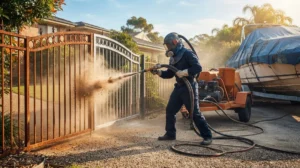
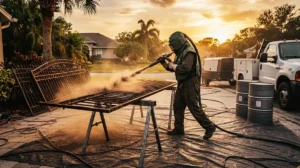
Picture a homeowner in Brandon with an iron fence. The rust is moderate and the fence is long and straight. Access is easy, so the work moves smoothly. This kind of job is a good fit for per-square-foot or a flat project price.
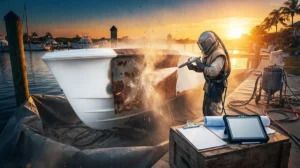
Now think of a boat owner in Clearwater with a fiberglass hull. The surface is delicate, so softer media like soda or walnut shell protects the gelcoat. Working dockside adds setup details, but we bring our own power and water. The media choice and care for the hull shape the cost more than raw size.
Finally, consider a Tampa business with graffiti on a storefront wall. Surface type, nearby glass, and after-hours scheduling all matter. Some surfaces, like painted walls, glass, veneer, and cultured stone, have to be evaluated in person first. That kind of evaluation keeps the final estimate accurate.
If you live near a pool, you might also like our guide to pool deck blasting. And if you are thinking about a pool project in general, the crew at Panther Pools is a good local resource to know about once your deck is prepped.
Why Local, Owner-Operated Matters for Pricing
One more thing worth saying. When you call a small, owner-operated company, you talk to the people doing the work. That cuts out the guessing. The person who looks at your photos is often the person who runs the rig, so the estimate reflects the real job.
We are fully insured and small enough to give your job our full attention. Our four steps are simple: walkthrough, free estimate, blast and strip, and ready to finish. You can read what neighbors say and visit us on Google to see what our customers are saying about us. If you want to learn the basics behind the process, what is sandblasting gives a solid overview of the method.
For businesses and homeowners across the area, local knowledge helps too. We understand Florida’s heat, humidity, and salt air, and how they affect coatings. Professionals in other fields, like the team at Healthcare Solutions Team Brandon, know that local, hands-on service is what neighbors value most. We feel the same about blasting.
Wrapping Up Your Sandblasting Rates Plan
Sandblasting rates are shaped by four things: the surface and coating, the finish you need, access and travel, and protection and cleanup. Published 2026 guides give planning ranges, like about $1.50 to $7 per square foot for standard jobs, but your final number depends on your project. The best move is to ask for a written, itemized estimate that spells out what is included.
Remember to share photos, describe your finish, and ask about mobilization, containment, and disposal. Do that, and you can compare quotes with confidence and avoid surprises. Blasting is also a smart investment, since good prep helps your next coating last longer in Florida’s tough climate.
Ready to see what your project would cost? Get a free estimate from our team, or give us a call at 813-380-8092. You can text us photos too. We come to you, and we would love to help.
FAQs
Q: How much does mobile sandblasting cost per square foot?
A: One 2026 contractor-published guide shows a broad range of about $1.50 to $7 per square foot for standard jobs. That is one provider’s planning example, not a national average, so your real price depends on the surface, coating, and site. A written estimate is the best way to know for sure.
Q: Do mobile blasting companies charge a travel or mobilization fee?
A: Many do, since they have to bring and set up equipment at your site. One 2026 guide lists mobilization at about $150 to $500, though this varies by provider and distance. Ask for it to be spelled out in your estimate so there are no surprises.
Q: Is mobile blasting more expensive than taking an item to a shop?
A: It can be, because field work involves transport, setup, containment, and weather. One guide estimates a 10 to 25 percent premium for industrial field work, but that is not a universal rule. For large or fixed items, bringing the blaster to you often saves hauling and hassle.
Q: What should I include to get an accurate mobile blasting estimate?
A: Send clear photos, rough measurements, and details on the finish you want next, like paint or powder coat. Share site notes too, such as access, parking, and nearby plants or windows. The more we know, the closer the estimate will be.
Q: Does a sandblasting quote include containment, cleanup, and disposal?
A: Not always, which is why it pays to ask. A solid quote states what is included, such as mobilization, media, masking, containment, cleanup, and waste disposal. Comparing quotes only works when each one covers the same scope.