Key Takeaways
-
Ask every contractor to specify the blasting media, containment, and cleanup in writing, since exclusions for cleanup or travel are a common source of hidden costs.
-
Silica sand is a serious inhalation hazard linked to silicosis; NIOSH has recommended since 1974 avoiding blasting media with over 1% crystalline silica.
-
Pricing often follows one of four methods: by the job, per square foot, hourly labor, or a flat price plus add-ons, so compare quotes using the same method and scope.
-
Share the material, coating history, desired finish, approximate size, access details, and photos to get a more accurate estimate.
-
One 2026 provider's guide lists $1.50 to $7 per square foot, $75 to $150 per hour for a two-person crew, and $150 to $500 for mobilization, but these are not national averages.
-
Compare quotes on equal footing by checking the same surfaces, finish, media, containment, cleanup, travel fees, and schedule before choosing the lowest price.
Getting a sandblasting estimate should feel simple. You tell a contractor what needs to be cleaned or stripped, and they tell you what it will cost. In real life, the numbers can swing wildly from one quote to the next, and that can be confusing.
Here is the good news. Once you know what goes into a mobile blasting quote, the whole process gets much easier. You will know what to share, what to ask, and how to compare quotes fairly.
This guide walks you through it in plain language. We will cover what drives the price, what a good estimate includes, and the safety details that matter. We will also share a few rough price ranges, with a clear note that they are only starting points. At Blastworx, we come to you across Tampa Bay and central Florida, so we quote this kind of work every day. Let’s make it easy for you too.
What Is a Mobile Sandblasting Estimate?
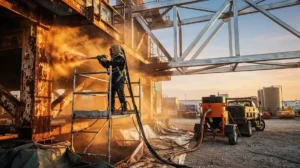
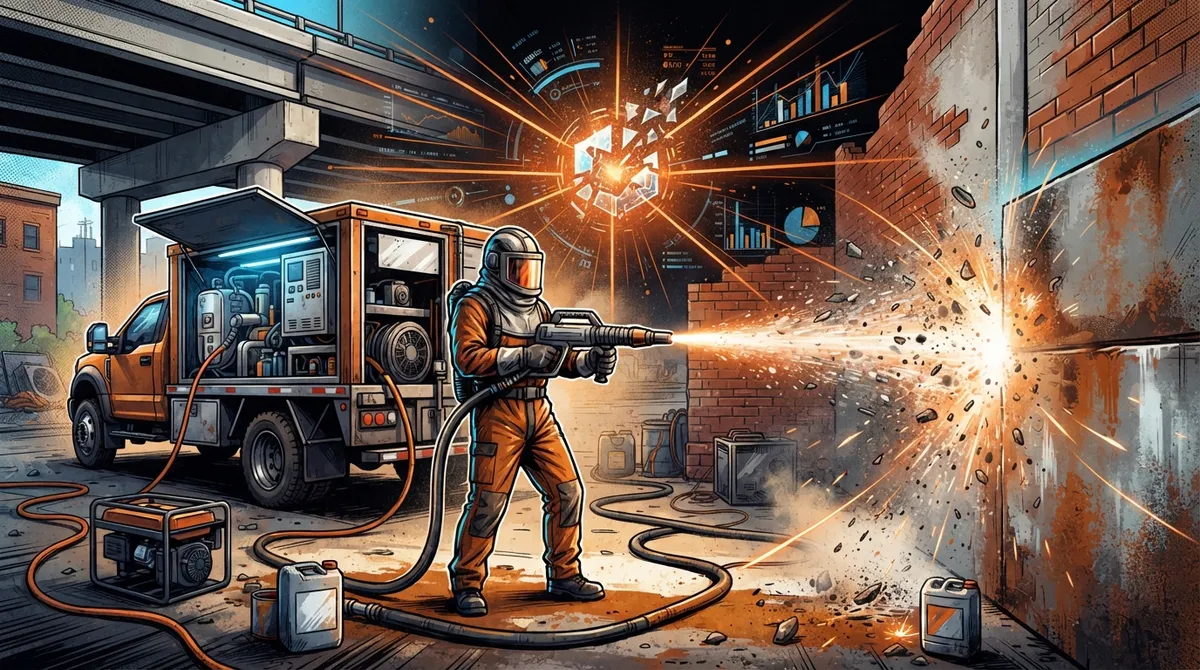
A mobile sandblasting estimate is a project-specific quote for bringing blasting equipment and a crew to your site. It covers the work itself, plus the extras that come with working on location. Many people use the word “sandblasting” for all kinds of abrasive blasting. If you are curious about the basics, this overview of what is sandblasting is a handy starting point.
Quotes can be built a few ways:
- By the job: one flat price for a clearly defined scope.
- By the area: a rate per square foot, common for concrete, decks, and walls.
- By labor time: an hourly rate for the crew, often used when the scope is hard to measure.
- A mix: a flat price plus add-ons for travel, containment, or special media.
No single method is better. What matters is that the quote clearly says what is included. If you want to see how quotes are put together, our post on how sandblasting quotes work for mobile jobs goes deeper.

What Affects the Price of a Sandblasting Estimate?
Every job is a little different. A small gate and a big parking area are not the same project, even if both need blasting. Here are the main things that move the price.
Surface Area and Shape
Bigger surfaces take more time and more media. Shape matters too. A flat concrete patio goes quickly. An ornate iron railing with tight curves and seams takes far longer, even if it looks small.
The Surface Material
Steel, concrete, brick, wood, fiberglass, and aluminum all react differently to blasting. Tough surfaces can handle stronger media. Delicate ones need a gentler touch. We match the blast to your surface, not the other way around, and that choice affects both time and cost.
Coating Type and Thickness
One thin layer of paint comes off fast. Several layers of old paint, heavy rust, thick marine bottom paint, or tough industrial coatings take much longer. If you know the coating history, share it.
The Finish You Want
Do you want a light clean, or back to clean, bare metal? A deeper finish means more time. If a new coating is going on afterward, the surface may need a specific texture so it bonds well.
Access, Containment, and Cleanup
Tight spaces, stairs, long hose runs, and nearby people all add effort. So does protecting landscaping, pools, windows, vehicles, and neighboring areas. We contain the mess and protect the surrounding area, and that setup is part of a fair quote.
Travel and Mobilization
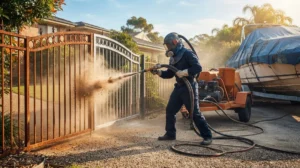
Mobile work means bringing the rig to you. Distance, drive time, and setup all play a role. The good news is that a fully mobile, self-contained rig saves you the cost and hassle of hauling large items to a shop.
Rough Price Ranges (Use With Care)
People always ask for numbers, so here are some. One 2026 contractor-published guide lists about $1.50 to $7 per square foot for mobile jobs, $75 to $150 per hour for a two-person crew, and $150 to $500 for mobilization. These are examples from one provider, not national averages.
| Pricing Item | Example Range From One 2026 Guide | What Changes It |
|---|---|---|
| Per square foot | $1.50 to $7 | Surface, coating, finish, media |
| Hourly (two-person crew) | $75 to $150 | Job difficulty, access, setup |
| Mobilization | $150 to $500 | Distance and equipment needed |
Think of these as a rough planning guide only. Your local market, your surface, and your goals can land well outside them. Specialized work, like heavy marine coatings or detailed restoration, can cost more. If you want more context on this topic, take a look at what a sandblasting pricing guide really covers and how much sandblasting estimates really cost.
What to Share to Get a Useful Estimate
A clear scope leads to a clear price. The more you share up front, the less guesswork there is, and the fewer surprises later. Here is a simple checklist.
- What needs blasting. Name the item or surface, such as a boat trailer, a fence, a pool deck, or a steel beam.
- Approximate size. Rough measurements work fine. Length times width is plenty for a flat surface.
- The material. Is it steel, concrete, wood, fiberglass, or aluminum?
- Coating history. Share what you know about old paint, rust, sealers, or antifouling.
- Your goal. Tell us if you want it ready to prime, ready to refinish, or just cleaned up.
- Location and access. Share the address area, gate widths, stairs, and any tight spots.
- Photos. Wide shots and close-ups of problem areas help a lot.
Photos can get you a solid estimate for many straightforward jobs. For complex or hazardous work, a quick on-site look is smarter. Some surfaces, like painted walls, glass, veneer, and cultured stone, should always be checked in person first.
What Should a Good Estimate Include?
A strong written estimate does not just show a total. It spells out what you are paying for. Look for these items:
- The exact surfaces and areas covered.
- The blasting media and method, such as soda, sand, or dustless.
- The finish or preparation standard you will get.
- Containment and protection of nearby areas.
- Cleanup and debris handling.
- Travel, mobilization, and any minimum charge.
- Taxes, schedule, and what is not included.
That last point matters. Exclusions can hide big costs. If a quote does not say whether cleanup is included, ask. Our team has seen plenty of confusion over this, which is why we put everything in writing.
Safety and Media: Not All “Sandblasting” Is the Same
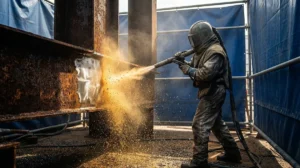
Here is something many people do not realize. The word “sandblasting” is often used for all abrasive blasting, but silica sand is a serious inhalation hazard. Breathing crystalline silica dust can cause silicosis, a lung disease. OSHA guidance on abrasive blasting materials highlights hazard assessment, safer media choices, containment, ventilation, and proper respiratory protection.
NIOSH has also recommended since 1974 that blasting media with more than 1 percent crystalline silica not be used. Always check current OSHA rules and ask a qualified safety professional about your specific job.
So your estimate should tell you which media will be used and how dust will be controlled. That is a sign of a careful contractor. It is also why many jobs use options like soda, walnut shell, or dustless blasting. Our guide to how pros handle sandblasting dust control and our post on safe blasting procedures every mobile crew follows explain more.
Matching the Media to Your Job
The right media for the job keeps your surface safe and your price fair. Here is how it often breaks down.
| Surface | Typical Approach | Why It Fits |
|---|---|---|
| Fiberglass boat hulls and gelcoat | Soda or walnut shell | Gentle on the hull |
| Frames, heavy rust, trailers | Stronger abrasives | Cuts through thick rust fast |
| Thin car body panels | Lower pressure, cooler media | Helps prevent warping |
| Concrete, brick, pavers | Stronger media or dustless | Removes buildup and stains |
| Wood decks and trim | Soft media, low pressure | Protects the grain |
If you are weighing options, you may like our posts on soda blasting vs sandblasting and what makes dustless blasting so effective.
How to Compare Sandblasting Quotes Fairly
Two quotes can look far apart and still be for very different work. Before you pick the lowest number, make sure you are comparing the same job. Here is a simple process.
- Line up the scope. Check that each quote covers the same surfaces and the same finish.
- Check the media. Confirm what will be used and why.
- Look at containment. See how nearby areas will be protected.
- Ask about cleanup. Find out if debris removal is included.
- Review extra charges. Look for travel fees, minimums, and taxes.
- Confirm the schedule. Make sure the timeline fits your plans.
A very low price can mean less prep, less protection, or missing cleanup. A fair price comes with a clear plan. For more on this, see why sandblasting service quotes vary so much and what to look for in a sandblasting contractor.
How Our Estimate Process Works at Blastworx
We keep things simple. You talk to the people doing the work, not a call center. Here is how a typical estimate goes:
- Walkthrough. Send photos, or we come look. We figure out the right media for your surface.
- Free estimate. You get a clear, written estimate the same day. The price we give is the price you pay.
- Blast and strip. We protect the surrounding area, then blast the surface clean at your location.
- Ready to finish. The surface comes out clean and ready for the next step.
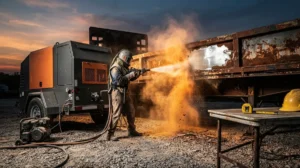
We are fully insured and fully mobile. Our rig is self-contained, so we work dockside, in a driveway, at a shop, or on a job site without needing your power or water. That means fewer headaches for you and a smoother quote.
We also want to be upfront about what we do and do not do. For most jobs we strip and prep only, and refinishing is handled by you, your painter, or your coating crew. That keeps the estimate focused and honest. Why does prep matter so much? A coating is only as good as the surface underneath it. Proper blasting helps new paint or coatings bond and hold up in Florida’s heat, humidity, and salt air. Our post on why sandblasting before painting pays off explains it well.
Common Ways to Save Money Without Cutting Corners
Nobody wants to overpay, but cutting corners on prep usually costs more later. Here are smart ways to keep your estimate reasonable:
- Group jobs together. Blasting a fence, gate, and railing in one visit saves on mobilization.
- Share good photos. Clear details reduce guesswork and padding.
- Clear the area. Moving furniture, cars, or planters saves setup time.
- Be flexible on timing. Weekday or off-peak scheduling can help.
- Skip unnecessary extras. Only blast what truly needs it.
For more ideas, read how to get affordable sandblasting without cutting corners and what drives the price in Tampa.
Where We Work
We are based in Tampa and serve the central Florida corridor, including Clearwater, Sarasota, Ocala, Orlando, and Fort Myers. Bay-area towns like Brandon, Riverview, Plant City, Lutz, and St. Pete are all part of our regular routes. For the right job, we will travel anywhere in the state. You can see our coverage on our service areas page. Curious how past customers feel? You can visit us on Google and see what our customers are saying about us.
Ready for Your Sandblasting Estimate?
A good sandblasting estimate is clear, written, and built around your surface and your goal. Share a few photos and a few details, ask about media, containment, and cleanup, and compare quotes on equal footing. That is all it takes to feel confident about your choice.
Whether you have a boat trailer, a rusty gate, a pool deck, or a steel frame, we are happy to help. Get a free estimate from our team today, or give us a call at 813-380-8092. You can text too. We come to you, we contain the mess, and we leave your surface ready for the next step.
FAQs
Q: How much does mobile sandblasting cost per square foot?
A: One 2026 contractor-published guide lists about $1.50 to $7 per square foot for mobile jobs, but that is just one provider’s example. Your price depends on the surface, the coating, the finish you want, and access. The best way to get a real number is a written estimate based on your actual job.
Q: What information do I need to get a sandblasting estimate?
A: Share what needs blasting, its rough size, the material, any coating history, and the finish you want. Add your location, access details, and a few photos. The more you tell us, the more accurate and quick your estimate will be.
Q: Can I get an accurate sandblasting estimate from photos?
A: For many simple jobs, yes. Good photos and rough measurements can get you a solid estimate. For complex or hazardous work, or surfaces like painted walls, glass, and veneer, we like to take a quick look in person first.
Q: Does a mobile sandblasting quote include travel and setup?
A: It should, but always ask. A good estimate spells out travel, mobilization, containment, cleanup, and any minimum charges. That way there are no surprises when the job is done.
Q: Is silica sand used for mobile sandblasting, and what safety controls are needed?
A: Silica sand is a serious inhalation hazard and can cause silicosis, so safer media are the better choice. Your estimate should name the media and explain how dust is contained and controlled. Check current OSHA guidance and ask your contractor about their safety plan.