Key Takeaways
-
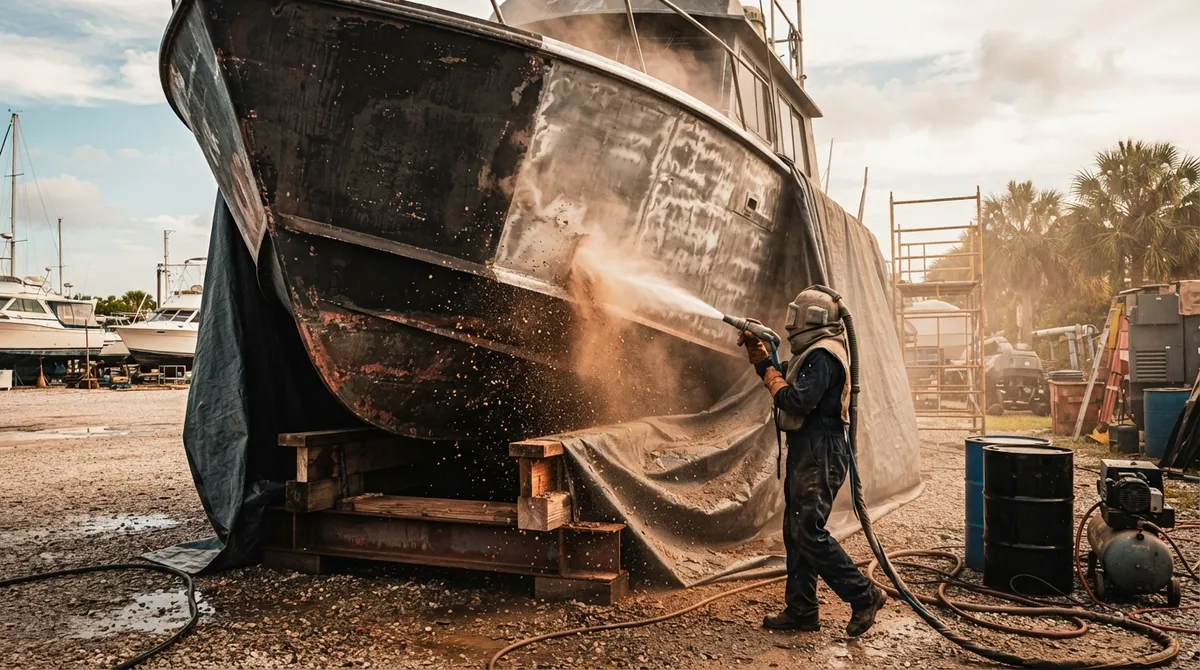
Match the blasting media to the hull material: use gentle soda or walnut shell on fiberglass and gelcoat, while steel can handle aggressive dry grit for heavy rust and thick coatings.
-
Old antifouling may contain lead or tributyltin (TBT), so treat spent media and paint chips as possibly contaminated until tested, and store them covered in closed containers.
-
Blasting a hull in the water risks sending paint and media into the marina, so hulls should be blasted out of the water on a trailer, stands, or in a yard.
-
Demand containment before work starts: ground sheeting or impermeable surfaces, shrouds or tarps, wind checks, and prompt collection of debris to protect soil, storm drains, and water.
-
Coordinate with your applicator before blasting, since bare steel or aluminum can flash rust quickly in Florida humidity and the coating should go on soon after stripping.
-
Get a written estimate after a walkthrough, because cost depends on hull size, material, coating layers, access, and containment needs rather than a single flat price.
If you own a boat in Florida, you already know what our heat, humidity, and salt water can do. Bottom paint builds up. Barnacles dig in. Old antifouling gets thick, flaky, and hard to manage. At some point, a quick scrub just will not cut it. That is when many boat owners start asking about sandblasting a boat hull.
Here is the good news. You do not have to haul your boat across the state to get it done. Mobile blasting means the equipment comes to your boat, whether it sits at a marina, a boatyard, or a driveway. Still, a hull is not a fence or a patio. The wrong media or the wrong technique can hurt the surface. Waste from old bottom paint can also be a real concern.
In this friendly guide, we will walk you through what hull blasting is, which methods work best, how containment works, and how to get your boat ready for new coatings in 2026. Let’s dive in!
What Does Sandblasting a Boat Hull Actually Mean?
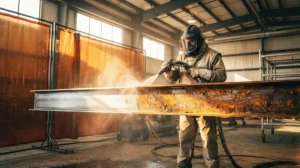
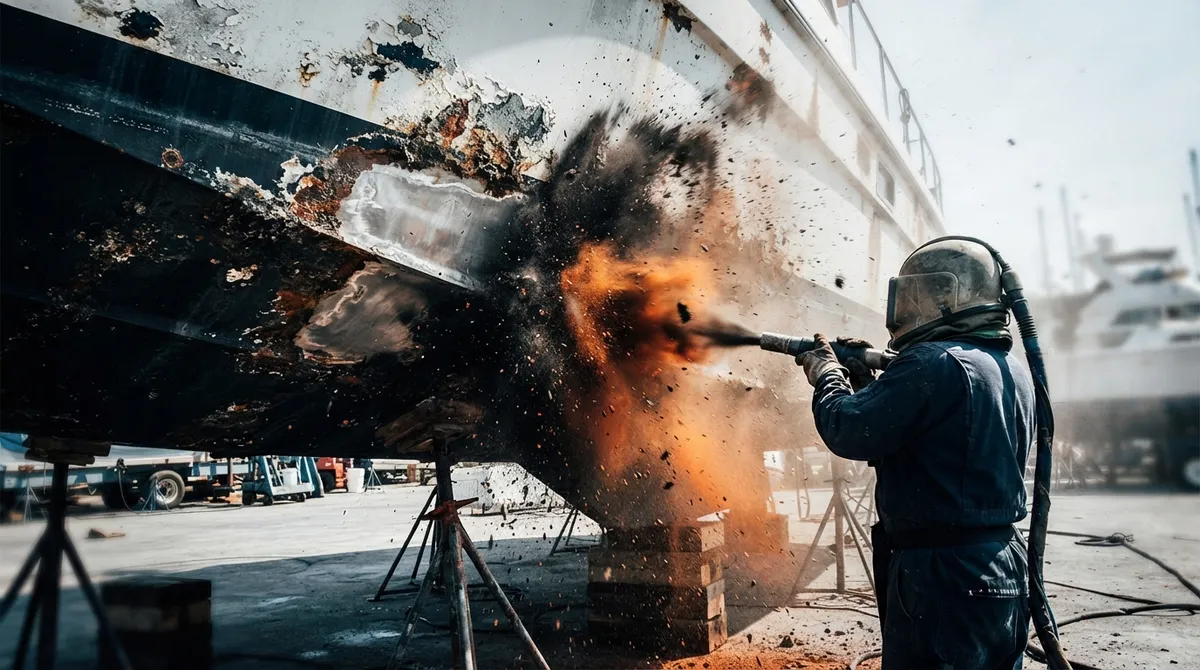
People use the word “sandblasting” as a catch-all. In real life, it covers several kinds of abrasive blasting. The idea is simple: a stream of media hits the surface and lifts off paint, rust, scale, and buildup. What changes is the media, the pressure, and the technique.
For a boat hull, blasting is used to:
- Remove old bottom paint and antifouling layers
- Strip rust and corrosion from steel or aluminum hulls
- Clear marine growth and stubborn buildup
- Expose the surface so you can inspect it for damage
- Prepare the hull to be primed and recoated
The goal is always the same. A coating is only as good as the surface underneath it. Fresh bottom paint will not last on top of failing old paint, and none of it bonds well to a dirty, rough, or rusty surface.
At Blastworx, our approach is simple. We match the blast to your surface, not the other way around. That matters most on a hull, where the material underneath can be fiberglass, gelcoat, aluminum, steel, or wood.
Why Is Sandblasting a Boat Hull Different From Other Jobs?
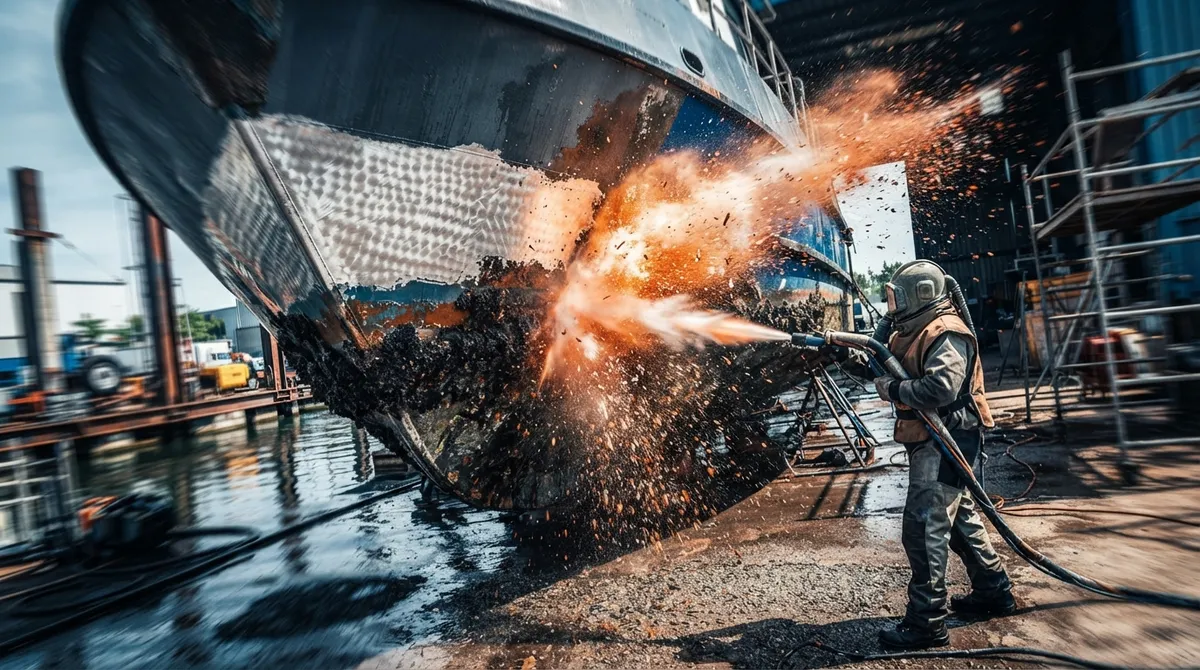
A hull has three things that make it special: the material, the coating history, and the setting.
The Material Matters
Fiberglass and gelcoat are softer than steel. Hard, aggressive abrasive can pit or scar them. That can mean costly repairs later. Aluminum can warp or get roughed up if the pressure is too high. Steel can take stronger abrasive, and it often needs it to get back to clean, bare metal.
The Coating History Matters
Older boats may have many layers of antifouling and other paint. Some older coatings may contain harmful substances such as lead or tributyltin (TBT). If you do not know what is on your hull, it is smart to treat the waste as possibly contaminated until it is checked.
The Setting Matters
Hulls sit near water. That raises the stakes on dust, paint chips, and runoff. Marinas and boatyards often have their own rules, and local environmental rules can apply too. A good contractor plans for all of this before the first pass.
Which Blasting Method Is Best for a Boat Hull?
There is no one answer. The best method depends on the hull material, the coating, and the goal. Here is a quick comparison.
| Method | Best For | Things to Know |
|---|---|---|
| Soda blasting | Fiberglass and gelcoat hulls, delicate surfaces | Gentle on the surface. Great for paint removal without harsh scarring. |
| Walnut shell blasting | Fiberglass, trailers, light coating removal | Softer media that protects the substrate. |
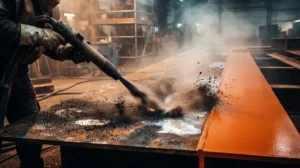
| Dry grit blasting | Steel hulls, heavy rust, thick coatings | Aggressive. Creates a surface profile for coatings. Needs strong containment. |
| Wet or dustless blasting | Jobs where dust control is a top concern | Cuts dust, but wastewater must be captured and handled properly. |
You may also hear about scraping, sanding, and water blasting. International guidance on antifouling removal names three main approaches: scraping and grinding, dry or wet grit blasting, and water blasting at different pressures. Each has a place. Blasting is often chosen when you want fast, even results across a large area.
Want to learn more about how these choices stack up? Our guide on how to choose between soda blasting vs sandblasting breaks it down. You can also read wet sandblasting vs dry to see which one fits your job.
Can You Sandblast a Fiberglass Boat Hull Safely?
Yes, but it takes care. Fiberglass is not the place for heavy, sharp media. A fiberglass hull usually needs a softer approach so the gelcoat and laminate stay sound.
That is why we lean on gentler media, like soda or walnut shell, for fiberglass work. We also adjust pressure and nozzle distance as we go. The goal is to remove the old coating without digging into the hull itself.
Before any blasting starts, it helps to agree on a few things:
- What the hull is made of and what the coating history is
- What finish you want after blasting
- What the coating maker or applicator needs for a good bond
- Which media and pressure will protect the hull
That last step is key. If you plan to apply new primer or antifouling, check with the coating maker or your applicator about the surface they want. This keeps you from paying twice for the same job.
For a deeper look at how pros think about this, see media blasting vs sandblasting: which is safer for you.
How Does Containment Work When Blasting Near Water?
This is where a careful contractor really stands out. Old antifouling paint can hold biocides and other harmful materials. Spent abrasive and paint chips should never reach soil, storm drains, or the water.
Good containment usually includes:
- An impermeable work surface or strong ground sheeting under the hull
- Shrouds, tarps, or enclosures to hold dust close to the work
- A way to collect spent media and paint chips as the job goes on
- Wind and weather checks before and during the work
- Protection for nearby boats, vehicles, and property
We contain the mess and protect the surrounding area on every job. We also keep an eye on the wind, since a breezy dock can carry dust farther than you would think.
Wet blasting adds another layer. The wastewater must be captured and managed under local rules. It should not drain into the marina or any surface water.
How Should Old Paint and Spent Media Be Handled?
Waste planning matters as much as the blasting itself. Guidance from environmental agencies calls for prompt cleanup and covered storage of spent abrasive. It also stresses that the waste may need testing and proper disposal through authorized facilities.
Here is a simple way to think about it:
- Collect it quickly. Do not let dust and chips sit and blow around.
- Store it covered. Use suitable, closed containers.
- Treat unknown coatings with care. If you do not know what is in the old paint, handle the waste as possibly contaminated.
- Follow local waste rules. Disposal requirements differ by location, so check what applies to your marina or yard.
Rules vary by place, so always check with your marina or boatyard before the job. A good contractor will ask about this up front. If a contractor does not bring it up, that is a red flag.
Can a Boat Be Blasted While It Is in the Water?
In most cases, no. Blasting an in-water hull risks sending paint and media straight into the water. Hull blasting is typically done when the boat is out of the water and supported, such as on a trailer, on stands, or in a yard.
That said, “mobile” is the magic word here. We come to you. Our rig is fully mobile and self-contained, so we can work at a marina, in a boatyard, or at your driveway. We bring our own power and water, so you do not need to hook anything up.
Before we start, we look at a few things:
- How we can reach the hull and move around it
- How the vessel is supported
- What needs masking or protecting, like through-hulls, props, and fittings
- Who and what is nearby
You can help by removing loose gear and items from the boat ahead of time. Ask us what to take off and what we can protect in place.
What Else Can Mobile Blasting Do for Your Boat?
The hull is just one piece. Boats come with a lot of metal and hardware that suffers in salt air. Mobile marine blasting can also handle:
- Boat trailers that are rusting at the frame and fenders
- Props, cleats, rails, and other fittings
- Docks and davits
- Jet skis and smaller watercraft
Trailers often take stronger abrasive, since steel can handle it and heavy rust needs it. That is a great pairing with a gentler approach on the hull. You can see more about this work on our marine blasting page, and browse real jobs in our gallery.
How Should You Prep the Hull After Blasting?
Once the old coating is gone, the clock starts ticking. Bare surfaces can pick up moisture and start to flash rust fast in Florida’s humid air. Here is a simple way to move from blasting to finish:
- Inspect the hull. A clean surface makes it easy to spot cracks, blisters, pits, or damage.
- Make repairs. Fix any problem areas before coating.
- Clean off dust and residue. Follow your coating maker’s directions for wiping or washing.
- Prime and coat on schedule. Do not leave bare metal waiting around.
Here is something important. At Blastworx, we do strip and prep only on marine jobs. We do not apply marine coatings. Your applicator or yard handles priming and antifouling. We leave the hull back to clean, sound material, ready to prime and coat. Plan your applicator’s schedule so the coating goes on soon after we finish.
Curious how blasting and coatings work together? Check out 7 reasons sandblasting before painting pays off.
How Much Does Boat Hull Blasting Cost and How Long Does It Take?
This is the question everyone asks, and the honest answer is that it depends. There is no single price that fits every boat. Cost and timing change based on:
- The length and size of the vessel
- How many layers of coating are on the hull
- The hull material
- How easy it is to get to the boat
- Containment and waste needs at your location
- Where the job is located
A small boat with one layer of paint is a very different job than a large vessel with years of buildup. That is why we do a walkthrough first. Send us photos or we can come look, and then we can recommend the right media for the surface.
We give a clear, written estimate the same day. The price we give is the price you pay. Want to understand why quotes vary? Our posts on how much sandblasting estimates really cost and how long sandblasting takes are worth a read.
Our Simple Four-Step Process
We keep things easy. Here is how a hull job works with us:
- Walkthrough. Send photos or we come look, and we choose the right media for your surface.
- Free estimate. You get a clear, written estimate the same day.
- Blast and strip. We protect the surrounding area, then blast the surface clean at your location.
- Ready to finish. The hull comes out clean and ready for the next step.
You also talk to the people doing the work. We are an owner-operated company, and we are fully insured. Our crew works throughout the Tampa Bay area and the central Florida corridor, including Ocala, Orlando, and Fort Myers. See where we go on our service areas page, or Visit us on Google — see what our customers are saying about us.
Ready to Get Your Hull Back to Clean, Bare Surface?
Sandblasting a boat hull is one of the best ways to reset a tired bottom and give your next coating a fair shot. The key is picking the right media, containing every bit of dust and waste, and following local rules. Do that, and your boat will be ready to look good and perform in Florida’s tough marine conditions.
If you are weighing your options, we would love to help. Get a free estimate for your hull, or give us a call at 813-380-8092. You can text us photos too. We come to you, and we will help you find the right fit.
FAQs
Q: Can a boat hull be sandblasted while it is in the water?
A: Not safely. Blasting in the water risks sending paint chips and spent media into the marina. Hulls are normally blasted out of the water, supported on a trailer or stands, and our fully mobile rig can come to wherever your boat is stored.
Q: Is abrasive blasting safe for a fiberglass boat hull?
A: It can be, when the media and pressure are matched to the surface. For fiberglass and gelcoat, we use softer media like soda or walnut shell so we remove the old coating without harming the hull. Harsh media can pit or scar fiberglass, so the right choice matters.
Q: How do you contain antifouling paint dust and debris near the water?
A: We use ground protection, shrouds or tarps, and prompt cleanup so dust, chips, and spent media stay out of the soil, storm drains, and water. We also watch wind and weather, since old antifouling can contain harmful materials. Wet methods add wastewater capture to the plan.
Q: Do you apply bottom paint or antifouling after blasting?
A: No. On marine jobs we strip and prep only, and we do not apply marine coatings. We leave the hull clean and ready to prime and coat, so plan with your applicator or yard to get coatings on soon after we finish.
Q: How much does mobile boat hull blasting cost?
A: It depends on the boat’s size, hull material, coating layers, access, and containment needs, so there is no one flat price. Send us photos or set up a walkthrough and we will give you a clear, written estimate the same day. The price we give is the price you pay.