
Key Takeaways
-
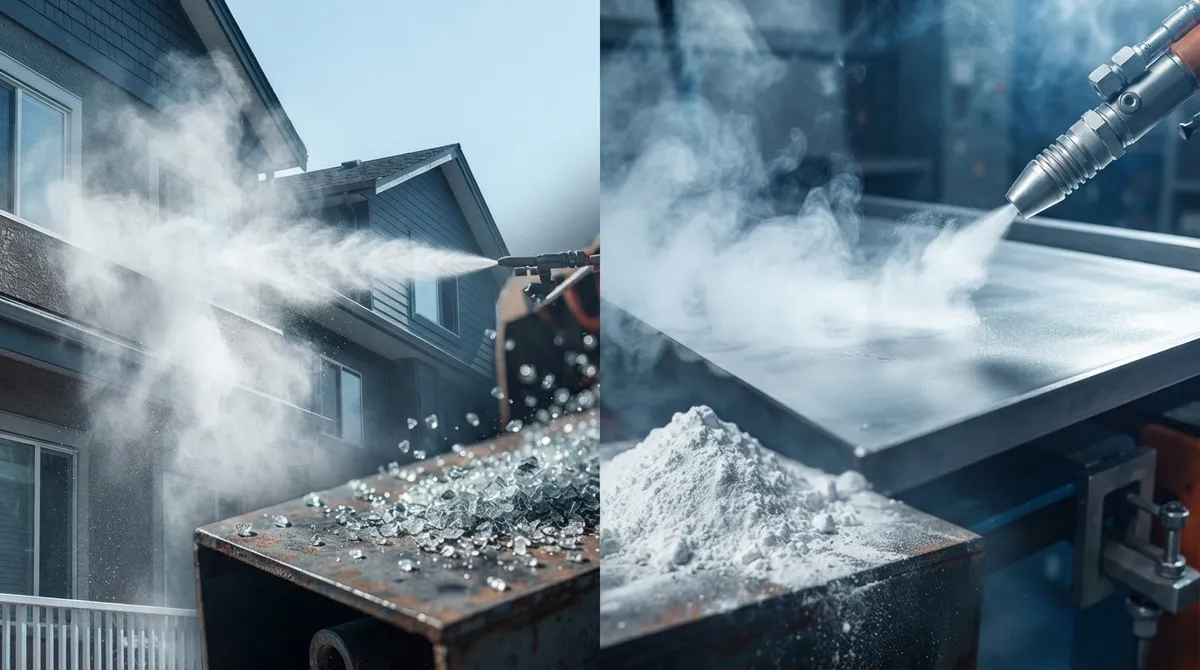
Wet or dustless blasting suppresses 90-95% of airborne dust compared to dry methods, making it ideal for residential areas, marinas, and busy commercial sites where dust control is critical.
-
Dry ice blasting sublimates instantly into gas with zero media residue, eliminating secondary waste cleanup and making it perfect for restoration work and sensitive equipment where any leftover abrasive would be problematic.
-
Soda blasting’s main drawbacks are lengthy cleanup from unreusable fine powder residue, slower cutting power on heavy rust or thick coatings, and higher costs on larger jobs due to media consumption.
-
Crushed recycled glass offers more cutting power than soda while remaining eco-friendly and gentler than harder abrasives, making it a cost-effective choice for graffiti removal and general paint stripping.
-
Total project cost depends more on labor time and media consumption than media price alone; reusable media like glass and garnet can lower long-term costs compared to single-use soda on bigger jobs.
-
The right blasting method requires matching media to your specific substrate (wood, steel, fiberglass), location (residential vs. industrial), and coating type rather than choosing one universal solution.
Soda blasting has a great reputation for a reason. It’s gentle, it won’t spark, and it treats delicate surfaces with care. But it isn’t always the right tool for the job. If you’ve ever waited around while a crew swept up mountains of spent soda residue, or wondered why a job took longer than expected, you already know its limits. The good news? You have options, and some of them might work even better for your project.
At Blastworx, we’ve spent years matching the right blasting method to the right surface across Tampa Bay and the central Florida corridor. We come to you, whether that’s a dock in Clearwater, a shop in Ocala, or a driveway in Riverview. Along the way, we’ve learned that the best soda blasting alternative depends on your surface, your timeline, and how much cleanup you’re willing to deal with. Let’s walk through five alternatives that mobile blasting pros reach for when soda just won’t cut it.
Why People Look for a Soda Blasting Alternative in the First Place
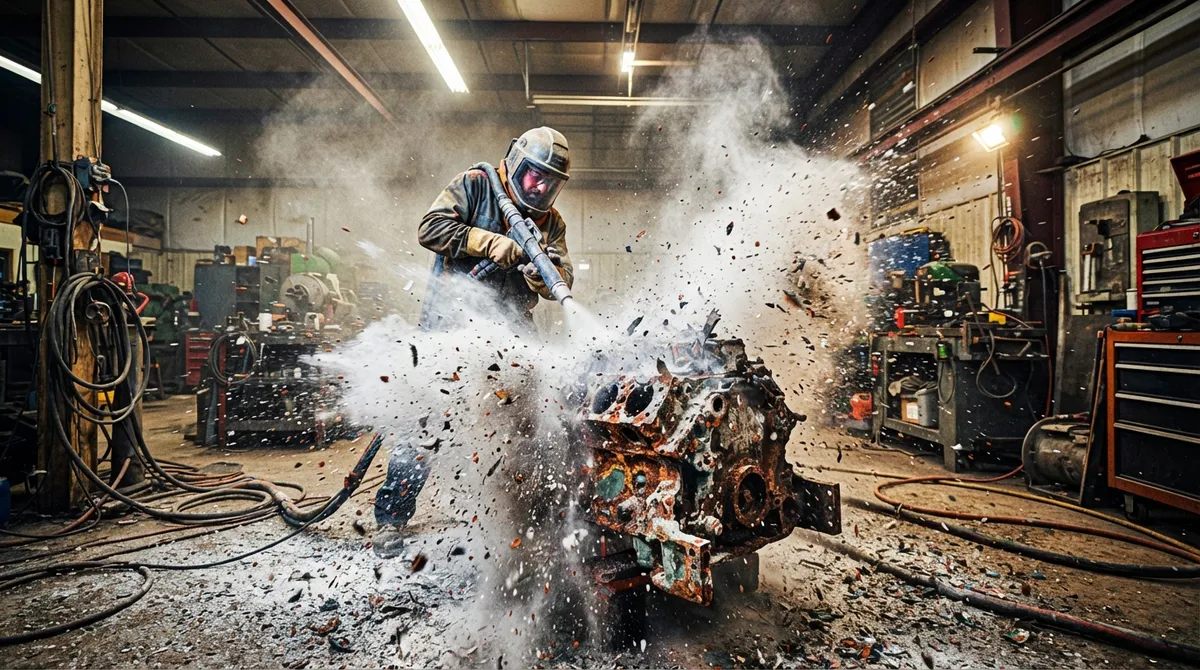
Soda blasting works by shattering sodium bicarbonate particles on impact. That’s what makes it so gentle on delicate surfaces. It’s also what makes cleanup such a headache. The bicarbonate turns into a fine, powdery mess that usually can’t be reused, and it spreads everywhere.
For a mobile crew working on-site, that means more time bagging and hauling waste, and less time actually finishing the job. Add in the fact that soda blasting is often slower at cutting through heavy rust or thick old paint, and you can see why people start asking what else is out there.
- Cleanup takes longer and creates more waste to haul away
- Soda media usually can’t be reused once it’s spent
- Cutting power is limited on tough rust or thick coatings
- Cost can rise on bigger jobs because of media consumption
- Some jobs need a different profile or finish than soda can deliver
1. Wet or Dustless Blasting
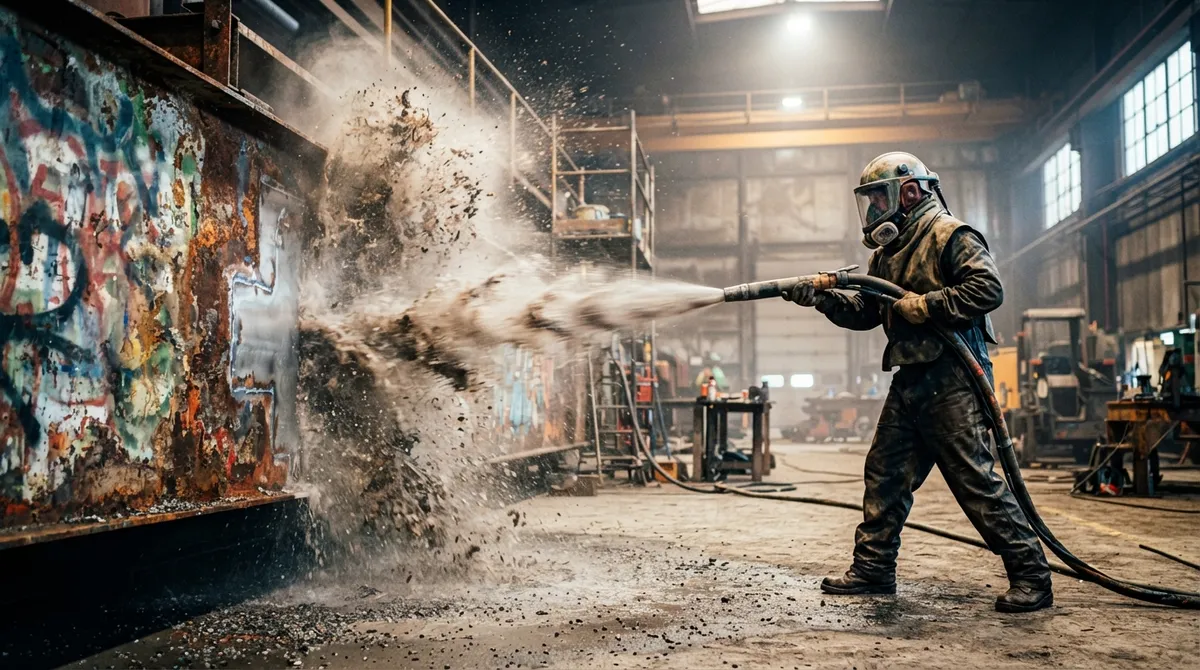
Wet blasting, sometimes called dustless blasting, injects water right into the abrasive stream. This one change makes a huge difference. Industry data shows wet or dustless blasting suppresses 90 to 95 percent of airborne dust compared to dry methods. That’s a massive improvement for anyone working near homes, marinas, or busy job sites.
Because water is doing part of the work, dustless blasting also cuts down on silica exposure risk and speeds up cleanup. There’s no giant dust cloud drifting into a neighbor’s yard or settling on nearby cars. We rely on this method often for dustless blasting in Tampa projects where dust control matters as much as the strip itself.
Best Uses for Wet Blasting
- Pool decks, patios, and driveways where dust control matters
- Marine hulls and hardware near water
- Residential jobs close to landscaping, pools, or windows
- Commercial storefronts in busy areas
2. Dry Ice Blasting
Dry ice blasting is a bit of a magic trick. The media, solid carbon dioxide pellets, sublimates on impact. That means it turns straight from solid to gas and vanishes. No secondary waste, no residue pile to clean up afterward.
This makes dry ice a favorite for restoration work, food-related environments, and sensitive equipment where any leftover abrasive residue would be a problem. The EPA’s archived research on graffiti-removal alternatives found that dry ice blasting, along with crushed recycled glass, could effectively replace soda blasting in demonstration projects, with comparable cost and far less disposal waste.
- The equipment accelerates dry ice pellets using compressed air
- Pellets strike the surface and lift contaminants through thermal shock
- The dry ice sublimates instantly, leaving only the removed debris behind
- Cleanup is limited to sweeping up what was on the surface, not the media itself
3. Crushed Recycled Glass
Crushed glass media is another strong soda blasting alternative, especially for mobile contractors who want more cutting power without switching to silica sand. It’s made from recycled glass bottles, so it’s an environmentally friendly option that still delivers solid results on paint and coating removal.
Glass media tends to strike a nice balance. It cuts faster than soda but is still gentler than harder abrasives like steel grit. That makes it a popular pick for graffiti removal, general surface prep, and jobs where soda just isn’t aggressive enough. If you’ve dealt with stubborn tagging on a storefront, our guide on graffiti removal in Tampa covers how media choice changes the outcome.
4. Garnet Blasting
Garnet is a natural mineral abrasive known for its hardness and clean-cutting profile. It’s a step up in aggression from soda and glass, which makes it useful for heavier rust, thick industrial coatings, and metal prep work where you need a stronger bite.
Because garnet doesn’t contain free silica in the same way sand does, it’s often chosen when crews want strong cutting power while still avoiding some of the silica exposure risks tied to traditional sand blasting. It’s a solid choice for structural steel, tanks, and heavy equipment prep. Our team walks through similar considerations in structural steel blasting facts Florida owners need.
5. Walnut Shell Media
Walnut shell blasting is a softer, biodegradable option made from crushed walnut shells. It sits somewhere between soda and glass in terms of aggression, and it’s a favorite for delicate substrates where you still need decent cutting power.
This media works well on wood, fiberglass, and softer metals. It’s commonly used in marine work and restoration projects where gouging the surface simply isn’t an option. If you’re weighing options for a boat hull or trailer, our marine blasting page breaks down which media fits which marine surface.
Comparing the Top Soda Blasting Alternatives
Here’s a quick side-by-side look to help you decide which alternative might fit your next project.
| Method | Cutting Power | Dust Level | Cleanup | Best For |
|---|---|---|---|---|
| Wet/Dustless Blasting | Moderate to High | Very Low | Fast | Marine, residential, commercial dust control |
| Dry Ice Blasting | Moderate | Low | Minimal (no media residue) | Restoration, sensitive equipment, food areas |
| Crushed Glass | Moderate to High | Moderate | Moderate | Graffiti, general paint removal |
| Garnet | High | Moderate | Moderate | Heavy rust, structural steel, industrial |
| Walnut Shell | Low to Moderate | Low to Moderate | Moderate | Wood, fiberglass, soft metals |
How to Choose the Right Alternative for Your Job
Picking the right media isn’t about finding the single “best” option. It’s about matching the method to your surface, your setting, and your goals. That’s the whole philosophy behind how we work: we match the blast to your surface, not the other way around.
- Identify the substrate. Wood, fiberglass, brick, and steel all respond differently to pressure and media hardness.
- Think about location. Indoor spaces, marinas, and residential neighborhoods often call for lower-dust methods.
- Consider the coating being removed. Thick industrial paint needs more aggression than a light rust film.
- Factor in cleanup time. Some media, like dry ice, leave almost nothing behind. Others require more sweeping and hauling.
- Ask about cost per square foot. Media consumption and labor time both affect your final price.
One important note from safety researchers at CPWR’s construction solutions program: even when the blasting media itself is silica-free, the substrate being blasted can still release crystalline silica dust. That means substrate composition matters just as much as media selection when planning for dust control and safety.
What About Cost Differences?
Soda blasting is often marketed as a budget-friendly option, but the math can flip depending on the job. Here’s a general breakdown of common cost factors mobile blasting crews weigh.
- Soda media costs less upfront but can’t be reused, so bigger jobs use more of it
- Wet blasting reduces cleanup labor, which can offset slightly higher water/media setup
- Dry ice equipment rental can cost more per hour, but eliminates media disposal fees
- Glass and garnet are often reusable in a controlled shop setting, lowering long-term cost
- Labor time, not just media price, usually drives the final invoice
If you’re comparing quotes for an upcoming project, our breakdown on how much sandblasting estimates really cost can help you understand what goes into a fair, accurate number.
Where Soda Blasting Still Wins
We don’t want to talk soda blasting out of a job entirely. It still has a place, especially on fiberglass, gelcoat, and other delicate surfaces where gentleness matters more than speed. Its lower-pressure impact, since sodium bicarbonate shatters on contact, helps protect substrates that would get chewed up by harder media. You can read more about where it shines in our piece on why soda blasting is Tampa’s gentlest cleaning fix.
Why Mobile Matters When Choosing Your Method
Whatever alternative you land on, working with a mobile crew changes the whole experience. We come to you, whether that’s a residential driveway in Brandon, a commercial lot in Sarasota, or a marina dock in Fort Myers. We’re fully mobile and self-contained, so we don’t need your power or water hookups to get the job done.
We also protect the surrounding area before we ever fire up the equipment. Landscaping, pools, windows, and nearby vehicles all get covered and contained. That’s part of what it means when we say we contain the mess so your property stays clean during and after the work.
Our Simple Four-Step Process
- Walkthrough. Send us photos, or we’ll come take a look, and figure out the right media for your surface.
- Free estimate. You get a clear, written price the same day. What we quote is what you pay.
- Blast and strip. We protect the surrounding area, then blast the surface clean right at your location.
- Ready to finish. Your surface comes out clean and ready for the next step, whether that’s paint, primer, or refinishing.
Curious what other property owners in the area have to say? You can see what our customers are saying about us on Google before you book your project.
Wrapping It Up
Soda blasting earned its reputation as a gentle, reliable method, but it isn’t the only tool worth knowing about. Wet blasting, dry ice, crushed glass, garnet, and walnut shell media each bring something different to the table. The right pick depends on your surface, your setting, and how fast you need the job done.
If you’re not sure which soda blasting alternative fits your project, that’s exactly what we’re here for. We serve homeowners, marinas, and businesses across Tampa, Clearwater, Sarasota, Ocala, Orlando, and Fort Myers, plus surrounding towns like Plant City, Lutz, and St. Pete. Whether it’s a boat hull, a rusty fence, or a commercial building exterior, we bring the right equipment straight to you. Learn more about how what is sandblasting works and how modern media choices have expanded far beyond the basics.
Ready to figure out the best method for your surface? Get a free estimate today, or give us a call to talk through your project with the people who’ll actually be doing the work.
FAQs
Q: What is the best alternative to soda blasting for mobile blasting?
A: It really depends on your surface and setting. For dust control, wet or dustless blasting is fantastic, suppressing up to 95 percent of airborne dust. For heavier rust or thick coatings, garnet or crushed glass often does the trick better than soda ever could.
Q: Is wet blasting better than soda blasting?
A: It’s not so much better as it is different in the right ways. Wet blasting cuts down dust dramatically and speeds up cleanup, which makes it a favorite for jobs near homes, pools, or marinas where soda’s cleanup can slow things down.
Q: When should you use dry ice blasting instead of soda blasting?
A: Dry ice is a great pick when you can’t leave any residue behind, like in restoration work or around sensitive equipment. Since it sublimates completely, there’s no secondary media to sweep up afterward, which soda blasting can’t quite match.
Q: Can crushed glass replace soda blasting?
A: In many cases, yes! Crushed recycled glass offers more cutting power than soda while still being an eco-friendly choice. It’s especially handy for graffiti removal and general paint stripping where soda alone isn’t aggressive enough.
Q: Is soda blasting cheaper than other blasting methods?
A: Sometimes upfront, but not always in the long run. Soda media can’t be reused, so bigger jobs burn through more of it, while methods like glass or garnet can be reused in controlled settings, which may even out the total cost over time.





