
Key Takeaways
-
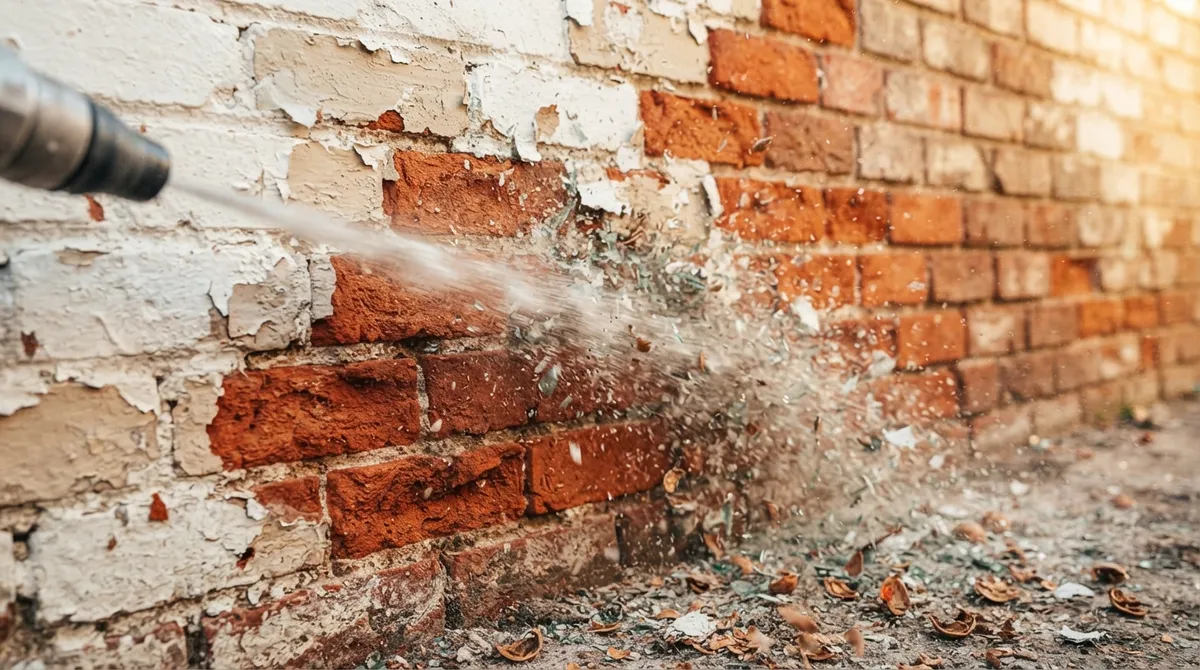
Use dustless blasting with soft media (crushed glass 40/70 grit, walnut shells, or baking soda) at around 80 PSI instead of traditional sandblasting, which permanently damages soft brick surfaces.
-
Avoid power washing and dry sandblasting entirely, as they either miss paint trapped in porous brick and textured grooves or cause permanent pitting and scarring.
-
Match the blasting media precisely to your brick type: crushed glass for thick paint on standard brick, walnut shells for historic/delicate brick, and baking soda for light paint layers.
-
Chemical paint strippers take several days to work, require hazardous material safety gear, and leave messy cleanup, making professional mobile blasting a faster alternative that strips paint in minutes.
-
Always test a small hidden area first and get a written estimate specifying media type and PSI before hiring any blasting service to prevent costly damage.
-
For large projects like whole house exteriors or historic brick homes, hire professional mobile blasting crews rather than DIY, as they have trained operators and proper containment equipment.
So you’ve got old paint peeling off your brick, or maybe someone painted your pavers years ago and now it looks tired and blotchy. You’re not alone. This is one of the most common questions we get here in Tampa Bay. Homeowners want their brick and pavers looking clean and natural again, but they’re worried about damaging the surface underneath. Good news: you can absolutely remove paint from brick or pavers without wrecking them. You just need to know which method actually works.
Brick and pavers are soft and porous. That means the wrong approach can do permanent damage, and there’s no undoing it once that happens. In this guide, we’ll walk through the three safest, most effective ways to strip paint from these surfaces, plus what to avoid completely. We’ll also cover why what is sandblasting matters here, since the wrong media choice is where most paint removal projects go wrong.
Why Removing Paint From Brick or Pavers Is Tricky
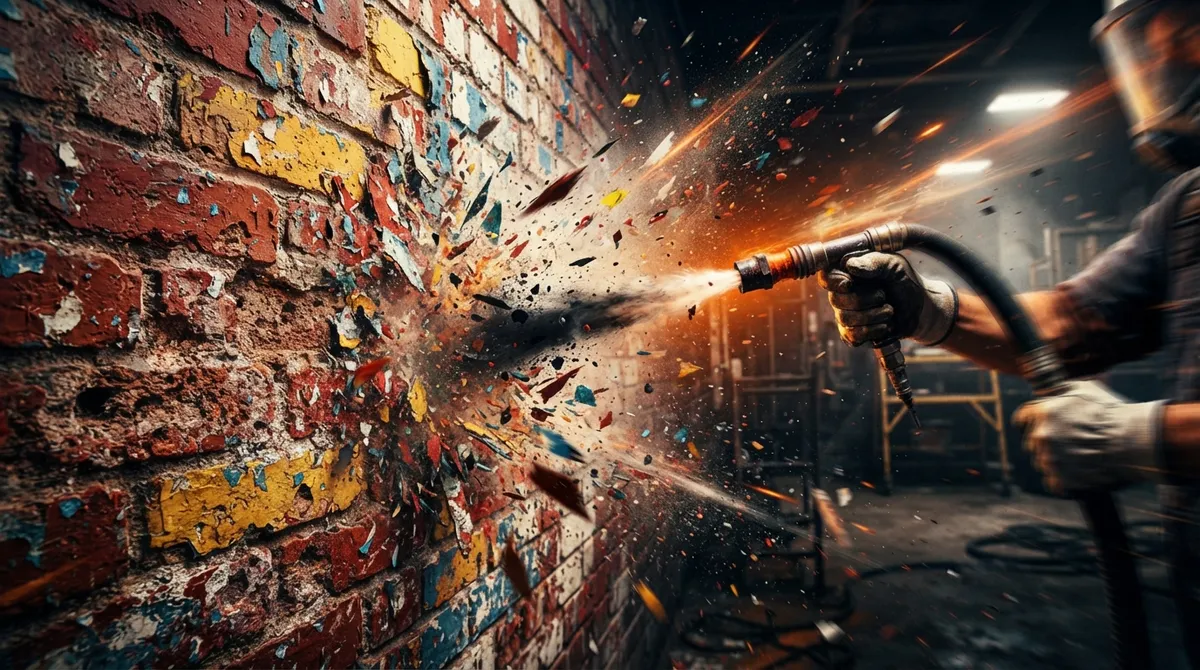
Brick isn’t like metal or concrete. It’s soft, it’s full of tiny pores, and it doesn’t like harsh treatment. Pavers have a similar problem, especially older ones that have started to weather and soften over the years.
Here’s what makes this job harder than it looks:
- Paint soaks deep into the pores of brick, not just the surface
- Too much pressure or the wrong media can erode the brick face permanently
- Chemical strippers can leave residue that stains or damages masonry
- Power washing alone often just spreads paint chips around without removing them
- Textured or historic brick hides paint in grooves that regular tools can’t reach
This is exactly why so many DIY attempts end in frustration. People reach for a pressure washer or a wire brush, spend a whole weekend on it, and still have paint stuck in every crevice.
Method 1: Dustless Blasting With Soft Media
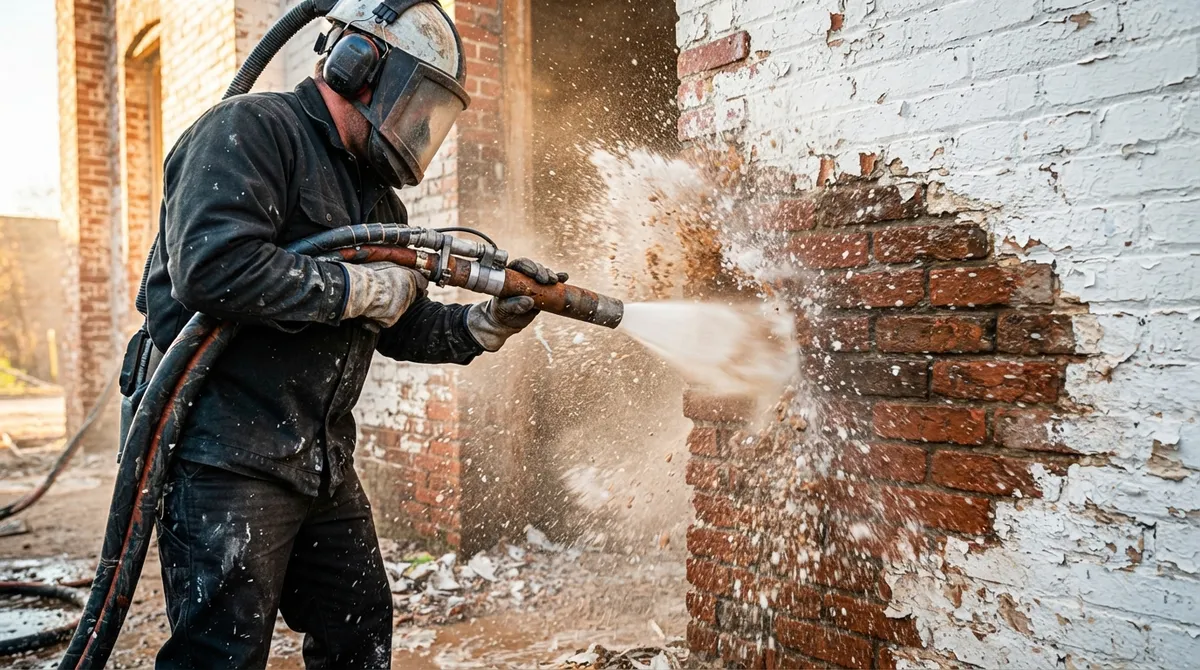
This is our top recommendation, and for good reason. Dustless blasting mixes water with a gentle abrasive media, which suppresses dust and heat while still stripping paint fast. It’s a night-and-day difference compared to old-school dry sandblasting.
Why It Works So Well on Brick and Pavers
Traditional sandblasting with sand media is actually one of the worst things you can do to brick. Sand is too aggressive, and it will chew into the soft surface, leaving pitting and permanent scarring. Dustless blasting flips that script entirely.
The right media makes all the difference. For brick and pavers, we typically reach for:
- Crushed glass, specifically 40/70 grit, for controlled paint stripping
- Walnut shells for a softer touch on delicate or historic brick
- Baking soda media for light paint layers and general cleanup
- Ice blasting in select situations where extreme gentleness is needed
A recent dustless blasting case study from 2024 showed that 40/70 crushed glass at 80 PSI successfully stripped paint from a historic brick home without damaging the masonry underneath. That’s the kind of result you want. Pressure control matters just as much as media choice. We typically run around 80 PSI, adjusted based on how old and soft the brick is.
What Makes Dustless Blasting Different From Power Washing
Power washing can knock loose paint off in some spots, but it often misses paint trapped in textured surfaces and porous brick. Dustless blasting penetrates deeper, removing every layer of paint, graffiti, and even calcium buildup that a pressure washer simply can’t touch. Industry sources note that dustless blasting is considered a superior alternative to power washing for cleaning masonry, stone, and brick because the pressure and abrasive flow can be fine-tuned for the exact surface. If you want to see how this compares directly, our article on sandblasting vs. pressure washing for concrete breaks down the differences even further.
Method 2: Chemical Paint Strippers (And Why They Fall Short)
Chemical strippers like acid gels or specialty masonry products are technically an option. But they come with a long list of headaches that most homeowners don’t expect.
The Downsides of Chemical Stripping
- Application can take days, not minutes, since the gel needs time to work through each paint layer
- You need hazardous material gloves, goggles, and respirators for safe handling
- Runoff can harm nearby plants, grass, and even pool water if you’re not careful
- Multiple coats are often needed for thick or old paint layers
- Cleanup afterward is messy and time-consuming
Compare that to blasting, which strips paint in minutes with minimal containment needed. For most homeowners, that time savings alone makes blasting the clear winner.
Method 3: Professional Mobile Blasting Service
If you want the job done right the first time, without renting equipment or risking damage to your brick, calling a professional mobile blasting company is the smart move.
What Makes Mobile Blasting Convenient
Here’s the beauty of mobile blasting: the equipment comes to you. You don’t have to load pavers onto a truck or figure out how to transport brick veneer to a shop. A mobile crew shows up, sets up on-site, and gets to work right in your driveway, patio, or exterior wall.
At Blastworx, we come to you with a fully mobile and self-contained rig, so we don’t need your power or water hookups. We match the blast to your surface, not the other way around, which means your brick and pavers get treated with exactly the right media and pressure for their condition.
Our Simple Four-Step Process
- Walkthrough. Send us photos, or we come take a look, so we can figure out the right media for your brick or pavers.
- Free estimate. You get a clear, written estimate the same day. The price we give is the price you pay.
- Blast and strip. We protect the surrounding landscaping, pool, or windows, then blast the surface clean right at your location.
- Ready to finish. Your brick or pavers come out clean and ready for the next step, whether that’s sealing, repainting, or just enjoying the natural look again.
We contain the mess and protect the surrounding area throughout the whole job, so you’re not left with overspray or debris scattered across your yard. And since we’re fully insured, you can feel confident the work is being handled the right way. Curious what past clients have experienced? Feel free to see what our customers are saying about us on Google before you decide.
Comparing the Three Methods
Here’s a quick side-by-side look at how these options stack up against each other.
| Method | Time Required | Risk to Brick | Best For |
|---|---|---|---|
| Dustless Blasting | Minutes to a few hours | Very low, when media is matched properly | Thick paint, historic brick, textured pavers |
| Chemical Strippers | Several days | Moderate, risk of staining or residue | Small spot treatments |
| Professional Mobile Blasting | Same day service | Very low, handled by trained crew | Whole-house exteriors, patios, large paver areas |
What Media Should You Use for Brick and Pavers?
Choosing the right media isn’t just a technical detail, it’s the whole ballgame. Here’s a rundown of the most common options and where they shine.
| Media Type | Best Use Case | Notes |
|---|---|---|
| Crushed Glass (40/70 grit) | Thick paint layers on standard brick | Great balance of power and control |
| Walnut Shells | Historic or delicate brick | Very gentle, minimal risk of etching |
| Baking Soda | Light paint and general grime | Non-abrasive, safe for most surfaces |
| Ice | Extremely sensitive surfaces | Melts away, leaves zero residue |
| Sand | Not recommended for brick | Too aggressive, causes permanent pitting |
Tips Before You Start Any Paint Removal Project
Whether you’re hiring a pro or just researching your options, keep these points in mind:
- Always test a small hidden area first to check how the brick reacts
- Ask about media type and PSI before agreeing to any blasting service
- Avoid dry sandblasting on brick entirely, it’s simply too harsh
- Protect nearby plants, pool water, and windows before work begins
- Get a written estimate so there are no surprises on price
If your paint removal project is part of a bigger outdoor renovation, you might also find our guide on pool deck blasting and patio restoration helpful for planning next steps.
When to Call in the Professionals
Some paint jobs are small enough to DIY, like a single painted brick planter. But whole exteriors, large paver patios, or historic brick homes are a different story. These jobs benefit from professional-grade equipment and experience.
Here’s when we recommend calling a mobile blasting team:
- You’re dealing with multiple layers of old paint
- The brick or pavers cover a large area, like a full driveway or house exterior
- You’re worried about damaging historic or original masonry
- You want the job done in hours, not days
- You don’t want to deal with chemical disposal or hazardous cleanup
We’ve handled plenty of residential projects across Tampa, Brandon, Riverview, and the surrounding Bay area, and every job gets the same careful attention. You can browse examples of our past work in our project gallery, or check out our residential blasting services page to see the full range of what we handle.
Final Thoughts on Removing Paint From Brick or Pavers
Removing paint from brick or pavers doesn’t have to be a nightmare weekend project. With the right method, mainly dustless blasting with the correct media, you can get clean, natural-looking masonry back without damaging what’s underneath. Skip the harsh chemicals, skip the sandblasting horror stories, and go with a method that actually respects your brick’s soft, porous nature.
If you’re anywhere in the Tampa Bay area or across central Florida, from Ocala to Orlando to Fort Myers, our team at Blastworx is ready to help. We come to you, we bring the right equipment, and you talk to the people doing the work every step of the way. Ready to see your brick or pavers looking clean again? Get a free estimate today, or give us a call to talk through your project.
FAQs
Q: Is sandblasting safe for brick or pavers?
A: Traditional dry sandblasting with sand media is actually not safe for brick since it’s too harsh and can cause permanent pitting. That said, dustless blasting with gentler media like crushed glass or walnut shells works beautifully and keeps your brick looking great.
Q: What is the best media for removing paint from brick without damage?
A: Crushed glass at 40/70 grit is a favorite for tackling thick paint layers, while walnut shells are perfect for delicate or historic brick. We always match the media to your specific surface, so nothing gets damaged along the way.
Q: How does dustless blasting compare to power washing for brick restoration?
A: Dustless blasting reaches deep into porous brick and textured grooves that power washing simply can’t touch. Plus, you get adjustable pressure and better control, which means a cleaner result without soaking your whole yard.
Q: How long does it take to remove paint from a brick home using mobile blasting?
A: Most residential jobs can be completed in just a few hours, sometimes even less depending on the size of the area. It’s a huge time saver compared to chemical strippers, which can take days to fully work.
Q: Does blasting damage the porous surface of brick or pavers?
A: Not when it’s done correctly with the right media and pressure, which is usually around 80 PSI for most brick surfaces. That’s exactly why choosing an experienced mobile blasting team matters so much for a safe, damage-free result.





