
Key Takeaways
-
Distinguish between surface rust (orange flakes) and pitted rust (metal craters) during inspection to determine if DIY methods or professional sandblasting is needed.
-
Apply rust-inhibitive alkyd metal primer immediately after rust removal, as bare steel develops flash rust within minutes in Florida’s humidity.
-
Professional mobile sandblasting reaches every crevice including seams and decorative scrollwork that manual sanding and wire brushing miss, preventing rust recurrence.
-
Choose epoxy or urethane coating systems over standard alkyd paint for coastal areas, as they provide superior durability against salt air corrosion.
-
Mobile sandblasting typically costs $100-$200 for standard railings and eliminates the need to remove or transport hardware, making it more convenient than DIY.
-
Maintain blasted railings by rinsing off salt spray every few weeks and inspecting welds twice yearly, as these areas are most prone to rust redevelopment.
Rusty railings are one of those problems that sneak up on you. One day your porch rail looks fine, and the next it’s covered in orange flakes and rough patches. If you’ve been searching for how to remove rust from railings, you’re in good company. Homeowners and property managers across Tampa Bay deal with this constantly, thanks to our humid air and salty coastal breeze. The good news is you have real options, from simple DIY fixes to professional mobile blasting that gets railings back to clean, sound metal in one visit. Let’s walk through 14 ways to tackle rust, starting with quick fixes and working up to the methods that actually last.
Whether you’re dealing with a small porch rail in Riverview or a long stretch of pool fencing in Sarasota, the right approach depends on how bad the rust is and how long you want the fix to hold. We’ll cover it all below.
1. Start With a Simple Visual Inspection
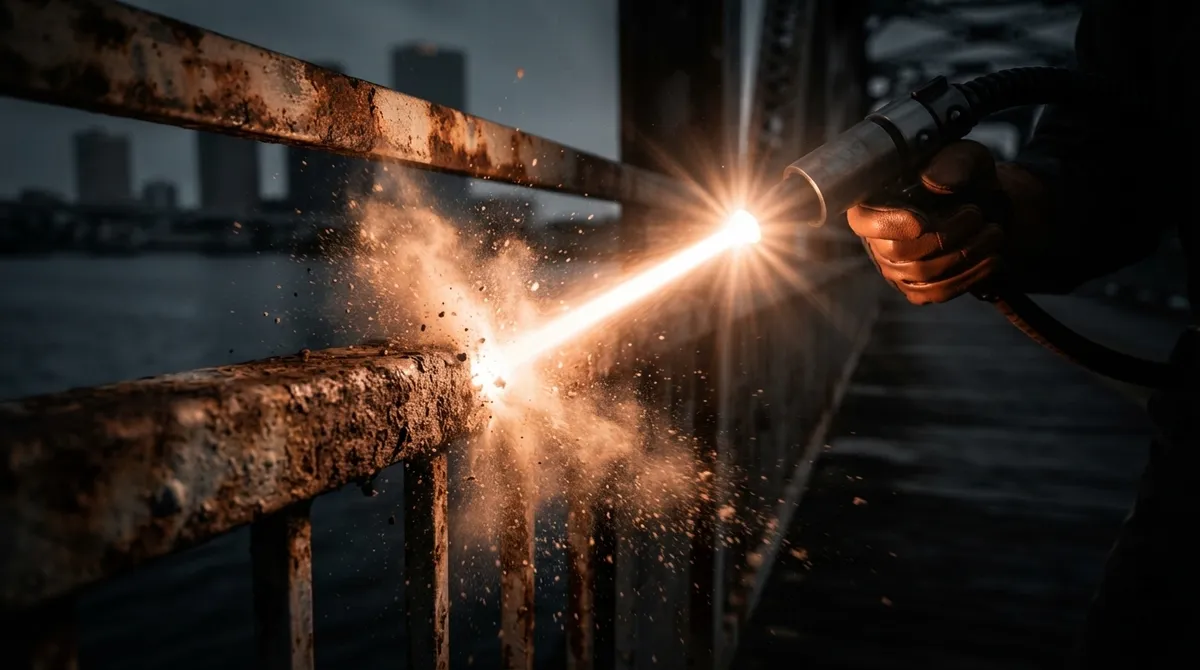
Before you grab a wire brush or call anyone, take a close look at the railing. Check for surface rust versus deep pitting. Surface rust looks orange and flaky, while pitted rust has eaten into the metal and left small craters. This step tells you whether you’re dealing with a light cleanup job or something that needs serious attention.
2. Try Manual Sanding for Light Surface Rust
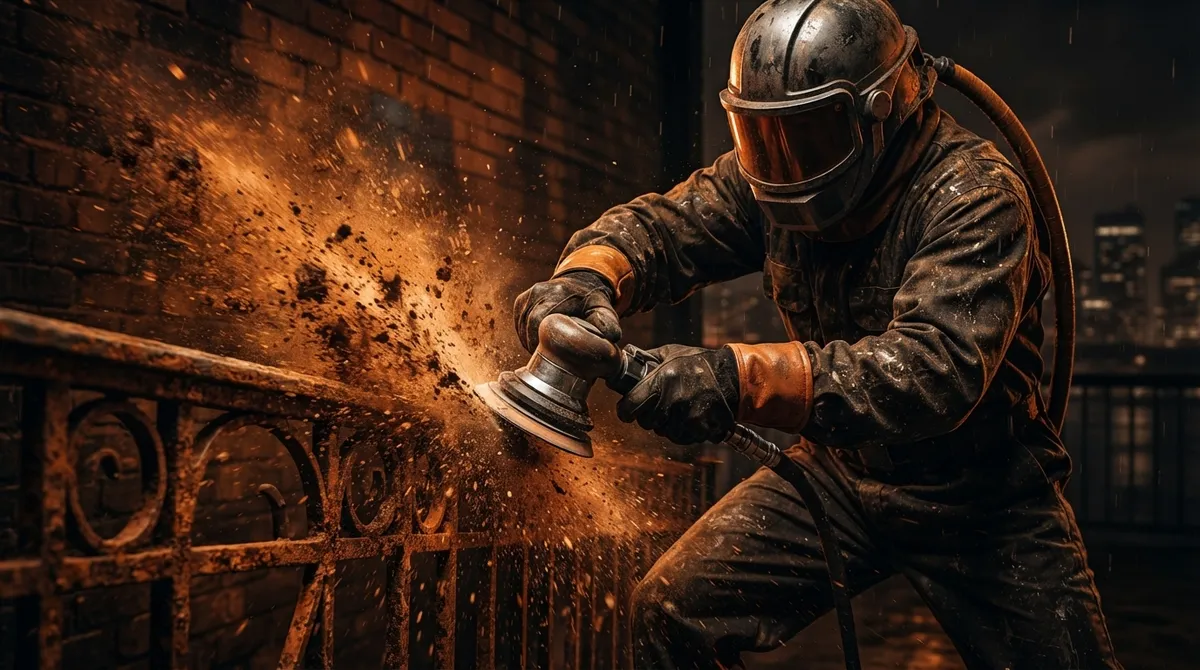
For minor rust spots, sanding with 80 to 220-grit sandpaper can knock down loose flakes. This works fine for small jobs but takes real elbow grease. The downside is that sanding rarely reaches into corners, welds, or decorative scrollwork, leaving hidden rust behind.
3. Use a Wire Brush for Stubborn Spots
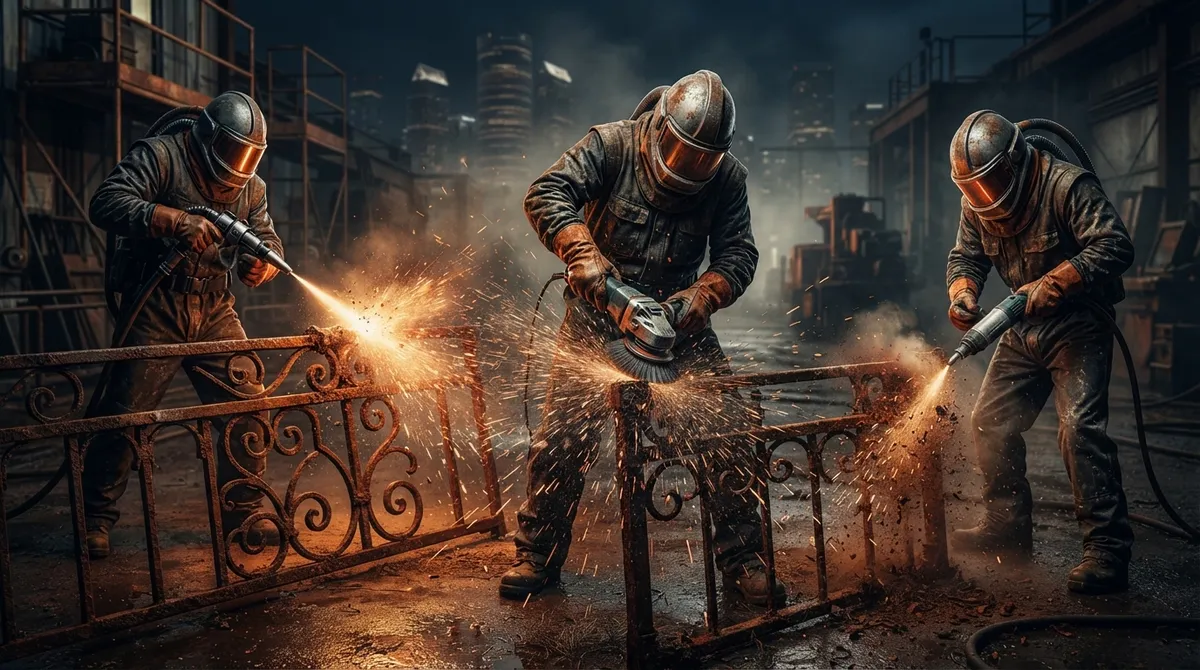
A wire brush attachment on a drill speeds things up compared to hand sanding. It’s a reasonable option for a single small railing section. But like sanding, it tends to leave microscopic rust residue in tight spots, which can cause your new paint to fail early.
4. Consider Chemical Rust Removers
Products containing phosphoric acid can dissolve rust on contact. These require dwell time, scrubbing, and a neutralizing rinse afterward. They work well on small, isolated spots but become messy and time-consuming on long runs of railing or ornate ironwork.
5. Know When DIY Methods Fall Short
Manual methods struggle with a few common problems:
- Rust hiding in seams, joints, and decorative curls
- Old paint layers that won’t come off evenly
- Pitted metal that needs more than surface cleaning
- Large railings that would take days to sand by hand
- Uneven results that show through new paint
If any of these sound familiar, it’s time to think about professional help.
6. Understand Why Sandblasting Works Better
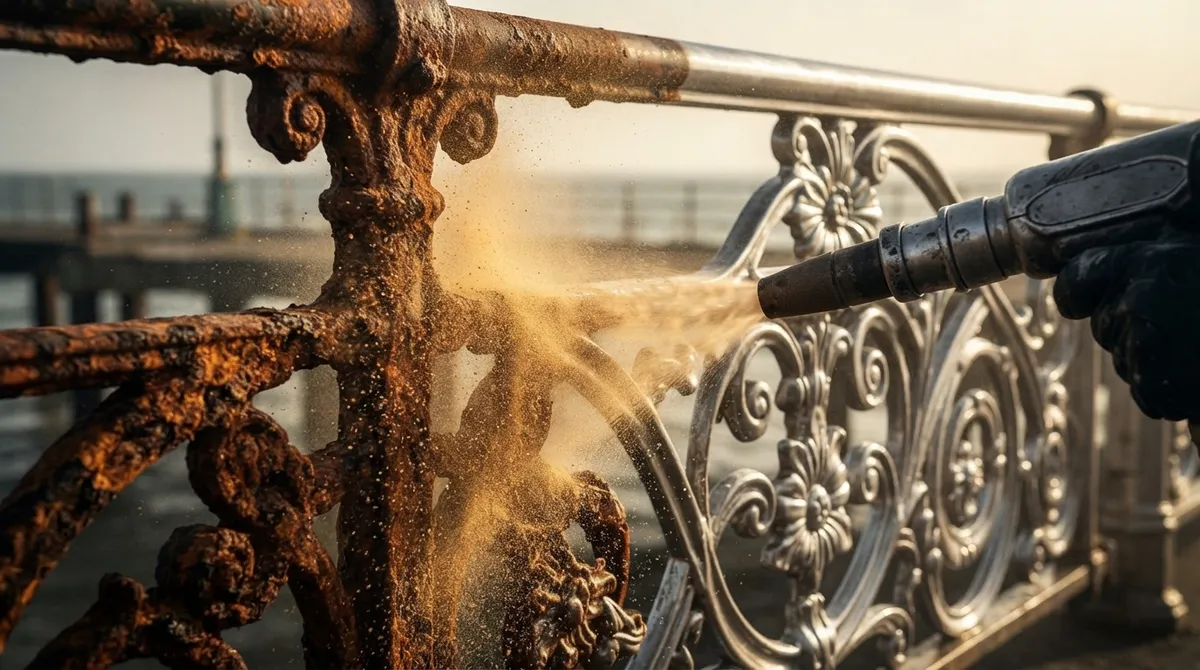
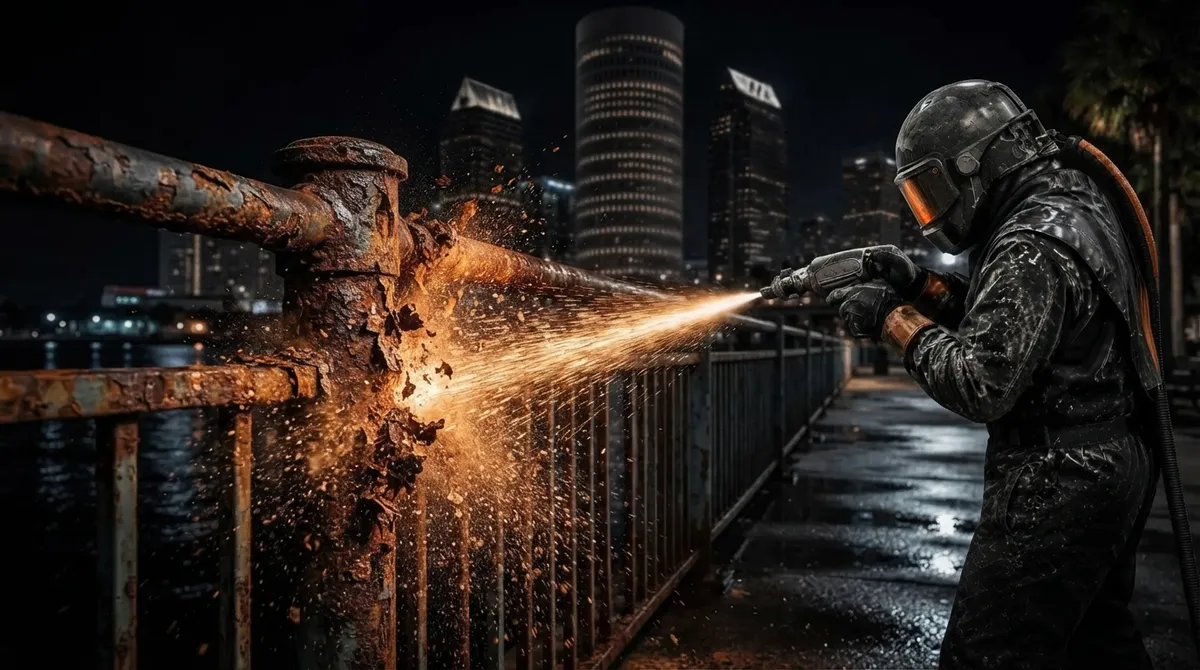
Sandblasting is widely considered the most thorough way to remove rust, loose paint, and corrosion from metal railings. It strips the surface down to clean, bare metal in one pass, reaching every crevice that a brush or sander would miss. This process, known as what is sandblasting, uses pressurized media to blast away contaminants without the labor of manual scrubbing.
7. Learn How Mobile Blasting Simplifies the Process
Here’s where things get convenient. Mobile blasting means a crew brings the equipment to your home, driveway, or job site instead of you hauling railings anywhere. This eliminates the back-and-forth of removing railings, dropping them off, and picking them up later. At Blastworx, we come to you, and our rig is fully mobile and self-contained, so we don’t need your power or water hookups.
8. Compare DIY vs Professional Rust Removal
| Method | Effectiveness on Deep Rust | Time Required | Best For |
|---|---|---|---|
| Hand Sanding | Low to Moderate | Several hours | Small, light rust spots |
| Wire Brushing | Moderate | 1-2 hours | Single sections, mild rust |
| Chemical Removers | Moderate to High | Several hours plus dwell time | Isolated stubborn spots |
| Mobile Sandblasting | Very High | Same-day service | Full railings, ornate ironwork, heavy rust |
9. Know What to Expect During a Blasting Visit
Here’s a simple rundown of how a typical residential blasting job goes for railings:
- We look at photos or come see the railing in person to figure out the right media for the surface.
- You get a free, written estimate the same day, with no surprise charges later.
- We protect the surrounding landscaping, pool, and windows, then blast the railing clean on-site.
- The railing comes out ready to prime and coat, with no leftover rust or paint residue.
This four-step process keeps things simple and predictable, whether you’re in Tampa, Clearwater, or Ocala.
10. Understand Media Selection for Railings
Not every railing needs the same blasting media. Wrought iron and steel can typically handle a stronger abrasive, while delicate decorative metalwork may need a gentler soda or lighter media to avoid warping thin sections. We match the blast to your surface, not the other way around, which protects the integrity of ornate or older railings.
11. Prime Immediately to Stop Flash Rust
This step matters more than people realize. Flash rust can begin forming on bare steel within minutes, especially in Florida’s humidity. Once a railing is back to clean, bare metal, it needs a high-solids, rust-inhibitive alkyd metal primer applied quickly, before moisture in the air starts the corrosion cycle all over again.
12. Choose the Right Primer and Coating System
Picking the right products after blasting protects your investment for years. Here are a few options worth considering:
- Standard alkyd metal primer for basic protection and budget-friendly projects
- Epoxy primer for improved adhesion and moisture resistance
- Urethane topcoats for superior durability in coastal, salty air
- Powder coating for long-lasting, factory-style finishes
- Rust-inhibitive additives mixed into standard paint for extra protection
An epoxy or urethane coating system costs more upfront but holds up far longer than standard alkyd paint, especially near the coast where salt air speeds up corrosion.
13. Budget Realistically for Professional Rust Removal
Cost is one of the top questions we hear. Professional sandblasting for standard railing sets typically runs between $100 and $200, depending on length, detail, and condition. Some jobs include minor repairs and priming in that price, while more decorative or heavily rusted railings may cost more. It’s always worth getting a written estimate before work begins so there are no surprises.
| Service | Typical Cost Range | What’s Included |
|---|---|---|
| Basic Blasting Only | $100 – $150 | Rust and paint removal |
| Blasting Plus Priming | $150 – $200 | Rust removal and rust-inhibitive primer application |
| Blasting Plus Minor Repairs | $175 – $250+ | Removal, welding fixes, and priming |
14. Maintain Railings After the Job Is Done
Once your railings are clean and coated, a little maintenance goes a long way. Rinse off salt spray and debris every few weeks if you’re near the water. Touch up small chips in the paint before they turn into new rust spots. Inspect welds and joints twice a year, since these areas are the first to show wear again.
Signs You Need Professional Blasting Instead of DIY
Sometimes it’s obvious you need more than a sander and a can of rust remover. Watch for these signs:
- Rust has eaten through the metal in spots, creating holes or thin patches
- Multiple layers of old, flaking paint cover the entire railing
- The railing has intricate scrollwork that’s hard to reach by hand
- You’ve tried sanding before and rust came back within months
- The railing is part of a larger commercial or pool area project
If any of these match your situation, it’s time to bring in a mobile blasting crew instead of spending another weekend with sandpaper.
Why Mobile Blasting Makes Sense for Tampa Bay Homes
Florida’s climate is tough on metal. Salt air along the coast and constant humidity inland both speed up corrosion, which means railings here rust faster than in drier climates. This guide from High Country Metalworks on removing rust without damaging metal echoes what we see daily in the field, gentle, surface-appropriate methods protect the metal while still fully removing corrosion. For pool decks, porch railings, and fences throughout Brandon, Plant City, and St. Pete, mobile blasting handles the job on-site without the hassle of removing hardware.
We also hear from a lot of homeowners who tried tackling railings themselves first. One popular home improvement discussion thread on cleaning rusty railings shows just how much time and frustration goes into manual rust removal, and how often people end up calling a professional anyway after hours of scrubbing. Blasting simply skips that frustrating middle step.
If you want to see examples of railings, fences, and other residential metalwork we’ve restored, check out our gallery of completed blasting projects. We also cover fences, gates, pool decks, and patios as part of our residential blasting services, so railings are rarely the only thing on the to-do list.
Bringing It All Together
Removing rust from railings comes down to choosing the right method for the job in front of you. Light surface rust on a small section might respond fine to sanding or a chemical remover. But heavier corrosion, ornate ironwork, or long runs of railing almost always benefit from professional blasting, which strips everything back to clean, bare metal in a single visit. Pair that with prompt priming, and you’ve got a railing ready to look great for years.
We serve homeowners and businesses throughout Tampa, Clearwater, Sarasota, Ocala, Orlando, Fort Myers, and the towns in between. Whether it’s one small porch rail or a full pool enclosure project, we contain the mess, protect your landscaping, and leave your railings ready for the next step. You can always read more about why Tampa businesses choose mobile sandblasting for projects big and small.
Curious what your railings could look like after a visit from our crew? Visit us on Google — see what our customers are saying about us before you decide. When you’re ready to talk specifics, feel free to get a free estimate or give us a call today. You’ll talk to the people doing the work, every time.
FAQs
Q: What is the best way to remove rust from metal railings without damaging the metal?
A: Mobile sandblasting is usually the safest and most thorough option, since the media and pressure get matched to your specific railing material. It strips rust and old paint evenly without gouging or warping the metal underneath, which hand tools often risk doing.
Q: How does mobile sandblasting compare to manual sanding for rust removal on railings?
A: Sanding can knock off surface rust but almost always misses spots in corners, welds, and decorative details. Blasting reaches every nook in one pass, giving you a truly clean, bare metal surface instead of a patchy result.
Q: Why is it important to prime railings immediately after sandblasting?
A: Bare steel starts developing flash rust within minutes, especially in Florida’s humid air. Priming right after blasting locks in that clean surface and stops new corrosion before it even gets started.
Q: How much does it cost to sandblast rusted railings professionally?
A: Most standard railing jobs run between $100 and $200, depending on length, detail, and how much rust needs removing. Getting a free written estimate upfront means you’ll know the price before any work begins.
Q: Can chemical rust removers be used instead of sandblasting for railings?
A: Chemical removers work fine for small, isolated rust spots, but they take longer and require careful rinsing and neutralizing afterward. For full railings or heavily rusted ironwork, blasting simply gets the job done faster and more evenly.





