
Key Takeaways
-
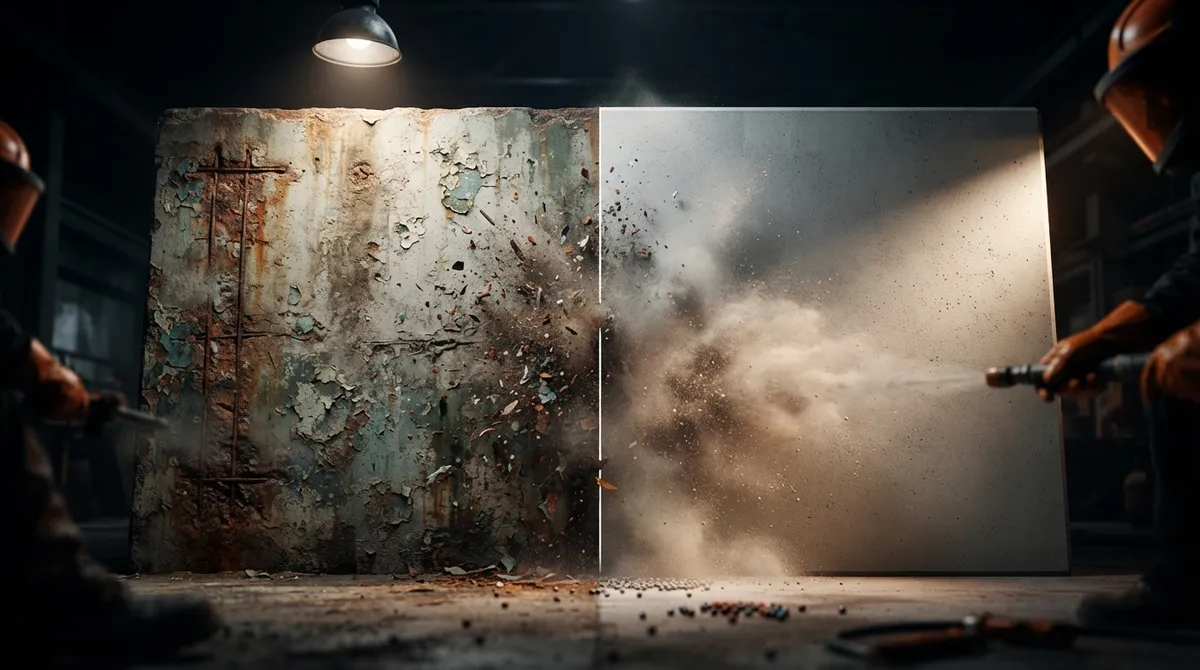
Sandblasting removes bonded materials like paint, rust, and epoxy while creating a surface profile for coating adhesion, whereas pressure washing only removes surface dirt and cannot prepare concrete for lasting coatings.
-
For concrete coating prep, sandblasting provides 10-15 year coating longevity compared to minimal durability with pressure washing alone, making the higher upfront cost a better long-term investment.
-
Embedded rust soaked into concrete pores cannot be effectively removed by pressure washing, but sandblasting reliably extracts rust completely, making it essential for industrial sites.
-
Modern dustless blasting uses only ~20 gallons of water per hour versus 120-480 gallons for pressure washers, making sandblasting the more environmentally conscious choice for large projects.
-
Industrial facilities must use sandblasting to meet MSHA compliance standards for old paint and rust removal, as pressure washing cannot guarantee the full removal required by regulations.
-
Choose pressure washing for routine cleaning of driveways and patios with dirt and mildew, but switch to sandblasting whenever paint removal, rust issues, or future coating application is involved.
Got a concrete slab, driveway, or warehouse floor that’s seen better days? You’re probably wondering whether to call in a pressure washer or go with something stronger. It’s a great question, and honestly, the answer depends on what’s actually stuck to that concrete. Grab a coffee, and let’s walk through it together, because getting this choice right can save you time, money, and a whole lot of frustration.
Here in Tampa Bay and across central Florida, we see this mix-up all the time. Someone rents a pressure washer expecting it to strip old paint or rust off a concrete pad, and it just doesn’t happen. That’s not a knock on pressure washing. It’s a fantastic tool. It’s just not the right tool for every job. Let’s break down exactly when each method shines, so you never waste a weekend (or a budget) on the wrong approach again.
The Real Difference Between Sandblasting and Pressure Washing
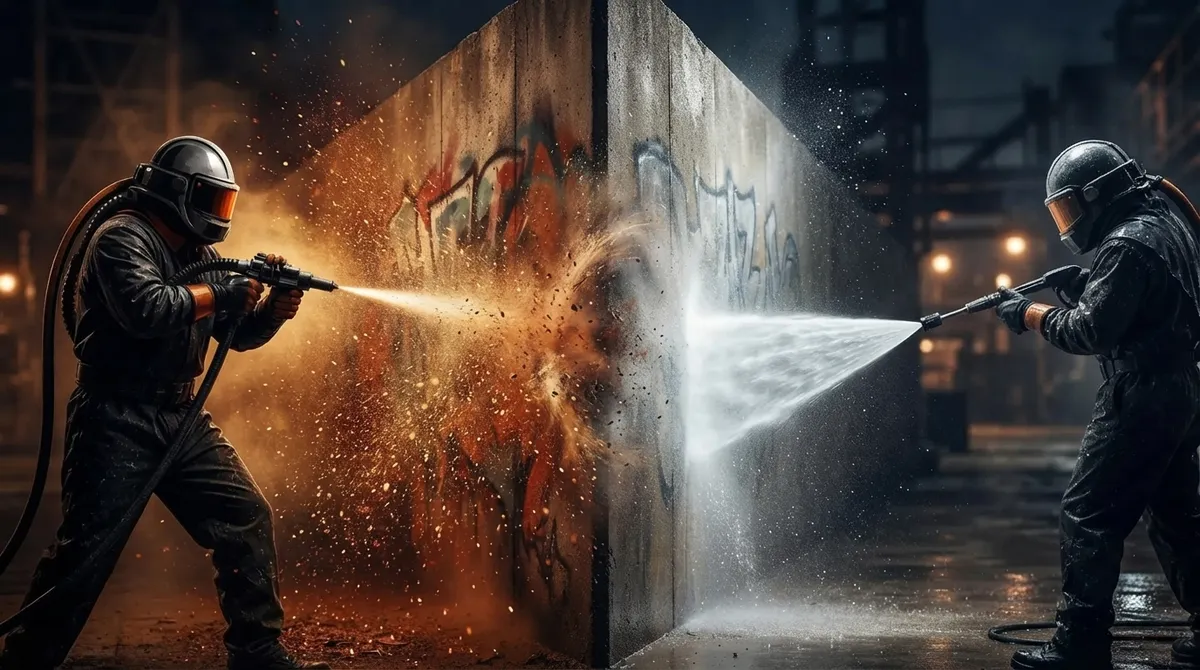
Think of it this way. Pressure washing removes what’s sitting on top of your concrete, like dirt, mildew, and light stains. Sandblasting, on the other hand, removes what’s actually bonded to the concrete, like old paint, rust stains, and stubborn coatings. That one difference explains almost everything else.
What is sandblasting exactly? It’s a process that fires abrasive media at high speed to strip away material and roughen up a surface. That roughing-up part matters more than most people realize, and we’ll get into why below.
What Pressure Washing Actually Does
Pressure washing blasts water at high force to knock loose dirt, algae, and grime off the surface. It’s quick, it’s affordable, and for everyday cleaning, it works great. But here’s the catch: it doesn’t change the texture of the concrete underneath, and it can’t reach anything that’s chemically bonded to it.
- Great for removing surface dirt and mildew
- Works well on driveways, patios, and sidewalks that just need a refresh
- Fast and relatively inexpensive
- Doesn’t create a surface profile for new coatings
- Struggles with embedded rust stains or old paint
What Sandblasting Actually Does
Sandblasting strips concrete down to a clean, sound surface. It removes bonded coatings like thick paint, epoxy, and rust, and it leaves behind a rough texture called a surface profile. That profile is what lets new coatings actually grip and last.
- Removes bonded paint, epoxy, and coatings completely
- Creates the surface profile new coatings need to stick
- Removes embedded rust that’s soaked into the concrete
- Ideal for industrial floors, warehouses, and commercial prep work
- Costs more upfront but lasts far longer
Why Surface Profile Matters So Much
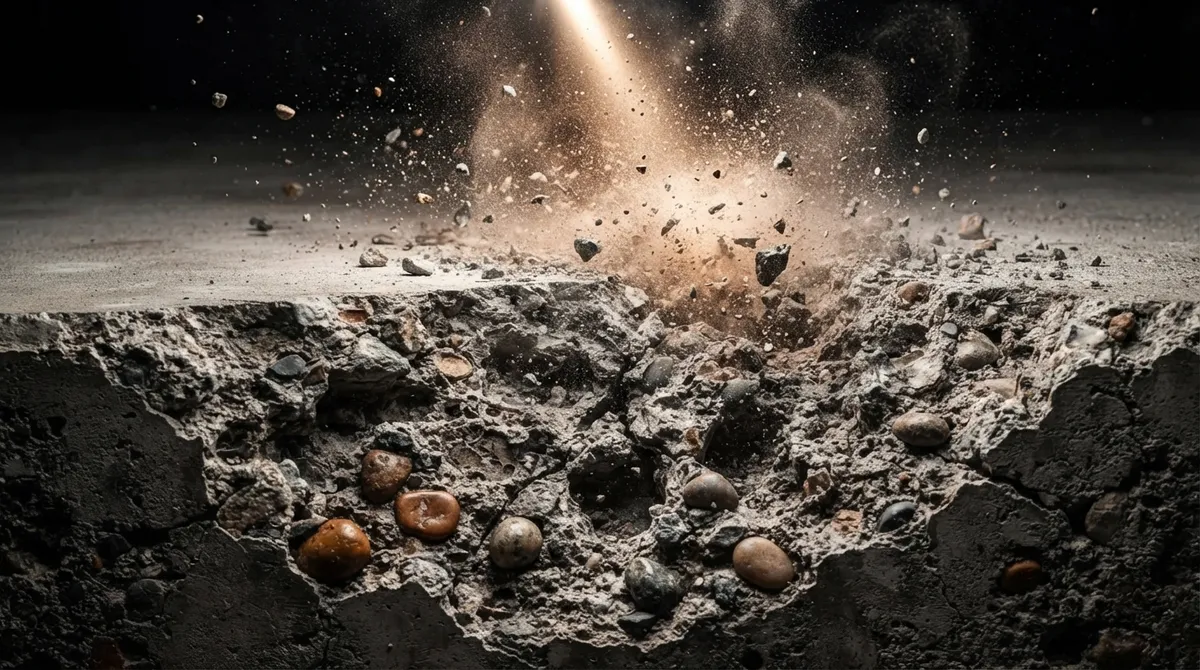
Here’s something a lot of folks don’t think about until it’s too late. If you’re planning to coat or repaint concrete, the surface underneath needs a little roughness for the new material to bond. Smooth, clean concrete actually holds coatings worse than concrete with texture.
Pressure washing alone won’t create that texture. You’d need to add acid etching afterward, which is an extra step, extra chemicals, and extra time. Sandblasting does both jobs in one pass. It cleans and profiles the surface at the same time, which is a big reason contractors and facility managers lean toward it for anything getting recoated.

The Cost Question: Which One Saves You Money?
This is where people get tripped up. Pressure washing looks cheaper on paper, and for a simple cleaning job, it usually is. But if you’re prepping concrete for a coating, the math changes fast.
| Factor | Sandblasting | Pressure Washing |
|---|---|---|
| Upfront Cost | Higher (equipment and media) | Lower |
| Removes Bonded Paint/Rust | Yes | No |
| Creates Surface Profile | Yes | No (needs acid etch) |
| Coating Longevity After Prep | 10-15 years | Minimal, coatings fail early |
| Best For | Industrial floors, coating prep, rust removal | Driveways, patios, light cleaning |
According to industry data, sandblasting followed by proper coating can protect a surface for 10 to 15 years, while pressure washing alone offers no real longevity when it comes to coating retention. If you’re paying for labor and materials anyway, spending a bit more upfront on sandblasting almost always pays off down the road.
Water Usage: A Surprising Advantage for Modern Blasting
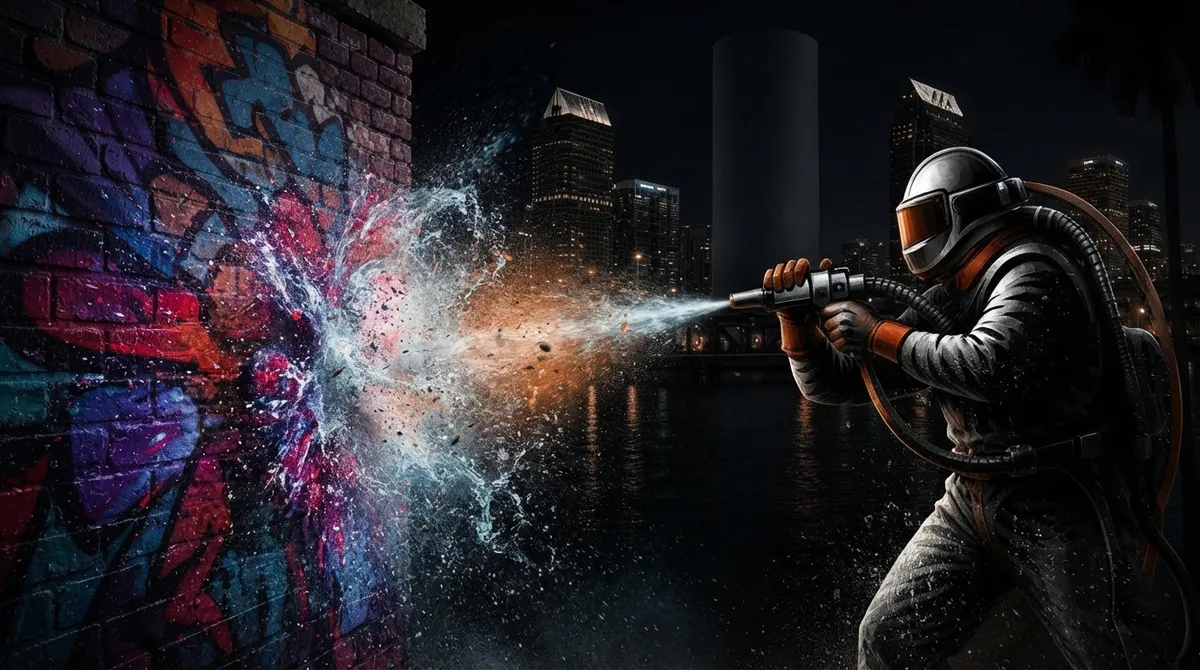
Here’s a fact that surprises a lot of homeowners and business owners alike. Traditional pressure washers actually use a lot more water than you’d think, and modern dustless blasting flips that expectation on its head.
- Standard pressure washers use between 120 and 480 gallons of water per hour.
- Dustless blasting uses roughly 20 gallons of water per hour, a fraction of that amount.
- Pressure washers operate at 1,500 to 3,000 PSI to force contaminants off the surface.
- Dustless blasters run at a gentler 30 to 150 PSI, because the abrasive media does the heavy lifting instead of water pressure.
That means dustless blasting can actually be the more water-conscious choice, especially for larger commercial jobs where water runoff and drainage matter. It’s a nice bit of good news if you’re trying to be mindful about resources while still getting a deep clean.
When Rust Is the Real Problem
Rust stains on concrete are sneaky. They look like a surface issue, but they’ve often soaked deep into the pores of the material. Pressure washing might lighten the stain a bit, but it won’t fully remove rust that’s worked its way in.
Sandblasting is really the only method that reliably pulls embedded rust out of concrete or nearby metal components. This matters a lot for industrial sites, since corrosion is a massive nationwide problem. In fact, metal corrosion costs the U.S. economy over $300 billion annually, and nearly 40% of all steel produced goes toward replacing corroded parts. If rust is part of your concrete problem, sandblasting is the move.
MSHA Compliance and Industrial Standards
For industrial sites and structures that need to meet MSHA compliance standards, sandblasting isn’t just the better option, it’s often the only acceptable one. Power washing simply can’t guarantee full removal of old paint and rust, which means it falls short of the standards these sites require. If you’re managing an industrial facility, this is a case where cutting corners with a pressure washer could cost you a compliance headache later.
Choosing the Right Method for Your Project
So how do you actually decide? Here’s a simple way to think it through.
- Ask what’s on the surface. Dirt and mildew? Pressure washing is fine. Paint, rust, or epoxy? You need sandblasting.
- Ask what happens next. Just want it clean? Pressure washing works. Planning to coat or seal it? Sandblasting sets you up for success.
- Ask about the setting. Home driveway or patio? Pressure washing is usually enough. Industrial floor or commercial structure? Sandblasting is the safer bet.
- Ask about long-term value. Need it to last a decade or more? Sandblasting wins every time.
For most homeowners just wanting a clean patio or pool deck, pressure washing does the trick nicely. But once paint, rust, or coating removal enters the picture, sandblasting becomes the clear winner. Our residential blasting services cover exactly this kind of work, from pool decks to pavers, using media gentle enough for delicate surfaces but strong enough to get the job done right.
Real-World Applications Across Industries
We work on a wide variety of concrete surfaces across Tampa Bay and the central Florida corridor, and the right approach always depends on the setting.
- Warehouse and factory floors needing rust and coating removal before a new epoxy finish
- Parking garages and structural concrete prepped for resealing
- Sidewalks and storefronts with graffiti or old paint that needs stripping
- Pool decks and patios with mildew stains or peeling coatings
- Loading docks and equipment pads with heavy rust buildup
Our commercial blasting team handles a lot of this exact work, and our industrial blasting crews tackle the heavier stuff like tanks, structural steel, and large-scale concrete prep. We match the blast to your surface, not the other way around, which means you get a clean result without unnecessary damage.
Why Mobile Blasting Makes Sense for Concrete Prep
One thing that sets mobile blasting apart is convenience. We come to you, fully mobile and self-contained, so there’s no need to haul concrete slabs or structures anywhere. We bring our own power and water, and we protect the surrounding area while we work.
Whether you’re in Tampa, Orlando, Ocala, or Fort Myers, we’re happy to come to your site and get the job done without disrupting your day more than necessary. For businesses curious about how this process fits into a broader project, our article on why Tampa businesses choose mobile sandblasting covers even more detail on the benefits.
A Quick Comparison Table for Easy Reference
| Question | Pressure Washing | Sandblasting |
|---|---|---|
| Removes dirt and mildew? | Yes | Yes |
| Removes bonded paint? | No | Yes |
| Removes embedded rust? | No | Yes |
| Creates surface profile? | No | Yes |
| Good for coating prep? | Not alone | Yes |
| Water usage per hour | 120-480 gallons | ~20 gallons (dustless) |
Getting Started With Your Concrete Project
If you’re still not sure which route makes sense for your concrete, that’s completely okay. This is exactly the kind of decision we help people work through every day. Send us a few photos, tell us what you’re hoping to achieve, and we’ll walk you through the right media and method for your specific surface.
We’re proud of the work we do around Tampa Bay, and we’d love for you to see what our customers are saying about us on Google before you decide. Reading real feedback from real neighbors can help you feel confident in your choice.
Ready to get your concrete looking its best, whether that’s a quick pressure wash or a full sandblasting job? Get a free estimate today, or feel free to give us a call to talk through your project. You’ll talk to the people actually doing the work, and we’ll help you figure out exactly what your concrete needs.
FAQs
Q: Is sandblasting better than pressure washing for removing concrete paint?
A: Yes, absolutely. Pressure washing just can’t grab onto paint that’s bonded to concrete, but sandblasting strips it right off down to a clean surface. If paint removal is your goal, sandblasting is the way to go every time.
Q: Does pressure washing create a surface profile for concrete coating adhesion?
A: Nope, pressure washing alone doesn’t create that rough texture coatings need to stick well. You’d need to add acid etching as a separate step, while sandblasting handles cleaning and profiling in one go.
Q: Can pressure washing remove embedded rust from concrete?
A: Not really, and this trips up a lot of folks. Rust often soaks deep into concrete pores, and pressure washing only touches the surface. Sandblasting is the reliable way to pull that rust out completely.
Q: How much water does sandblasting use compared to pressure washing?
A: This one might surprise you. Modern dustless blasting uses around 20 gallons of water per hour, while standard pressure washers use anywhere from 120 to 480 gallons per hour. Sandblasting can actually be the more water-friendly option.
Q: Is sandblasting more cost-effective than pressure washing for industrial concrete prep?
A: In the long run, yes. Sandblasting costs more upfront, but it sets up coatings to last 10 to 15 years. Pressure washing alone offers little to no coating longevity, so you often end up paying for repairs sooner.





