Key Takeaways
-
Mobile commercial blasting brings a self-contained rig to your site, so large or fixed items never need hauling and work can happen without your power or water.
-
Match the blasting method to the surface: dry blasting suits heavy steel rust, while wet, dustless, soda, and hydroblasting options reduce dust or protect delicate materials.
-
Before any work begins, get a pre-job hazard check covering respirable silica and lead, since older buildings may have lead paint that changes containment and waste handling.
-
Prepare the site by clearing the work area, sharing photos and coating history, flagging delicate spots like glass, and confirming rig access and nearby tenant needs.
-
Price depends on surface type and size, coating thickness, media choice, access limits, and containment needs, so insist on a written estimate rather than a guessed quote.
-
When hiring, verify insurance, ask for a hazard plan and containment details, and confirm who handles recoating, since many blasting firms only handle removal and prep.
Picture a rusty steel handrail on a busy storefront, a parking lot covered in old paint stripes, or a stained wall that no scrubbing can fix. Those are the kinds of problems commercial sandblasting was made to solve. Think of it as a deep reset for a surface. It takes the old stuff off and gets the material ready for whatever comes next.
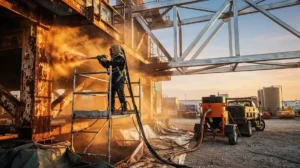
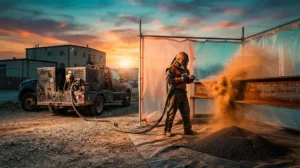
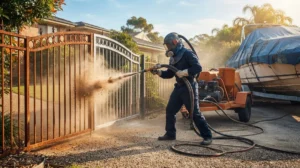
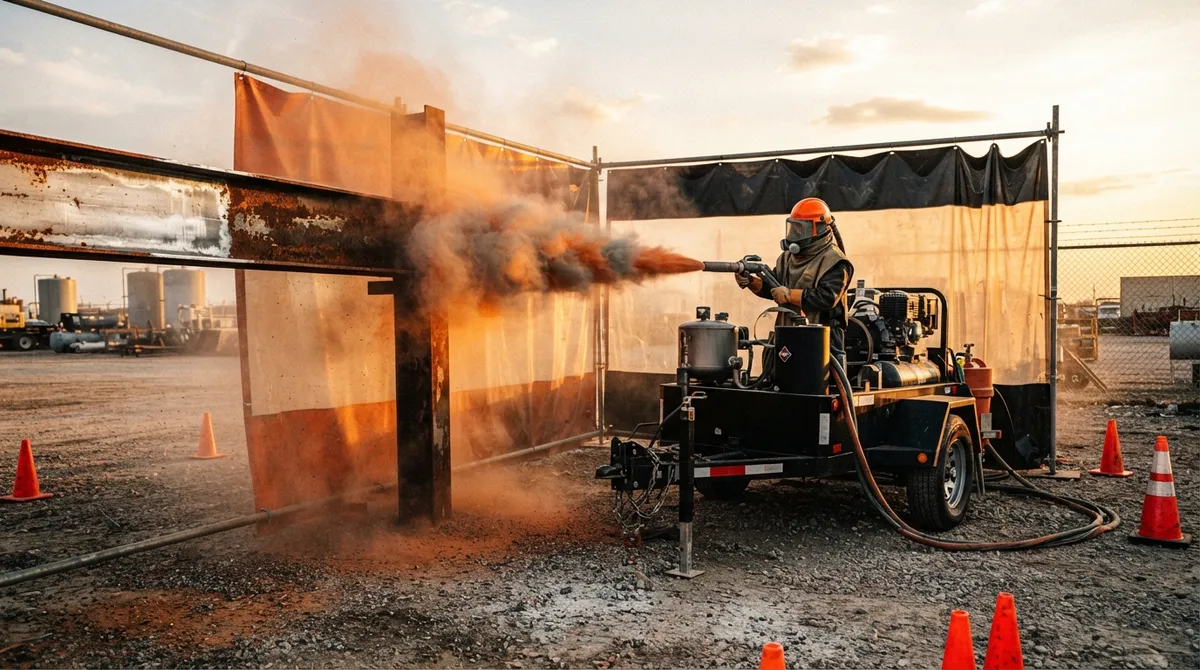
Here is the good news for business owners and property managers: you do not have to haul big items to a shop. With mobile service, the crew shows up at your site with the gear. At Blastworx, we come to you. Our rig is fully mobile and self-contained, so we work in a parking lot, at a warehouse, or on a job site without needing your power or water.
In this guide, we will walk through what commercial sandblasting is, how mobile blasting works, which methods fit which jobs, what safety rules matter, and how to hire the right crew. Let’s dig in.
What Is Commercial Sandblasting?
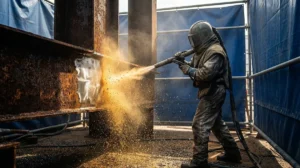
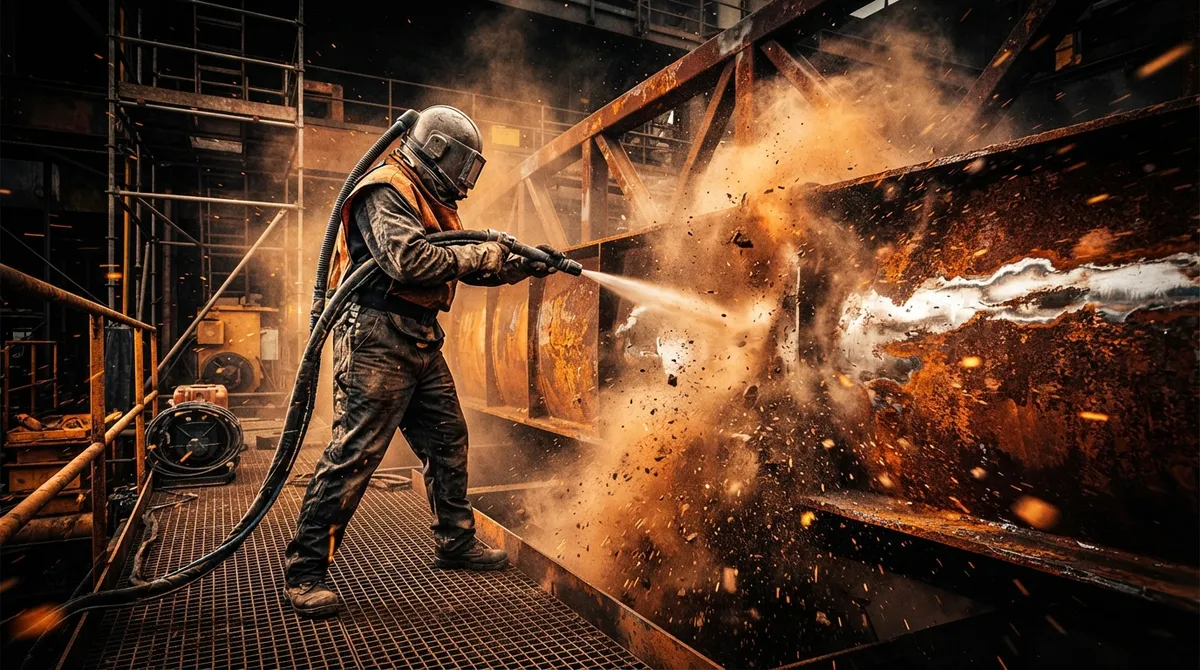
Commercial sandblasting is a surface-prep service. A crew uses compressed air, water, or another force to shoot abrasive media at a surface. That media knocks off paint, rust, scale, graffiti, and buildup. It can also give a surface a light texture so new coatings stick better. If you want the textbook version, here is a quick look at what is sandblasting and where the process came from.
In the industry, the broader term is abrasive blasting. That is because many jobs no longer use sand at all. The media might be soda, walnut shell, glass bead, aluminum oxide, or steel grit. The best choice depends on the surface and the goal.
A coating is only as good as the surface underneath it. Paint, powder coat, and sealers will not last if the prep is poor. Hand-sanding often misses rust in seams and corners. Blasting takes the whole surface back to clean, sound material at once, so the next layer bonds the way it should and holds up in Florida’s heat, humidity, and salt air.
How Does Mobile Commercial Sandblasting Work?
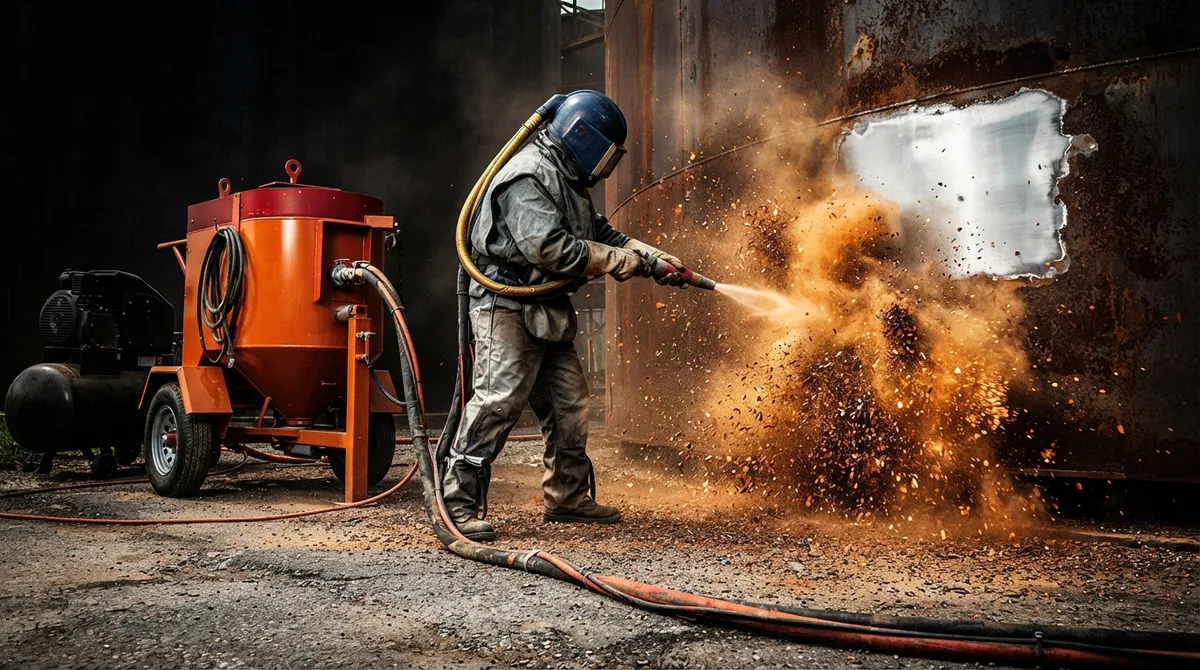
Mobile blasting flips the usual setup. Instead of moving your equipment to a blasting shop, the blasting setup moves to your equipment. That is a big deal for things that are huge, fixed in place, or too costly to shut down.
Here is how a typical mobile job runs at Blastworx:
- Walkthrough. You send photos, or we come look. We figure out the right media for the surface.
- Free estimate. You get a clear, written estimate the same day. The price we give is the price you pay.
- Blast and strip. We protect the surrounding area, then blast the surface clean at your location.
- Ready to finish. The surface comes out clean and ready for the next step.
You talk to the people doing the work from start to finish. There is no handoff to a call center and no guessing about who is on your site.
What Can a Mobile Crew Blast?
Mobile crews handle a wide range of commercial surfaces. Here are some of the most common ones:
- Concrete sidewalks, parking areas, and loading zones
- Structural steel, beams, and railings
- Building exteriors and storefronts
- Graffiti on walls and enclosures
- Dumpsters and dumpster enclosures
- Fleet vehicles, trailers, and heavy equipment
- Tanks, vessels, and fabrication parts
Some surfaces need a close look first. Painted walls, glass, veneer, and cultured stone should be checked in person before any blasting starts. That is not a hassle. It is how you avoid damage.
For a deeper look at how this plays out for local businesses, check out our commercial sandblasting services guide for Tampa Bay businesses. You can also see the full range of work on our commercial blasting page.
Which Blasting Method Fits Your Job?
We match the blast to your surface, not the other way around. That one idea guides every choice we make. A soft surface needs a gentle touch. A thick steel beam can take a harder hit. The table below shows how the main methods compare.
| Method | Best For | Dust Level | Things to Know |
|---|---|---|---|
| Dry abrasive blasting | Heavy rust and thick coatings on steel | Higher | Fast and strong, but needs tight containment |
| Wet or dustless blasting | Active job sites, indoor work, areas near equipment | Much lower | Cuts airborne dust, but still needs cleanup |
| Soda blasting | Delicate surfaces, grease and light coatings | Moderate | Gentle on the material underneath |
| Hydroblasting | Concrete and some industrial cleaning | Low | Uses water pressure to clean and strip |
Wet methods are a smart pick when dust is a concern. OSHA guidance notes that wet abrasive blasting and hydroblasting produce much lower dust than dry blasting. Lower is not the same as zero, though. Any good crew still plans for cleanup.
Want to dig into the choices? We break them down in wet sandblasting vs dry and in what makes dustless blasting so effective.
Why Do Businesses Choose Mobile Over a Shop?
Time is money. Shutting down a loading dock or hauling a trailer across town costs more than the blasting itself. Mobile service solves that in a few simple ways.
- No hauling. Big or fixed items stay put.
- Less downtime. We can work after hours or on weekends to cut disruption.
- Self-contained rig. We bring our own power and water.
- One point of contact. You deal directly with the crew.
If you are weighing your options, our posts on mobile vs. shop sandblasting and why Tampa businesses choose mobile sandblasting lay out the tradeoffs in plain language.
What Safety Rules Matter for Commercial Blasting?
Blasting can create hazardous dust and loud noise. The hazard might come from the media, the surface, or the coating being removed. Two big ones are respirable crystalline silica and toxic metals like lead. That is why a pre-job hazard check matters before any work begins.
Here are the key points every owner should know:
- OSHA’s construction silica standard sets an action level of 25 micrograms per cubic meter and a permissible exposure limit of 50 micrograms per cubic meter. Both are measured as 8-hour time-weighted averages.
- NIOSH has recommended since 1974 that silica sand, or any blasting material with more than 1% crystalline silica, not be used as an abrasive.
- OSHA points to engineering and work-practice controls first. That means swapping in less harmful media, containing the work, and using ventilation or dust collection.
- When respirators are needed, employers must choose the right type and follow the respiratory protection rules.
Rules can change based on the type of work and the location. State and local requirements may be stricter than federal ones. Always confirm what applies to your site before the crew arrives.
Lead Paint and Older Buildings
If your building is older, the paint may contain lead. That changes the plan. The crew needs to know before blasting starts so they can set up the right containment, protection, and waste handling. Tell your contractor what you know about the building’s age and history up front.
How Do Mobile Crews Control Dust and Protect Property?
We contain the mess. We also protect the surrounding area. Good containment is the difference between a smooth job and an unhappy neighbor. A solid plan usually covers these points:
- Isolate the work zone. Use barriers, tarps, or enclosures to keep media and debris in one place.
- Protect what is nearby. Cover vehicles, windows, plants, utilities, and equipment.
- Capture dust. Choose wet or dustless methods, or use dust collection when dry blasting is needed.
- Plan for weather. Florida wind and rain can change how a job runs.
- Handle the waste. Collect spent media and removed coatings, and dispose of them the right way.
Waste rules vary by place and by what is being removed. Air-emission, stormwater, and hazardous-waste rules can all come into play. Rather than assume one rule fits every job, confirm the requirements with the right local authorities.
How Do You Get Ready Before the Crew Arrives?
A little prep goes a long way. Here is a simple checklist to help your job start strong:
- Clear the work area of vehicles, furniture, and loose items.
- Share photos and any known history of the surface, including old coatings.
- Point out spots that need extra care, like glass, trim, or landscaping.
- Confirm access for the rig and any gate or parking details.
- Tell the crew about nearby people, tenants, or sensitive equipment.
Our post on 9 steps to prepare for sandblasting goes into more detail if you want a full walk-through.
How Much Does Commercial Sandblasting Cost?
There is no single price, and anyone who quotes one without seeing the job is guessing. Costs depend on a handful of things.
| Factor | Why It Affects the Price |
|---|---|
| Surface type and size | Bigger areas and tougher materials take more time and media |
| Coating thickness and type | Heavy rust or layered paint takes longer to remove |
| Media and method | Dustless and specialty media can change the setup and cost |
| Access and site limits | Tight spaces and occupied sites need more planning |
| Containment and cleanup | Lead, silica, or busy areas require extra protection |
| Schedule | After-hours or weekend work may be arranged to cut disruption |
The best way to get a real number is to ask for an estimate. With Blastworx, you get a clear, written estimate the same day, and the price we give is the price you pay. For more on pricing, see how much sandblasting estimates really cost and why quotes vary so much.
What Should You Look For When Hiring a Commercial Blasting Company?
Not every crew is the same. Use this short list to size up any contractor before you sign:
- Fully insured. Ask for proof, not just a promise.
- Right media for the job. They should explain why they chose it for your surface.
- A real hazard plan. They should ask about lead, silica, and old coatings.
- Clear containment and cleanup. Ask how they protect people and property.
- Written estimates. No surprises later.
- Direct communication. You should talk to the people doing the work.
One more tip: know what the contractor does and does not do. At Blastworx, our commercial work covers removal and prep. We take the surface back to clean, sound material, ready for the next step. Recoating is handled by your general contractor or coating crew.
Our guide on what to know before hiring sandblasting services adds more questions worth asking.
Where Do We Work?
We are based in Tampa and serve the Tampa Bay area and the central Florida corridor. That includes Tampa, Clearwater, Sarasota, Ocala, Orlando, and Fort Myers, plus nearby towns like Brandon, Riverview, Plant City, Lutz, and St. Pete. You can see the full list on our service areas page. For the right job, we will travel anywhere in the state.
Want to see the results? Browse our project gallery, or visit us on Google and see what our customers are saying about us.
Ready to Get Your Surface Back to Clean?
Commercial sandblasting is one of the smartest steps you can take before a new coat of paint, a fresh seal, or a full restoration. Done right, it saves time, protects your investment, and gives you a surface that is ready to last. The key is picking the right method, planning for safety, and working with a crew that treats your site with care.
If you are ready to move forward, get a free estimate from our team. Prefer to talk it through? Give us a call at 813-380-8092. You can text too. We are happy to help you figure out the right plan for your project.
FAQs
Q: What is commercial sandblasting, and how does mobile sandblasting work?
A: Commercial sandblasting is a surface-prep service that uses force to shoot abrasive media at a surface and remove paint, rust, graffiti, and buildup. With mobile service, we bring a fully self-contained rig to your site, so you do not have to move large or fixed items. It is a friendly way to save time and skip the hauling.
Q: Is dustless blasting really dust-free?
A: Not quite, but it is much better. OSHA guidance notes that wet methods give off far less dust than dry blasting, though they do not remove every hazard or the need for cleanup. We use dustless blasting for indoor work, active job sites, and areas near other equipment.
Q: What safety steps are needed for lead paint or silica?
A: A pre-job hazard check comes first, followed by containment, dust control, and the right respiratory protection. Rules depend on the work and location, so it helps to share your building’s age and coating history up front. Then we can plan the job the safe way.
Q: How should I prepare my site before a mobile blasting crew arrives?
A: Clear the work area, share photos and any coating history, and point out delicate spots like glass or landscaping. Confirm access for our rig and let us know about nearby tenants or sensitive equipment. A little prep helps your job go smoothly.
Q: Does Blastworx apply new coatings after blasting?
A: For commercial jobs, we handle removal and prep only. We leave the surface clean and ready for the next step, and your general contractor or coating crew handles the recoating.